Contact Info

 Odoo CRM, Philippines
When does Odoo CRM make sense for a Philippine company?
Odoo CRM makes sense for a Philippine company when Odoo already runs, or will run, its stock, sales and accounting, so a won deal can move to a priced quote, an order and a registered invoice without retyping. It needs sales teams by region, activity rules reps follow, consent records your privacy officer approves and an honest Community versus Enterprise check. I set this up remotely and independently of any Odoo implementer.
Last reviewed by Vikas Saroj
Many Philippine distributors and traders keep leads in chat threads and spreadsheets, then retype the deal into the accounting system when the customer finally orders. Every retyping is a chance for the wrong price, the wrong branch or the wrong customer TIN to reach a sales invoice.
Odoo CRM removes that step when the rest of the business already runs on Odoo. The opportunity, the quotation and the confirmed order all live beside the stock and the ledger, so the salesperson sees what is available before promising a delivery to Cebu or Davao.
I work remotely as an independent consultant, and the engagement runs in English. Filipino or regional-language wording in quotations comes from, or is reviewed by, native speakers among your own staff.
 What I Do
Each piece of work connects the pipeline to what happens after the deal: stock, invoicing and collections in the same Odoo database.

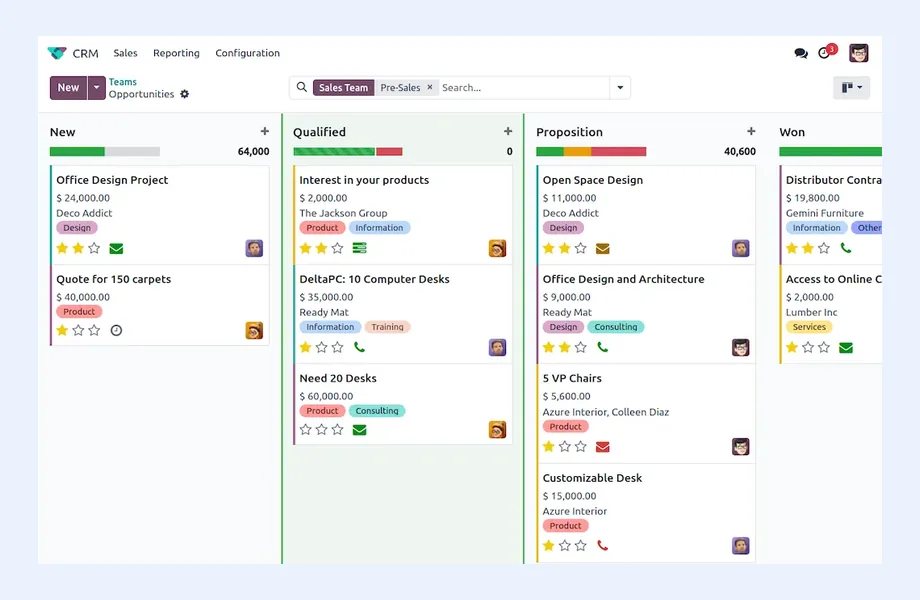
Sales teams and territories for Luzon, Visayas and Mindanao, or by channel such as modern trade, wholesale and institutional, with lead assignment rules your sales managers can maintain themselves.

Website forms, email aliases and imported lists routed into Odoo, plus a decision on how chat inquiries reach the pipeline, so no lead depends on one rep's phone.

Registered name, TIN, branch code and billing address captured when an account is qualified, because the invoice later prints from the same record and corrections after posting are painful.

Templates for standard price lists, project supply and repeat orders, with terms in English and any Tagalog or Cebuano lines drafted and proofread by bilingual staff on your side.

Fields and access rights that record how a contact agreed to be contacted and who can export contact lists, designed with your data protection officer and legal advisor.

A list of the CRM features your team wants, marked by whether your Odoo version offers them in Community, in Enterprise or only through a third-party module.
How I Work
How deals are really won today
 Sales manager interviews
Lead sources listed
Quote and approval steps
Customer data gaps found
Sales manager interviews
Lead sources listed
Quote and approval steps
Customer data gaps found
Pipeline and templates in a test copy
Stages and teams configured
Assignment rules tested
Quotation templates drafted
Consent fields agreed
Edition gaps logged
Reps use it, managers trust it
Pilot team goes live
Weekly pipeline review
Data quality report
Next team onboarded
This is the first question I put to a Philippine company, because the answer is not always Odoo. Odoo CRM is a good choice when the business already runs, or is moving, its inventory, sales orders and accounting on Odoo. Then a won opportunity becomes a quotation with real prices and real stock, and the confirmed order flows to delivery and to the invoice your registered system issues. There is no sync to break and no second customer list to reconcile.
A separate CRM can be the better answer when:
For the second and third cases, compare options on my Zoho CRM Philippines page or the Zoho vs Odoo comparison. When Odoo is the answer, the general product view is on the Odoo CRM page, and the rest of this page covers what changes for a Philippine sales team.
A Philippine distributor rarely sells as one team. There may be a Metro Manila team for modern trade accounts, a provincial team working through dealers, and branch sales staff in Cebu or Davao who quote from local stock. Odoo CRM models this with sales teams, each with its own pipeline view, members and targets, and with assignment rules that route new leads by province, product line or customer type.
Decisions I work through with your sales manager:
Mobile use matters because reps work from the field. Odoo runs in a phone browser and through its app; I test the screens your reps will use on the connections they actually have before the pilot starts.
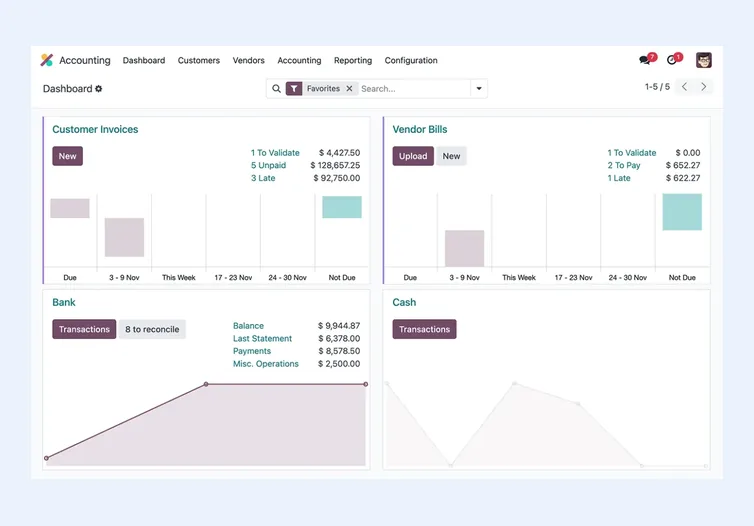
The strongest reason to keep CRM in Odoo is the path after the deal. A quotation built from the opportunity carries the customer, price list, taxes and terms. Once confirmed it becomes a sales order, then a delivery, then an invoice posted in Odoo Accounting. In the Philippines that last step is where care is needed, because invoices issued from a computerized system have to meet BIR requirements that your tax advisor interprets.
What I check along the path:
Which invoice layouts and e-invoicing capabilities the Philippine localization offers in your version is something I confirm with Odoo or your implementer and record in writing, rather than assume.
A CRM collects exactly the personal data that the Data Privacy Act is concerned with: names, mobile numbers, emails and notes about individuals at customer companies. How the law applies to your marketing and sales activity is a question for your data protection officer and legal advisor. My part is making sure Odoo records the facts they will need.
Design points I raise:
Chat-based selling needs special thought. Odoo offers messaging integrations in some versions and editions, while many Philippine reps sell through personal chat apps. I document which conversations should reach the CRM and how, and leave the policy decision to your team. My CRM consultant Philippines page covers channel strategy beyond Odoo.
Core pipeline features, including leads and opportunities, stages, sales teams, activities and quotation templates through the Sales app, are part of Odoo in general. Several features Philippine teams ask about may depend on edition, version or hosting, so I confirm each one with Odoo or your partner in a test database:
Because no Odoo license revenue or commission reaches me, the feature list can stay factual. The Odoo consultant Philippines page covers the wider platform decision, and the Philippines ERP consultant page helps if you are still choosing a system. Related siblings: Odoo Inventory and Odoo Projects in the Philippines.

Tell me about your business and current systems. I’ll suggest the most sensible first step.
Book a Consultation
Not sure which ERP you need?
Share your business requirements with me and I will help you understand the right process, architecture and platform before implementation.
FAQ
If Odoo runs your stock, sales orders and accounting, Odoo CRM usually wins because quotations use live prices and stock and flow straight to invoicing. If your selling is long-cycle, marketing-heavy or your ERP is something else, a dedicated CRM can be the stronger pick. I test both options against how your reps actually sell before giving a recommendation.
Yes. Odoo can print documents in more than one language, so a template can mix English terms with Filipino lines. The engagement runs in English, and someone on your staff who writes Filipino natively drafts or proofreads that wording before it goes to customers.
Odoo can store consent sources, mailing preferences and access restrictions, which gives your data protection officer the records they need. Whether your processes comply is a legal question for your advisor. I design the fields and access rights around their guidance and test them before go-live.
In recent versions, messaging and telephony integrations have been tied to Odoo Enterprise, and availability can change between versions. I confirm what your target version and edition provide with Odoo or your partner and list any gaps before you commit.
Every business is different. Share where you are today and what you want to fix, and I’ll tell you honestly whether and how I can help.
Book a Consultation
Insights
 Book a Consultation
Book a consultation to talk through your processes, systems and goals. I’ll reply with practical next steps - no obligation.