Contact Info

 Odoo Inventory, Philippines
How should a Philippine distributor set up Odoo Inventory?
A Philippine distributor should set up Odoo Inventory with a warehouse per hub or island branch, routes that cover port, shipping line and branch receipt, lots and expiry where food or health products move, consignment and third-party warehouses as their own locations, and delivery documents agreed with the tax advisor through the localization. I design and test this remotely, independently of any implementer, and confirm which features need Enterprise.
Last reviewed by Vikas Saroj
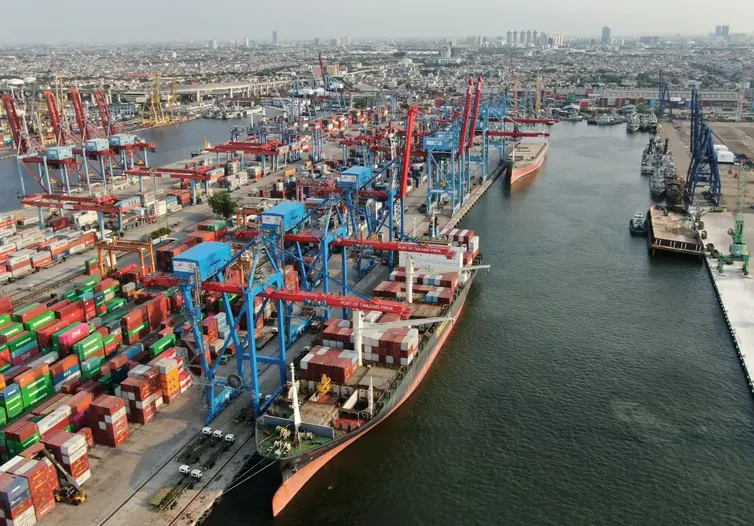
A Philippine distributor's stock problem is rarely the warehouse itself. It is the gap between a Manila hub, the pier, a shipping line and a provincial branch, plus goods sitting at a supermarket on consignment or in a rented third-party warehouse. When the system cannot show those places, branches build their own lists.
Odoo Inventory can represent every one of those places as a location with rules. The work is deciding which locations exist, which steps each receipt and delivery passes through, and which documents print at each step.
I do that design remotely with your operations and finance leads, as an independent consultant who neither sells Odoo nor bills development hours.
 What I Do
These pieces of work follow a carton from the supplier's container to the shelf of a provincial customer.

One warehouse per hub or branch, with sub-locations for bulk, picking, quarantine and returns, kept as simple as the operation allows so branch staff can learn it quickly.

Resupply routes from the hub to each branch with a dispatch step, a transit stage tied to the shipping line and a branch receipt, so stock in the voyage is visible and owned.

Lot tracking with expiry dates and a first-expiry-first-out removal strategy for food, personal care and health products, plus a near-expiry report for branch managers.

Goods placed with supermarket or pharmacy chains held in their own locations, with sell-through reports converted into replenishment and invoicing on an agreed routine.

Rented warehouse space modeled as a warehouse, with a file or connector exchange agreed with the provider, and dropship routes for supplier-delivered project orders.

Delivery receipts and invoices produced through Odoo Inventory and Odoo Accounting, with layouts and series checked against what your tax advisor and the localization require.
How I Work
Follow real goods through the network
 Hub to branch walkthrough
Consignment and third-party warehouse list
Lot and expiry needs
Document samples collected
Hub to branch walkthrough
Consignment and third-party warehouse list
Lot and expiry needs
Document samples collected
Locations and routes in a test copy
Warehouses and locations set
Transit routes tested
Removal strategies configured
Print layouts reviewed
Edition gaps recorded
Pilot branch, then the rest
Opening stock count
Pilot branch live
Variance review with finance
Next branches scheduled
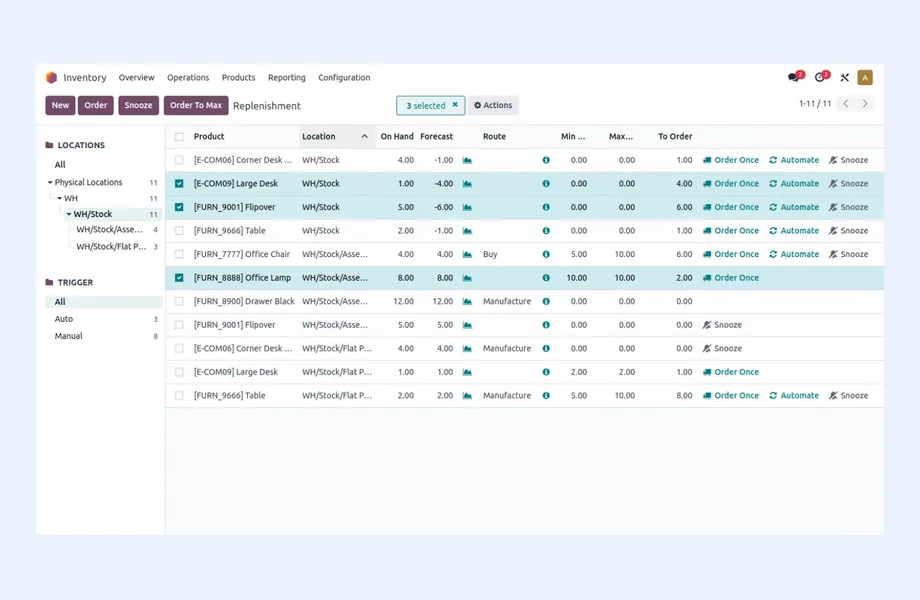
In Odoo, a route is the chain of steps stock follows, such as receive, store, pick and ship, or hub to branch. For a Philippine network the important design work sits between warehouses. I usually set up resupply so a branch can be replenished from the hub automatically by reordering rules, with three visible stages: picked and dispatched at the hub, on the vessel, and received at the branch.
Points to settle with your logistics lead:
The parent platform view, including why this matters for the whole Odoo decision, is on my Odoo consultant Philippines page; this page goes deeper into the stock design itself. The general features are described on the Odoo Inventory product page.
Food, beverage, personal care and health products in the Philippines move through supermarket chains, drugstores and wholesalers who will reject short-dated stock. Odoo can track lots with expiry and related dates, and a first-expiry-first-out removal strategy makes pickers take the oldest valid lot. Lot tracking at receipt is extra work for the warehouse, so I agree with your team which products truly need it.
Consignment is the harder part. When your goods sit on a retailer's shelf but remain your property until sold, the stock must stay in your books at a location that represents that retailer. I design:
Whether consigned goods change how invoices or delivery receipts are issued is a question for your tax advisor; I make the Odoo flow match whatever they decide. Related patterns are on inventory and warehousing.
Many Philippine distributors rent space from logistics providers rather than run every warehouse themselves. In Odoo, a third-party warehouse is still a warehouse, with your stock in it, but the people moving the goods do not use your system. The design question is how orders and confirmations travel between you and the provider: a shared file, the provider's portal or an API connector. I define that exchange, its timing and who corrects mismatches, before any developer is asked to build it.
Dropship routes suit project orders where a supplier delivers straight to the customer site, for example building materials or equipment for a large account. The purchase and sale stay linked, and no stock passes through your warehouse.
For barcode scanning, Odoo's dedicated barcode app has been an Enterprise feature in recent versions, so a Community deployment needs another approach. I check:
Multi-company stock, such as an importing entity selling to a distribution entity, is also possible in one database; the intercompany accounting side is on my Odoo Accounting Philippines page.
Odoo Inventory moves stock; the tax effect of a sale is handled in Odoo Accounting through taxes, journals and the Philippine fiscal localization. For a Philippine distributor, that split matters because the documents that leave the warehouse and the invoice that follows may both need to meet BIR requirements for a computerized system. What those requirements are for your business is for your tax advisor to say.
What I check with your advisor and your implementer:
The localization's coverage of these points differs by version and edition and changes over time. I confirm it with Odoo or the partner in a test database, and where it lacks something, such as a required print layout or report, I record a gap with a proposed fix and an owner. My gap analysis service is how those items are tracked.
Odoo Inventory is capable, but there are Philippine situations where I would steer you elsewhere or ask for more proof first.
When Odoo does fit, I can stay involved as an independent reviewer through implementation, checking configuration against the agreed design, running user acceptance tests and reviewing the first stock counts. If you are still deciding between platforms, start with the Philippines ERP consultant page, and for wider market context see the Philippines hub. Manufacturers should also read my Odoo Manufacturing Philippines page.

Tell me about your business and current systems. I’ll suggest the most sensible first step.
Book a Consultation
Not sure which ERP you need?
Share your business requirements with me and I will help you understand the right process, architecture and platform before implementation.
FAQ
Yes. With multi-step resupply routes and a transit location per shipping lane, Odoo shows goods that left the hub but have not reached the branch. I design the dispatch and receipt steps, how short or damaged arrivals are handled and who reviews transit balances.
Each consignment customer gets its own location, stock moves there without an invoice, and the retailer's sales report triggers a delivery and invoice. Periodic counts compare balances. Your tax advisor decides the document treatment; I make the Odoo flow follow it.
In recent versions the dedicated barcode app has been part of Enterprise, so Community users need another approach or a third-party module. Edition features change, so I confirm what your target version offers with Odoo or your partner before planning scanning.
Odoo can print delivery documents and invoices with custom layouts, and the Philippine localization adds country-specific setup in some versions. Whether a layout meets BIR requirements is for your tax advisor to confirm. I collect their requirements and test the printed output before go-live.
Every business is different. Share where you are today and what you want to fix, and I’ll tell you honestly whether and how I can help.
Book a Consultation
Insights
 Book a Consultation
Book a consultation to talk through your processes, systems and goals. I’ll reply with practical next steps - no obligation.