Contact Info

 Odoo Inventory Oman
What does Odoo Inventory need to handle for an Omani business?
An Omani Odoo Inventory setup has to separate free zone or re-export stock from goods cleared for local sale, keep recoverable import VAT out of item cost, value low-priced items precisely in rials and baisa, and track stock held at customer sites. I design and review that setup remotely as an independent advisor, then test it with your storekeepers, accountant and tax advisor's guidance.
Last reviewed by Vikas Saroj
Omani distributors often hold goods under more than one status. Some stock sits in a free zone or economic zone unit waiting to be re-exported, some has been cleared and carries import VAT that finance expects to recover, and some lives at a customer's site under a supply agreement. Each needs its own place in the system.
Odoo Inventory can show all of this clearly, but only if warehouses, ownership and costing are designed around Omani realities rather than copied from a generic template. Small details matter too: a fastener worth a few baisa, valued with too little precision, can distort stock value across thousands of units.
I work remotely and independently with Omani owners, warehouse managers and finance teams. I write the inventory design, check an implementer's configuration against it and lead testing before the first live count.
 What I Do
These are the warehouse and stock questions Omani companies most often ask me to resolve when they move onto Odoo Inventory.

Free zone, economic zone and mainland units set up as separate companies or warehouses, so stock that has not been cleared cannot be delivered to a local customer by mistake.

Duty, freight and clearing charges added to item cost while recoverable import VAT goes to the tax accounts, following the treatment your tax advisor confirms.

Product cost, price and unit of measure precision checked so low-value items keep accurate value in rials and baisa through receipts, transfers, counts and valuation reports.

Goods held at customer sites or supplier-owned stock in your store tracked with ownership, so availability, valuation and invoicing reflect who actually owns each item.

Lot and expiry control for food, chemicals and lubricants, with alert dates set ahead of the limit and the earliest usable lot proposed for every pick.

Receipt types and transit locations for trucks arriving from the UAE, so goods on the road appear in planning and link to transport and clearing bills.
How I Work
Learn how stock really moves
 Zone and mainland entities
Import VAT path agreed
Customer-site stock list
Low-value item review
Shelf-life categories
Zone and mainland entities
Import VAT path agreed
Customer-site stock list
Low-value item review
Shelf-life categories
Test with your own documents
Re-export order trial
Costed past shipment
Consignment replenishment cycle
Precision on real prices
Bilingual slips reviewed
Open with agreed balances
Counts per status and site
Opening value checked by finance
Store team coaching
Early variance follow-up
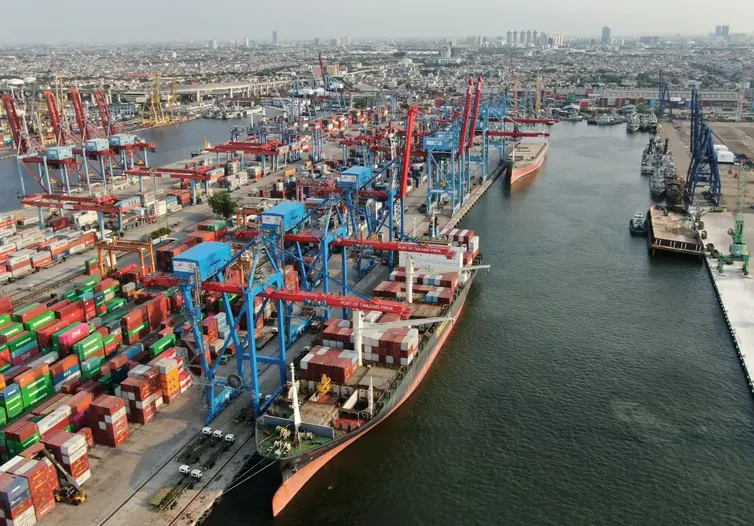
Oman has several free zones and special economic zones, often near ports such as Sohar, Salalah and Duqm, and groups commonly run a unit there alongside a mainland trading company. Goods can arrive in the zone, be stored, repacked or assembled, and leave again for other markets without being cleared into Oman. Other goods move into the mainland company for local sale.
In Odoo I normally give each licensed unit its own company, with its own warehouse and accounts, and treat movements between them as intercompany sales or transfers backed by documents. That makes it impossible for a mainland salesperson to deliver goods that are still under zone status. Where a single entity holds bonded and cleared stock in one building, separate warehouses or locations with restricted operation types can achieve the same control.
Re-export orders get their own operation type, with packing lists and export documents distinct from local delivery notes. If goods are relabeled or kitted for an export market, I check with finance whether a simple transfer is enough or whether a light manufacturing step should carry the cost.
Customs and tax treatment of zone movements is not something I advise on. I build what your clearing agent and tax advisor agree, and make sure stock can be reported by entity, status and location for them. The wider Omani trade picture is on my Oman trading ERP page.
Oman applies VAT, and goods imported for local sale usually carry import VAT alongside customs duty. For most VAT-registered businesses that import VAT is recoverable, which means it belongs in the tax accounts, not in the cost of the product. Mixing the two inflates stock value and margins at the same time. Your tax advisor should confirm how your imports are treated, including any scheme that changes when or how import VAT is accounted for.
Odoo's landed cost feature then handles the rest: freight, insurance, duty, clearing fees, port charges and transport to the store attached to a receipt and spread across its lines by value, weight, volume or quantity. I agree the split rules with finance and test them on a shipment whose final cost your accountant has already worked out.
Precision deserves a separate check. The rial is divided into baisa, so currency amounts carry finer decimals than most currencies, and product cost precision must be set to match. On low-value items such as fittings, fasteners or consumables bought in large quantities, too few decimals in unit cost can push stock value away from the ledger with every receipt. I run real purchase prices through receipt, transfer and count, and compare the result with what finance expects. The ledger and VAT configuration itself is on the Odoo Accounting page for Oman.
Suppliers to energy operators, utilities and large contractors in Oman are sometimes asked to keep stock close to the customer: a cage of spares at a site, a container of consumables at a camp, or an agreed minimum quantity in their own store reserved for one buyer. The goods still belong to the supplier until they are used or called off, so they must stay on the supplier's books.
Odoo can represent this in a few ways, and I choose with the commercial and finance teams:
The hard part is not configuration but the consumption signal. If the customer reports usage weekly by email, someone must turn that into a delivery and invoice promptly, or stock and receivables drift apart. I design that routine with your team and test it end to end. For buyers with strict delivery paperwork, the ERP business analyst in Oman page explains how I capture those requirements.
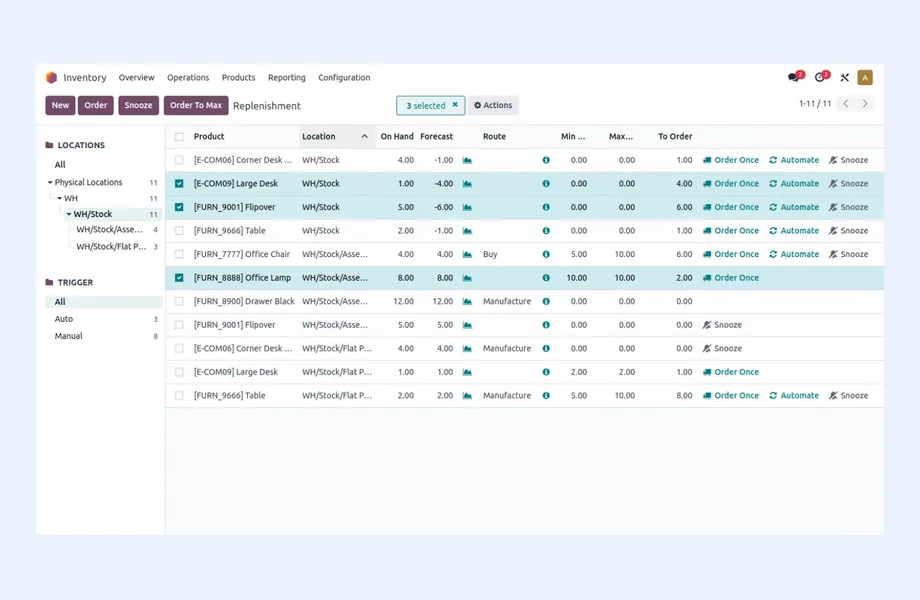
Heat is a practical concern for Omani stores, particularly away from the coast where summer temperatures are severe. Food, beverages, lubricants, adhesives and some chemicals need lot and expiry tracking, with alert dates set early enough to sell or move stock before it becomes a write-off. I configure first-expiry-first-out removal which sends each picker to the lot nearest its limit first, plus a quarantine location for returned or questionable goods.
Many fast-moving items reach Oman by truck from UAE suppliers rather than by sea. I give those shipments their own receipt type and a transit location, so the store and sales see goods while they are still on the highway, and each receipt carries the haulage and clearing invoices into its cost.
For scanning, Odoo's Barcode app works on handhelds and phones and, to my understanding, requires Enterprise, so I confirm the edition before hardware is ordered. Delivery slips and labels often need Arabic and English together; I have templates checked against real product names and addresses before drivers use them.
Edition, hosting and the broader localization questions are covered on the Odoo in Oman page, and the product itself on the global Odoo Inventory page.
For most Omani traders and distributors, Odoo Inventory is capable enough. I suggest a specialist system alongside it when:
In those cases Odoo can keep purchasing, sales, valuation and the books, while the specialist tool runs the floor. I help draw that boundary and write the interface specification.
My role throughout is independent. I write the inventory requirements, compare proposals from Muscat or regional implementers on the same scenarios, review configuration and lead acceptance testing, without commission from any vendor. See the ERP integration service for connectors, and the ERP consultant in Oman page and Oman hub for my wider work in the country.

Tell me about your business and current systems. I’ll suggest the most sensible first step.
Book a Consultation
Not sure which ERP you need?
Share your business requirements with me and I will help you understand the right process, architecture and platform before implementation.
FAQ
Usually not, if it is recoverable. Recoverable import VAT belongs in the tax accounts, while duty, freight and clearing charges go into landed cost. Ask your tax advisor which rule covers your imports; I then configure and test Odoo so the two never mix on a receipt.
Yes. I usually set up each licensed unit as its own Odoo company with its own warehouse, and record movements between them as documented intercompany transactions. Where one entity holds stock under different statuses, separate warehouses with restricted operations can give similar control.
The site becomes a location under your warehouse, refilled by transfer and invoiced when the customer confirms usage. Reordering rules can propose refills at the agreed minimum. The key design work is the routine that turns the customer's usage report into deliveries and invoices without delay.
The rial is divided into baisa, so amounts need more decimals than most currencies. If product cost precision is set too low, small rounding differences on cheap items bought in volume can add up and pull stock value away from the ledger. I test precision with your real prices before go-live.
Every business is different. Share where you are today and what you want to fix, and I’ll tell you honestly whether and how I can help.
Book a Consultation
Insights
 Book a Consultation
Book a consultation to talk through your processes, systems and goals. I’ll reply with practical next steps - no obligation.