Contact Info

 Odoo Inventory Bahrain
What does Odoo Inventory need to do for a Bahraini company?
For a Bahraini company, Odoo Inventory often has to dispatch goods by truck over the Causeway to Saudi customers, keep port-side or re-export stock apart from cleared goods, cost imports in dinars without mixing in recoverable VAT, and track serialized hardware or maintenance spares. I design and review that setup remotely and independently, and test it with your store, finance team and the guidance of your tax advisor.
Last reviewed by Vikas Saroj
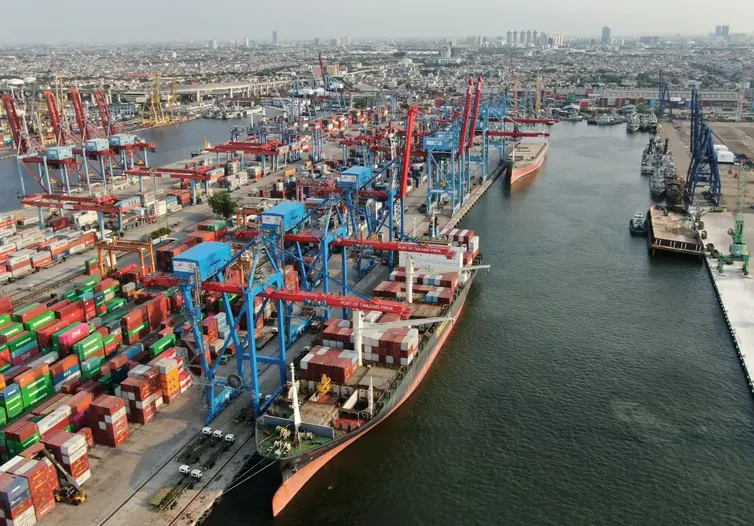
Plenty of Bahraini stock never stays in Bahrain for long. Distributors receive containers at the port, hold goods in a warehouse on the island and send them by truck across the Causeway to customers in Saudi Arabia, or onward to other Gulf markets. Others keep smaller stocks of hardware, parts and consumables that support service and maintenance contracts rather than retail sales.
Odoo Inventory fits both patterns, as long as export dispatches, storage under different customs statuses and serial or spare part tracking are designed for the way your business actually moves goods.
I work remotely and independently with Bahraini owners, operations managers and finance teams. The stock design is mine to draft with you; the people who receive, pick and ship then test whatever the implementer builds before anyone signs.
 What I Do
These are the stock topics Bahraini businesses most often want settled when they plan or repair an Odoo Inventory setup.

An export operation for trucks heading to Saudi Arabia, with packing lists, commercial invoice data and the references your customs broker needs on each shipment.

Goods sold from a Bahraini company to a Saudi sister entity recorded as intercompany sales, so each side holds the right stock and the books agree.

Goods awaiting re-export kept in their own warehouse or company, apart from cleared stock, so nothing under the wrong status reaches a local customer by accident.

Customs duty, shipping and broker fees raise item value in dinars; reclaimable VAT paid at the border stays on the tax side, as your advisor directs.

Serial capture for IT hardware, devices and equipment at receipt and delivery, so warranty claims, replacements and returns can be traced to the unit without guesswork.

Spare parts and consumables held for maintenance or service contracts, issued against jobs and reported per contract so the cost of supporting each client is visible.
How I Work
Trace stock in and out
 Inbound and export routes
Entities on both sides
Customs status of stock
Serial and spare needs
VAT guidance from advisor
Inbound and export routes
Entities on both sides
Customs status of stock
Serial and spare needs
VAT guidance from advisor
Rehearse with real shipments
Export dispatch trial
Intercompany sale tested
Past container costed
Serial capture on devices
Fils rounding checks
Begin with clean balances
Counts per status
Open export orders loaded
Driver and store training
Early reconciliation checks
Bahrain's road link to Saudi Arabia makes the island a practical base for serving customers in the Eastern Province and beyond. For a distributor this means many outbound shipments are exports, not local deliveries: trucks leave the warehouse with customs paperwork, cross the Causeway and are cleared on the Saudi side before the customer receives anything.
In Odoo I give these shipments their own operation type, separate from local deliveries, with packing lists and commercial invoice data printed from the system and fields for the broker's declaration references. Delivery is confirmed when the customer receives goods, not when the truck leaves, so a transit location can hold goods that are on the road or waiting at the border.
Many Bahraini groups also run a Saudi sister company that sells locally in the Kingdom. In that case goods usually move as an intercompany sale from the Bahraini entity to the Saudi one, with the Saudi company handling its own local invoicing and compliance. Whether the Saudi entity sits in the same Odoo database or in its own system is a design decision I settle with group finance early. The Odoo in Bahrain overview discusses that choice at platform level.
Treatment of these sales for VAT and customs is a question for your advisor and broker; I configure what they agree.
Bahrain promotes itself as a regional logistics base, with a port and dedicated logistics areas where goods can be stored, consolidated or repacked before moving on. Companies using those facilities may hold stock that has not been cleared into the Bahraini market alongside goods that have.
The Odoo design must keep that distinction clear. Where the business holds goods under different customs statuses, I set up separate warehouses, or separate companies where a distinct licensed entity is involved, and restrict which operations can move stock between them. A transfer from re-export storage into local stock then becomes a documented step linked to clearance rather than an ordinary internal move.
Re-export orders get their own documents and routes. If goods are relabeled, repacked or kitted before leaving, I check with finance whether that work should be recorded as a simple transfer or as a light assembly order that carries cost and traceability.
Reporting is the final piece. Customs brokers, auditors and tax advisors often ask for stock by status, entity and location at a given date. I make sure that report comes straight from Odoo instead of a spreadsheet maintained on the side. The global Odoo Inventory page describes the underlying routes and locations in more general terms.
VAT is part of everyday trade in Bahrain, under the National Bureau for Revenue, and a container cleared into the local market normally pays import VAT at the border together with any customs duty. The two behave differently in Odoo. Duty is a cost of getting the goods onto your shelf, so it raises the value of every unit received. Import VAT, for a registered business that can reclaim it, is a tax balance that should sit on the VAT return, never inside item value. When an implementer loads both into one landed cost line, stock and gross margin are overstated together and nobody notices until the auditor does. Ask your advisor how your imports, and goods passed on to other GCC states, should be treated before configuration starts.
With that line drawn, landed cost in Odoo collects sea freight, insurance, duty, broker fees, port handling and the truck to your warehouse, and splits them across the received lines. Which basis applies to each charge is for your finance lead to choose; I lay out the effect of each option on a recent container they already costed manually, so the choice is made on familiar numbers.
The dinar's peg to the US dollar keeps dollar invoices steady, but euro or yuan purchases still swing, so stock should carry the exchange rate of the supplier invoice itself. Fils-level precision on unit cost gets its own test with cheap, high-volume items. Ledger and VAT return setup belong on the Odoo Accounting page for Bahrain.
Because Bahrain's economy leans toward services, many Bahraini Odoo users hold stock to support service rather than to resell in volume. IT companies resell laptops, network equipment and devices. Facility and maintenance firms keep spare parts and consumables for contracts with buildings, banks or industrial clients. Both need tighter tracking than a simple quantity on hand.
For hardware, I set serial tracking on each item so the serial is captured at receipt and at delivery. Warranty claims, swaps and returns can then be traced to the exact unit and customer. For contract spares, I usually create a location or analytic tag per major contract, so parts issued to a job are costed against that contract and finance can see what supporting each client really costs.
Perishable lines, food above all, call for lots with expiry dates, warnings that fire well before a lot runs out, and picking that always offers the oldest lot still fit to sell. Heat during the long summer makes storage discipline important for those lines.
Scanning comes through Odoo's Barcode app on handhelds or phones. My understanding is that this app is limited to Enterprise, which is why the edition question gets answered before any scanner is ordered. Delivery notes in Arabic and English are tested with real product names and addresses before drivers rely on them.
For most Bahraini distributors and service firms, Odoo Inventory is more than adequate. I point to a specialist tool alongside it when:
Where Odoo fits, I keep the project anchored to your requirements rather than a vendor's template. I document the stock design, review implementer proposals from Manama or elsewhere in the Gulf on identical scenarios, check configuration and lead user acceptance testing. I earn nothing from licenses or implementation fees. My ERP requirements gathering service shows how the stock requirements are captured, and you can read more about my work in the country on the Bahrain ERP consultant page and the Bahrain hub.

Tell me about your business and current systems. I’ll suggest the most sensible first step.
Book a Consultation
Not sure which ERP you need?
Share your business requirements with me and I will help you understand the right process, architecture and platform before implementation.
FAQ
I set up a separate export operation with its own documents and a transit location for goods on the road or at the border. Delivery is confirmed when the customer receives the goods. Customs and VAT treatment is confirmed by your broker and tax advisor, and the configuration follows their guidance.
It can sit in the same database as a separate company with its own warehouse, or run in its own system. Goods usually move between the entities as intercompany sales. The right choice depends on Saudi compliance needs and how closely the two businesses operate, which I work through with group finance.
Not when you can reclaim it. Reclaimable VAT paid at the border belongs on the VAT return, while duty, shipping and broker fees raise the value of the goods. Have your tax advisor confirm how this applies to you, and I then prove the setup on a container you have already costed.
Yes. Parts can be issued from a contract location or tagged with an analytic account for the contract, so the cost of spares used for each client is visible. Combined with service or project records, that shows whether a contract is profitable.
Every business is different. Share where you are today and what you want to fix, and I’ll tell you honestly whether and how I can help.
Book a Consultation
Insights
 Book a Consultation
Book a consultation to talk through your processes, systems and goals. I’ll reply with practical next steps - no obligation.