Contact Info

 Bahrain
What does a CRM consultant do for a Bahraini company?
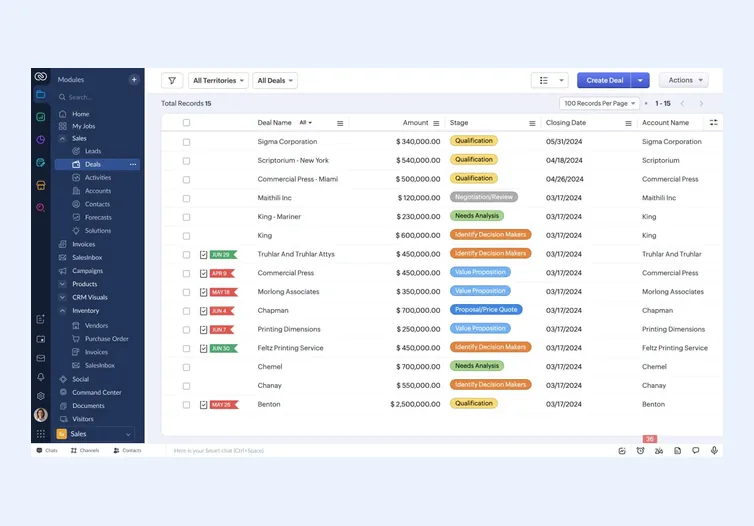
A CRM consultant works out how a Bahraini company actually wins and keeps customers, then designs the CRM around it: whether it should sit inside the ERP or stand alone, how message-based orders and inside sales are captured, how credit and collections reach salespeople, and how consent for broadcast messages is recorded. I compare platforms without vendor ties and work remotely, with legal points referred to your advisor.
Last reviewed by Vikas Saroj
Many Bahraini suppliers take a large share of their orders by message. A hotel purchasing officer sends a list on WhatsApp, a cafe owner calls the salesman directly, and a contractor emails a scanned request for quotation. The sale happens, but the history sits on personal phones, and when a salesperson leaves, the relationship often leaves too.
I help Bahraini companies decide what a CRM should hold, which platform should hold it and how it connects to the ERP that invoices and collects. The work is platform-neutral: Zoho CRM, Odoo CRM, ERPNext, HubSpot, Salesforce and Dynamics 365 are weighed against your own sales process, and I take no commission from any of them.
The engagement is remote and runs in English. Arabic wording on customer-facing templates is written or checked by your bilingual staff.
 What I Do
Each piece of work ends in a written decision or a tested configuration, not a slide of best practices.

I compare a CRM inside your ERP with a standalone product, scoring Zoho CRM, Odoo CRM, ERPNext, HubSpot, Salesforce or Dynamics 365 on your sales process, admin capacity and integration cost drivers rather than feature lists.

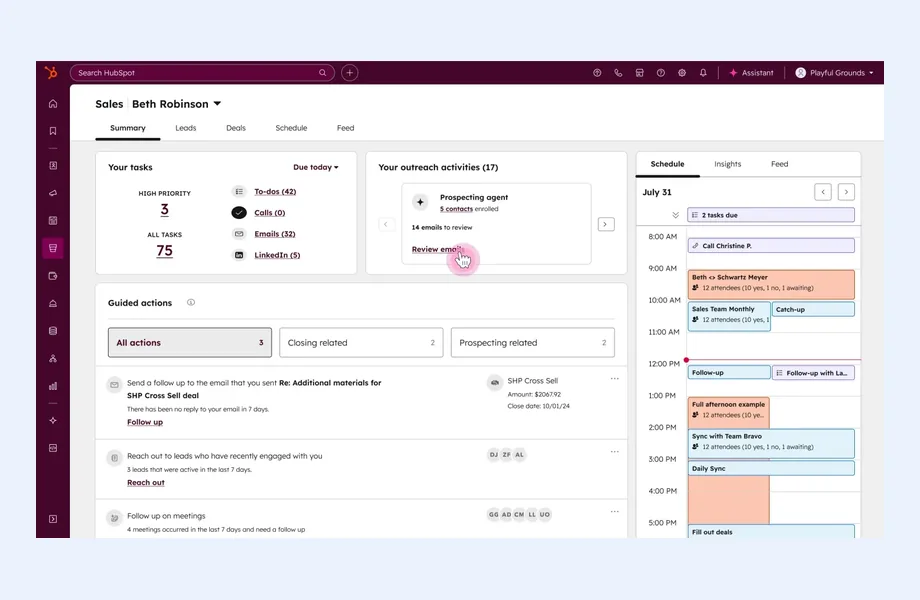
Rules for turning WhatsApp, phone and email requests into tracked records with an owner, a response deadline and a link to the customer account, so repeat buyers stop depending on one salesperson's phone.

Queues and assignment rules for inbound inquiries, reorders and new account requests, separating hotel, retail, contractor and corporate buyers so each lands with the person who can quote quickly.

Overdue balances, credit limits and checks awaiting clearance shown on the CRM account from the ERP, so salespeople know the position before they promise a new delivery or longer terms.

Fields and routines recording how contacts were obtained and what they agreed to receive, designed to follow the guidance your legal advisor gives on Bahrain's personal data law.

Pipeline, reorder and account coverage dashboards that owners actually read in their weekly meeting, plus training built around each role and a review of real usage a few weeks after launch.
How I Work
See how orders really arrive
 Interview sales and finance
Trace message and phone orders
List customer segments
Review current CRM or sheets
Interview sales and finance
Trace message and phone orders
List customer segments
Review current CRM or sheets
Agree the rules before any build
Choose CRM inside or beside ERP
Define stages and ownership
Specify ERP handoff fields
Set consent and access rules
Release in usable steps
Test with real scenarios
Migrate clean accounts only
Train each role
Review usage after launch
For many Bahraini companies the first CRM question is not which brand to buy but where the CRM should live. A trader running Odoo or ERPNext already has a sales module that shares customers, products and prices with stock and invoicing. A professional firm on Zoho Books can add Zoho CRM within the same suite. A group whose parent has standardized on Salesforce or Dynamics 365 may find the choice already made.
I look at three things before recommending either route:
Neither answer is always right. A distributor selling to hotels may be best served by Odoo CRM or the ERPNext CRM features, while an advisory firm may prefer Zoho CRM or HubSpot. I write the reasoning down, so the decision can be revisited when the business changes rather than argued from memory. If you are still unsure where CRM ends and ERP begins, the article on ERP vs CRM sets out the usual split.
In Bahrain's hospitality supply, food distribution and building materials trade, much of the selling is reordering. Customers know the products and want a quick answer on price and delivery. They message the salesperson they know, and the order is keyed into the ERP later, sometimes from a screenshot.
That works until the salesperson is on leave, a message is missed or a customer disputes what was agreed. The design I propose treats these conversations as business records:
WhatsApp Business connectors exist for several CRMs, but their features, costs and message template rules differ by provider. I test the shortlisted option with your numbers and real message types before recommending it. Where a connector is not justified, a disciplined manual routine is often enough for a small team.
The aim is not to watch salespeople. It is to keep customer history with the company, so a hotel that has ordered from you for years is not lost when one person moves on.
Bahraini B2B sales often run on credit terms, and collections can still involve checks picked up by a salesperson or a collector. When the CRM does not show what the customer owes, a salesperson can agree a large new order with an account that finance has already put on hold.
I design the quote-to-cash loop so each system does its own job:
Ownership of customer data is agreed field by field. Sales usually owns contacts and activity; finance owns the legal name, VAT registration number, credit terms and billing address. Without that agreement, the two systems overwrite each other and nobody trusts either.
The integration itself is covered on my Bahrain integration consulting page, and the general pattern on connecting a sales CRM with the ERP.
Bahraini legislation on personal data, overseen by a dedicated authority, governs how details of customers and prospects are gathered, used and sent abroad. What it requires of your company is a question for your legal advisor, and regulated firms may face additional expectations from the Central Bank of Bahrain. My role is to make the CRM capable of following that advice consistently.
In practice that usually means:
Hosting questions come up early in Bahrain, especially for firms with outsourcing conditions from a regulator. I ask each CRM vendor where data would be stored for your account, which subprocessors are involved and how data can be exported if you leave, and I file the answers for your counsel. I do not interpret the law; I make sure nothing in the design makes compliance harder than it needs to be.
In owner-managed Bahraini firms the CRM succeeds or fails on one question: does the owner stop asking for the spreadsheet? Dashboards therefore start from the decisions management already makes in its weekly meeting, not from what the software can display.
Typical views include open quotations by customer segment and age, reorder frequency for key accounts with an alert when a regular buyer goes quiet, conversion from inquiry to order by channel, and pipeline for Saudi or other Gulf customers shown apart from domestic business. Where marketing spend is involved, lead source can be traced from campaign to invoice, which links to my B2B lead generation work.
Rollout goes in small releases. Accounts, contacts and message capture come first, then quotations and the ERP handoff, then reporting. Data migration brings across active customers with clean names and registration numbers, not every contact ever exported from a phone. Each release is tested with scenarios your sales team recognizes, and I review usage a few weeks after launch to remove fields nobody fills in.
Everything runs remotely in the hours Bahrain and India share, with visits only by arrangement. For the wider systems picture, see my ERP consultant page for Bahrain, the general CRM consulting service and the Bahrain hub.

Tell me about your business and current systems. I’ll suggest the most sensible first step.
Book a Consultation
Not sure which ERP you need?
Share your business requirements with me and I will help you understand the right process, architecture and platform before implementation.
FAQ
It depends on where your sales process sits. If quotes rely on stock and prices held in the ERP, the ERP's own CRM often makes sense. If selling is relationship-led, a dedicated CRM such as Zoho CRM, HubSpot or Salesforce may suit better. I compare options against your requirements and explain the trade-offs, and I take no commission or referral fee from any vendor.
Often, yes, through a WhatsApp Business connector for the chosen CRM. Features, costs and template approval rules vary by provider, so I test a shortlisted option with your company numbers before recommending it. For small teams, a clear manual routine for logging message orders against the customer account can be enough at first.
I avoid putting tax logic in the CRM. Quotes can show indicative totals, but the invoice and its VAT come from the ERP or accounting system, configured as your tax advisor directs. The CRM passes the customer's VAT registration details and agreed terms, and receives invoice and payment status back.
The work is delivered remotely through video workshops, shared design documents and recorded walkthroughs, scheduled in hours that suit the Bahraini working week. Visits can be discussed by arrangement, but most CRM projects do not need them, because process mapping, design reviews and testing all work well online.
Every business is different. Share where you are today and what you want to fix, and I’ll tell you honestly whether and how I can help.
Book a Consultation
Insights
 Book a Consultation
Book a consultation to talk through your processes, systems and goals. I’ll reply with practical next steps - no obligation.