Contact Info

 Sales & CRM
What is ERP CRM integration?
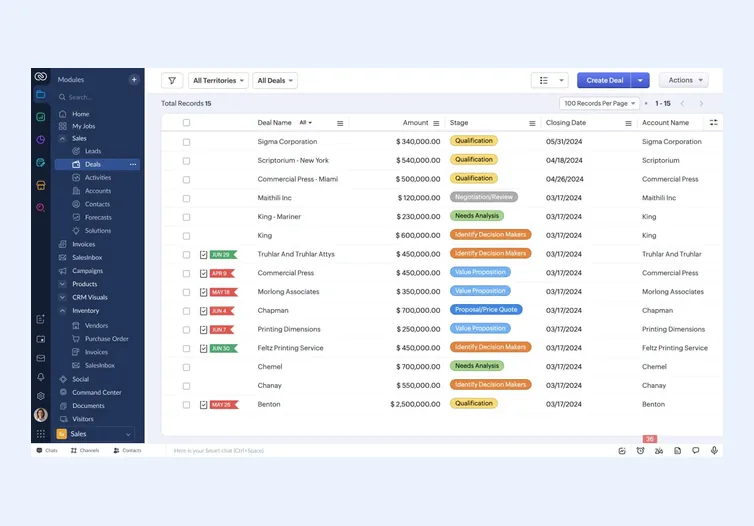
ERP CRM integration connects the system your sales team uses to win deals with the system that fulfils orders, bills customers and tracks payments. Done well, a quote becomes a sales order without retyping, customers and products have one master record, and sales can see stock, credit and invoice status. I help businesses decide what should sync, in which direction, and which system owns each record.
Last reviewed by Vikas Saroj
Most growing businesses end up with a CRM chosen by sales and an ERP or accounting system chosen by finance. Each works on its own. The trouble sits in the gap between them: orders retyped from quotes, customers created twice, and sales reps calling the warehouse to ask whether something is in stock.
This page explains the problem rather than the service. If you recognize the symptoms below, the fix is rarely just a connector. It starts with agreeing who owns each record and where each step of the quote-to-cash process happens. Only then does the integration design become straightforward.
I work as an independent consultant, so the recommendation is about your process, not about selling you a particular CRM, ERP or integration tool. Sometimes the answer is a connector, sometimes a custom integration, and sometimes it is running sales and operations on one platform so there is nothing left to sync.
 What I Fix
Each item below is a specific break point I look for when sales and operations do not line up.

Designing the point where a won deal becomes a sales order, which fields carry over, who approves pricing and discounts, and how the order number flows back to the CRM.

Deciding which system creates customers, which one holds billing and tax details, and how duplicates are prevented when both sales and finance create records in their own system at different stages of the deal.

Keeping the product catalog, units of measure, discounts and price lists consistent across both systems, so reps quote exactly what the ERP can actually invoice, deliver and fulfil without manual correction.

Giving sales a read-only view of available stock, open orders, credit limits and overdue invoices inside the CRM, without giving them access to the ERP.

Choosing between native connectors, a middleware tool or custom API work, based on transaction volume, error handling needs, budget and who inside or outside the business will support it once it is live.

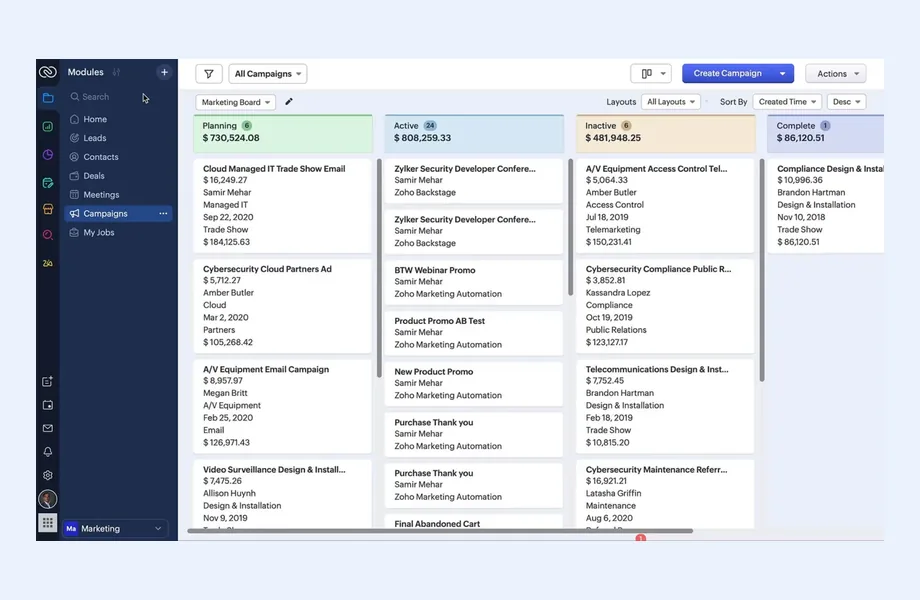
Linking closed deals to invoices and payments so pipeline reports show revenue actually collected, and marketing can see which campaigns and channels produce paying customers, not just leads.
How It Runs
Trace quote-to-cash end to end
 Current sales and order steps
Where data is retyped
Duplicate and mismatch examples
Record ownership questions
Current sales and order steps
Where data is retyped
Duplicate and mismatch examples
Record ownership questions
Agree ownership and sync rules
System of record per entity
Field mapping and direction
Trigger points and approvals
Error handling and alerts
Build, test and hand over
Connector or middleware setup
Test with real scenarios
User guides for sales
Monitoring and ownership
The problem rarely announces itself as an integration issue. It shows up as friction between teams. Typical symptoms I hear in discovery sessions:
If several of these sound familiar, the cost is not just admin time. It is pricing errors, delayed orders and decisions made on pipeline numbers that do not match the books.
Before anyone builds a connector, I work through a short checklist with sales, operations and finance. Most integration problems trace back to one of these:
Each of these is a business decision first. The technical design follows from the answers, which is why I start with process mapping rather than with the integration tool.
There is more than one way to close the gap, and the right one depends on volume, complexity and how much both systems are worth keeping.
I lay these options out with their trade-offs for your situation: what each one costs to build and run, what it means for users, and how it will behave as volume grows. If the CRM itself is the weak link, CRM consulting may come first.
Platform choice changes how much integration you need at all.
Industry matters too. Distribution and wholesale businesses need stock and price visibility in the CRM. Manufacturing often needs configured quotes and lead times. Professional services and SaaS companies care most about contracts, billing schedules and revenue attribution. The services CRM case study shows how structure and lead tracking connect.
I do not quote figures on a page like this because the effort depends on factors that only discovery reveals. The main cost drivers are:
The timeline runs in phases rather than a fixed calendar. First comes discovery and quote-to-cash mapping with sales, operations and finance. Then ownership rules, field mapping and the integration design are agreed and signed off. Data cleanup of customers and products follows, often the longest step. Build and testing come next, using real scenarios such as a discounted quote, a partial delivery and a customer on credit hold. Finally, a supported go-live with monitoring and a clear owner for integration errors.
If sales and operations are working from different versions of the truth, the first useful step is a short discovery session. I walk through how a deal becomes an order, an invoice and a payment in your business today, and mark every point where data is retyped, duplicated or invisible.
From there you get a clear view of the system of record for each entity, the integration options that fit, and what each option involves. You can then decide whether to fix it with process changes, a connector, a custom integration or a platform change. If you go ahead, I can lead the design and coordinate with whoever builds it, whether that is your internal team, an implementation partner or a developer.
Useful background reading: ERP vs CRM explains where each system starts and stops, and the Zoho CRM implementation guide covers CRM setup decisions. When you are ready, book a discovery call and work directly with Vikas.

Tell me about your business and current systems. I’ll suggest the most sensible first step.
Book a Consultation
Not sure which ERP you need?
Share your business requirements with me and I will help you understand the right process, architecture and platform before implementation.
FAQ
It depends on where the customer relationship starts and who maintains billing details. A common pattern is that the CRM owns prospects and contacts, while the ERP owns the customer account once it is approved for credit and invoicing. What matters most is agreeing one owner per field and enforcing it, so neither team overwrites the other.
Often it is a good starting point, especially when both products come from the same vendor or ecosystem. Connectors fall short when you need custom approvals, multiple companies, complex pricing or reliable error alerts. I check your quote-to-cash scenarios against what the connector actually does before you rely on it.
Yes. A well-designed integration can push available stock, open orders, credit status and overdue invoices into the CRM as read-only information. Sales gets what they need to make promises customers can trust, without extra ERP licenses or the risk of changing financial data.
Not usually. Most problems come from unclear ownership and handover rules, not from the CRM itself. Replacement makes sense when the CRM cannot hold the data you need, or when moving CRM and ERP into one platform removes most of the integration work. I compare both routes before recommending either.
Once closed deals link to invoices and payments, you can trace revenue back to the campaign or channel that produced the lead. That turns marketing reporting from lead counts into revenue by source, which makes paid media and SEO budget decisions much easier to justify.
Every business is different. Share where you are today and what you want to fix, and I’ll tell you honestly whether and how I can help.
Book a Consultation
Insights
 Book a Consultation
Book a consultation to talk through your processes, systems and goals. I’ll reply with practical next steps - no obligation.