Contact Info

 Salesforce Consulting
What does an independent Salesforce consultant do?
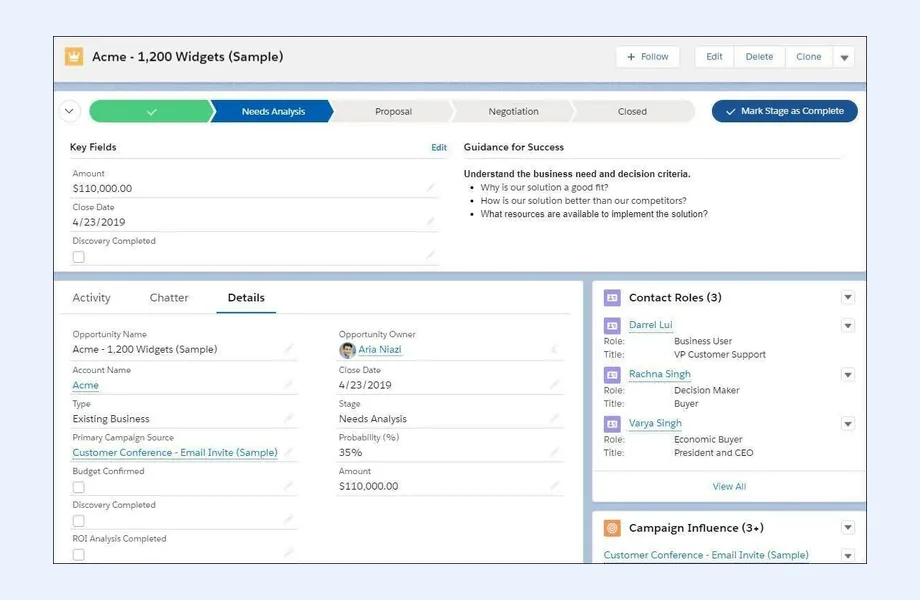
An independent Salesforce consultant helps you decide whether Salesforce is the right CRM, defines what it must do, and protects your interests during implementation. I map your sales and service processes, write requirements, review implementation partner proposals, design integration with your ERP and oversee delivery. I am not a Salesforce partner, so my advice is not tied to selling licenses or build hours.
Last reviewed by Vikas Saroj
Salesforce is one of the most widely used CRM platforms, covering sales, customer service, marketing and a development platform for building custom applications. It is powerful and highly configurable, which is exactly why it can become expensive and complex when the business requirements behind it are unclear.
Most Salesforce advice comes from implementation partners whose business is selling configuration and development work. That expertise is valuable, but it is not neutral. As an independent Salesforce consultant, I sit on your side of the table: I help you decide whether Salesforce fits at all, what scope is genuinely needed and whether a partner's proposal matches your requirements.
I work remotely with founders, sales leaders, COOs and CFOs who are choosing a CRM, preparing for a Salesforce implementation, or living with a Salesforce org that no longer matches how the business works. A large part of my work is connecting Salesforce to the ERP, so that sales, orders, invoices and customer data tell one consistent story.
 What I Do
I do not sell Salesforce licenses or development hours. These are the areas where an independent view protects your investment.

A structured look at your sales, service and marketing processes to decide whether Salesforce is the right platform, or whether a simpler CRM or your ERP's own CRM would serve you better.

Business requirements written in plain language, covering processes, data, roles, reports and integrations, so every implementation partner quotes against the same clear scope rather than their own assumptions.

An independent review of implementation proposals: scope coverage, assumptions, customization approach, data migration, testing, licensing questions and post-launch support, so you compare offers on substance.

Integration design between Salesforce and your ERP, including which system owns accounts, products, prices, orders and invoices, what syncs, how often and how failures are handled.

Acting as your independent lead during delivery: reviewing designs, tracking decisions, challenging unnecessary customization and running user acceptance testing with your team before go-live.

A review of an existing Salesforce org that users avoid or leadership no longer trusts, covering data quality, automation sprawl, reports and adoption, with a prioritized plan to fix it.
How I Work
Confirm Salesforce is the right choice
 Sales and service processes mapped
Requirements documented
Platform options compared
Integration needs identified
Sales and service processes mapped
Requirements documented
Platform options compared
Integration needs identified
Choose scope and partner well
Requirements shared with partners
Proposals reviewed side by side
Scope and assumptions clarified
Licensing questions raised
Delivery plan agreed
Protect scope through delivery
Design reviews and decisions log
ERP integration checks
User acceptance testing
Adoption review after launch
Salesforce is a strong choice for organizations with complex sales processes, several sales teams or regions, demanding service operations, or a need to build custom applications on a CRM platform. Its configurability, broad marketplace of add-on apps and large ecosystem of consultants and developers mean it can be shaped to almost any process.
That flexibility comes with trade-offs. Salesforce generally needs a skilled administrator, careful governance and a clear understanding of which products and add-ons you actually need. For smaller teams with straightforward sales processes, a simpler CRM can deliver most of the value with far less overhead.
Questions I work through with you before any recommendation:
If you are comparing options, see Zoho CRM vs Salesforce, Zoho vs Salesforce and Dynamics 365 vs Salesforce. Each sets out where Salesforce is stronger and where it is not.
Salesforce is a family of cloud products built around a shared customer data model. Understanding which parts you genuinely need is one of the most important decisions, because each product and add-on affects cost, complexity and implementation effort.
| Area | What it typically covers |
|---|---|
| Sales | Leads, accounts, contacts, opportunities, forecasting, quotes and sales reporting |
| Service | Cases, queues, service processes, knowledge and customer support channels |
| Marketing | Email, journeys and campaign management through separate marketing products |
| Platform | Custom objects, Flow automation, code-based development and custom apps |
| Marketplace | Third-party apps for quoting, document generation, telephony, integration and more |
| Analytics and AI | Reports, dashboards, analytics products and AI features that continue to evolve |
Product names, packaging and editions change over time, so I always confirm current scope with Salesforce and the implementation partner rather than relying on old assumptions. My job is to map each requirement to the smallest set of products and add-ons that meets it, and to flag where a requirement would be better handled in the ERP or another tool.
Most Salesforce projects are delivered by implementation partners. Choosing the right one, and the right scope, often matters more than the platform itself. Proposals can look similar on the surface while making very different assumptions underneath.
When I review proposals for you, I check:
The result is a side-by-side comparison you can take into negotiations, plus a list of clarifications to request. This sits within my wider vendor selection and RFP consulting work.
Salesforce rarely works alone. Sales teams need product, price, stock and credit information from the ERP, and finance needs won deals to become orders and invoices without retyping. Poorly designed integration is one of the most common reasons a CRM loses trust.
I design Salesforce and ERP integration around a few core decisions:
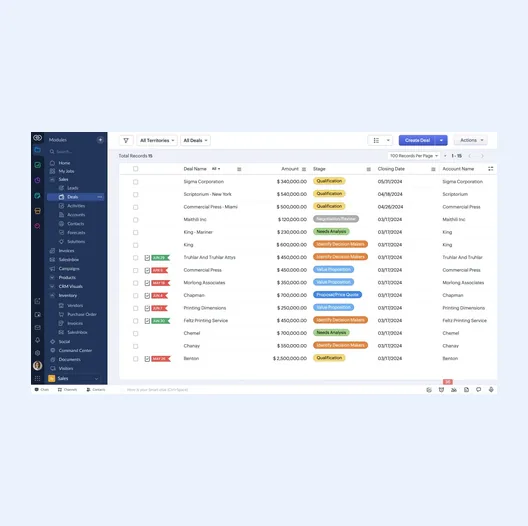
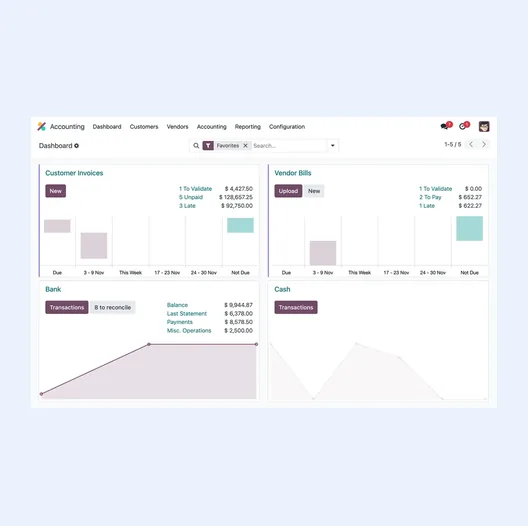
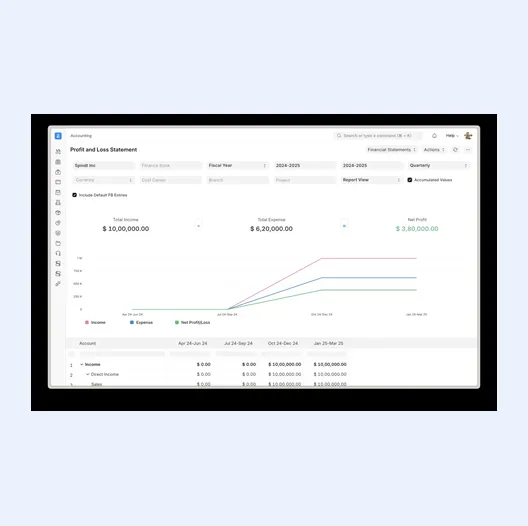
I advise on ERPs including Zoho, Odoo, ERPNext and Microsoft Dynamics 365, so I can define both sides of the integration. The design is documented so any developer or partner can build and support it. More detail sits on my ERP integration page.
Salesforce is a capable platform, but it is not automatically the right one. These are the points I discuss openly:
For many organizations these trade-offs are worth it. My aim is that you make the choice knowingly, with a scope that matches your needs and a plan for who will own the system afterwards.
I am not a Salesforce partner and I do not resell licenses or development. You work directly with me, and my role is to represent your business in decisions that are often made by people with something to sell.
Common engagements include:
I do not replace a skilled Salesforce administrator or developer when hands-on build is needed. I make sure their work matches your requirements, integrates cleanly with your ERP and stays maintainable. If you are weighing Salesforce against other CRMs such as HubSpot, a short call is a sensible first step.

Tell me about your business and current systems. I’ll suggest the most sensible first step.
Book a Consultation
Not sure which ERP you need?
Share your business requirements with me and I will help you understand the right process, architecture and platform before implementation.
Platforms
 FAQ
FAQ
No. I am an independent CRM and ERP consultant with no partnership or reseller arrangement with Salesforce. I do not earn from licenses or implementation hours, so my advice on whether Salesforce fits, what scope you need and which proposal is strongest is based only on your requirements.
My focus is the decision, requirements, proposal review, ERP integration design and independent oversight of delivery. Hands-on configuration and development are usually done by a Salesforce implementation partner or your internal team. I make sure that work matches your requirements, stays maintainable and connects properly to the rest of your systems.
A partner is responsible for delivering what is in the contract. An independent consultant checks that the contract and design actually match your business needs, challenges unnecessary scope or customization, and keeps decisions documented. The two roles complement each other, and good partners usually welcome clear, stable requirements.
Yes. Salesforce is commonly integrated with ERPs such as Zoho, Odoo, ERPNext and Microsoft Dynamics 365 through connectors, middleware or custom APIs. The key is deciding which system owns each type of data, what triggers each sync and how errors are handled. I design that before anything is built.
Not always, but often. Salesforce can work for small teams with clear growth plans or complex processes, yet many smaller businesses get similar value from simpler CRMs with lower administration effort. I compare options against your requirements and expected growth rather than defaulting to the best-known name.
Every business is different. Share where you are today and what you want to fix, and I’ll tell you honestly whether and how I can help.
Book a Consultation
Insights
 Book a Consultation
Book a consultation to talk through your processes, systems and goals. I’ll reply with practical next steps - no obligation.