Contact Info

 Odoo Inventory Kuwait
What should a Kuwaiti group get right in Odoo Inventory?
A Kuwaiti group moving to Odoo Inventory needs a clear rule for which company owns stock in shared warehouses, landed cost in dinars that reflects the rate on each supplier bill, a disciplined path for retail returns and near-expiry goods, and separate handling for showroom displays and spare parts. I design and review that remotely and independently, then test it with your stores and group finance.
Last reviewed by Vikas Saroj
In many Kuwaiti family groups, the warehouse is run by one company while the stock on its racks belongs to several. The food distributor, the household goods agency and the electronics business may all share the same building, the same forklift drivers and the same storekeeper. Finance still needs to know, at any moment, whose goods are whose.
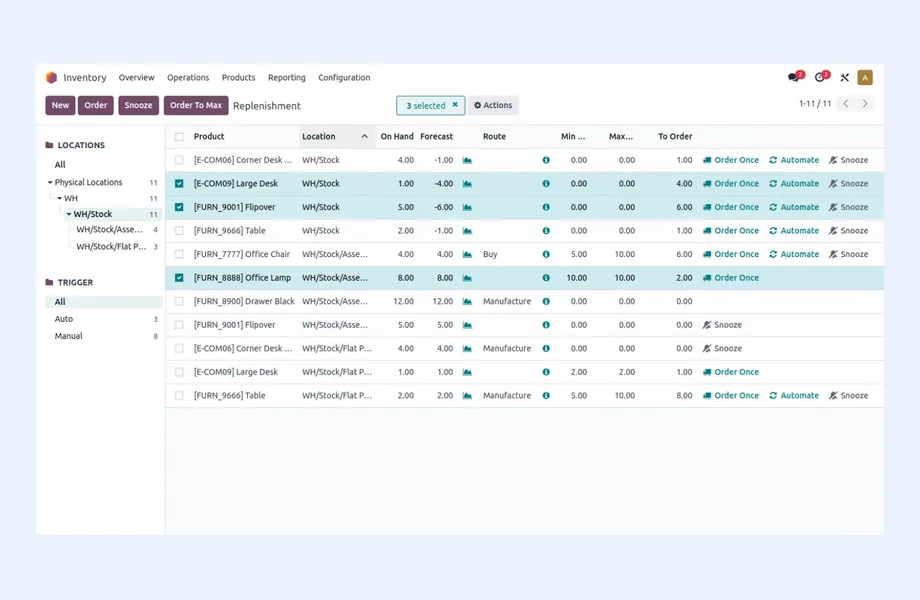
Odoo Inventory can carry that structure, along with receipts arriving by sea or overland through Saudi Arabia, returns flowing back from retail shelves, and the display units and parts stock that sit behind a showroom.
I work remotely as an independent advisor with Kuwaiti group finance managers, supply chain heads and store teams. Together we agree the stock model on paper; I then hold whoever configures it to that model and run the trials your store team signs off.
 What I Do
These are the stock topics Kuwaiti groups most often ask me to resolve before or during an Odoo Inventory rollout.

One physical warehouse serving several group companies, with stock owned and valued by the right entity and access rights so each team sees only its own goods.

Receipt types and transit locations for containers through Kuwaiti ports and trucks crossing from Saudi Arabia, linked to the freight and clearing bills for each consignment.

Duty, freight, insurance and clearing charges spread across received items in dinars, using the exchange rate from each supplier bill rather than the purchase order.

Customer returns received with reason codes into a checking location, near-expiry goods flagged early, and clear rules for restocking, return to supplier or disposal for each case.

Display units and demonstration items kept in their own locations, so they are not sold as new stock and their value can be reviewed separately.

Spare parts with superseded and alternative part numbers, and serial tracking for appliances and electronics, so warranty claims and after-sales service can find the unit.
How I Work
Map owners, sites and channels
 Which company owns what
Inbound routes and agents
Return paths by channel
Showroom and parts stock
Group finance reporting needs
Which company owns what
Inbound routes and agents
Return paths by channel
Showroom and parts stock
Group finance reporting needs
Configure and trial real flows
Ownership on shared stock
Costed past consignment
Returns trial with reasons
Fils precision on prices
Scanner and label test
Start every company cleanly
Counts per company and location
Opening value agreed per entity
Store and showroom training
First-period variance checks
Industrial and storage land in Kuwait is limited, so many groups consolidate stock from several companies into one or two large warehouses, often run by a logistics arm or by the biggest trading company. Physically this is efficient. In the system it raises questions that must be answered before configuration.
Odoo gives three broad options, and I work through them with the group finance manager:
Whichever option is chosen, storage and handling recharges between companies need a rule agreed with finance, and record rules must stop a storekeeper of one business from adjusting another's stock. The wider group structure is discussed on the Odoo in Kuwait overview, and the commercial side of trading groups on my Kuwait trading ERP page.
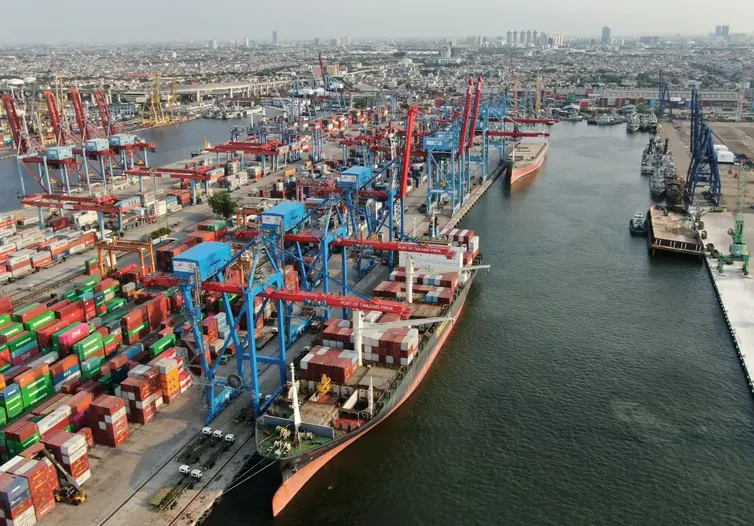
Goods reach Kuwaiti warehouses through the commercial ports, by air for urgent lines and overland via the Saudi border crossing, sometimes after first entering the GCC through another member state. Each path carries its own transit time, agents and paperwork. Odoo can show each path as a distinct inbound operation feeding an in-transit location, so purchasing and sales see what is on the way and the store records the count and condition before goods become available.
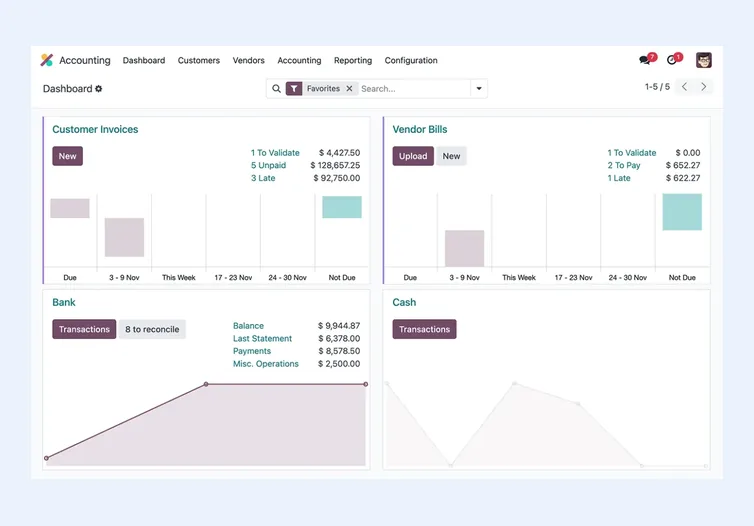
For costing, Kuwait has no general VAT in force, as I understand it, so import VAT is usually not part of the picture. Your tax advisor should confirm this, since the regional position can change. Duty, freight, insurance, clearing fees and port charges then form the landed cost, which Odoo can split across a receipt by value, weight, volume or quantity under rules finance agrees.
The dinar is managed against a basket of currencies rather than pegged to the US dollar alone, so even dollar purchases can move a little between order and payment. I make sure stock value uses the rate on the vendor bill and that later differences go to exchange gain or loss, not to item cost. Because the dinar is divided into fils, I also check unit cost precision on low-value items before go-live. The ledger setup sits on the Odoo Accounting page for Kuwait.
Kuwaiti distributors of food, beverages and household goods sell through cooperative supermarkets, hypermarkets and independent stores, and goods come back: damaged cartons, slow lines removed from shelves, promotional surplus and products close to expiry. When returns are handled informally, stock looks healthier than it is and credit notes lose their link to the goods.
In Odoo I set a return flow per channel. Returned goods arrive into a checking location with a reason code, are inspected, and then move to sellable stock, to a return-to-supplier location, or to scrap with approval. Credit notes follow the inspected quantity, not the quantity the driver collected.
Shelf life needs to be handled before goods come back. Long, hot summers shorten the margin for error, especially for goods stored or transported without full temperature control. I switch on lot and expiry tracking for sensitive lines, set alert dates well ahead of the limit and use first-expiry-first-out removal. A simple near-expiry report, reviewed weekly by sales and the store, lets the business move stock through promotions or other channels while it can still be sold.
Where principals share in the cost of expired goods, the return-to-supplier location keeps those quantities visible until the claim is settled.
Many Kuwaiti agencies sell through their own showrooms, whether for appliances, furniture, electronics, building products or vehicles and equipment. Display and demonstration units sit on the floor for months, may be used by customers and are eventually sold at a discount. If they stay in ordinary stock, they are sold as new by mistake or valued as if they were.
I give displays their own location per showroom, with a transfer when an item goes on the floor and a clear process for selling or returning it. Serial tracking for appliances and electronics links each unit to its sale, which helps with warranty and installation records.
Spare parts businesses bring a different challenge: part numbers superseded by the manufacturer, alternative parts that can replace each other, and large catalogs where only a fraction is stocked. Odoo can hold alternative products and supplier codes, but supersession chains usually need a defined rule or a small customization. I test this with the parts manager on real lookups before go-live.
For scanning, Odoo's Barcode app, which to my understanding needs Enterprise, works on handhelds and phones. I settle the edition before devices are bought, and have bilingual labels and slips checked with real product names. The product itself is described on the global Odoo Inventory page.
Odoo Inventory serves most Kuwaiti trading, distribution and retail groups well. I suggest a specialist system next to it in a few situations:
In each case the group can keep buying, selling and ledger postings in Odoo and let the specialist tool handle its own slice. I help define that boundary and write the interface specification.
Throughout, I work for the group, not a vendor. My deliverables are a written stock specification, a side-by-side reading of implementer bids from Kuwait and the region, configuration reviews, and acceptance scripts your storekeepers run. The ERP vendor selection service explains how proposals are compared, while ERP consulting in Kuwait and the Kuwait market hub cover the rest of my advisory there.

Tell me about your business and current systems. I’ll suggest the most sensible first step.
Book a Consultation
Not sure which ERP you need?
Share your business requirements with me and I will help you understand the right process, architecture and platform before implementation.
FAQ
Yes. Each company can have its own warehouse mapped to a zone of the building, or one operating company can hold stock owned by others with ownership recorded on the goods. I choose with group finance based on how often goods move between companies and who needs to see what.
Returned goods should arrive into a checking location with a reason code, be inspected, and then move to sellable stock, return to supplier or scrap. Credit notes should follow the inspected quantity. I design the flow per channel and test it with the store and finance teams.
It can. Because the dinar is not pegged to the US dollar alone, dollar purchases may move slightly between order and payment. I configure Odoo so stock value uses the vendor bill rate and later differences post to exchange gain or loss rather than to product cost.
Yes. Displays and demonstration units go into their own location per showroom, moved there by transfer, so they are not sold as new stock and their value can be reviewed on its own. Serial numbers can follow each unit for warranty records.
Every business is different. Share where you are today and what you want to fix, and I’ll tell you honestly whether and how I can help.
Book a Consultation
Insights
 Book a Consultation
Book a consultation to talk through your processes, systems and goals. I’ll reply with practical next steps - no obligation.