Contact Info

 Odoo in Kuwait
Why would a Kuwaiti company hire an independent Odoo consultant?
Kuwaiti businesses, often family groups with trading, contracting and services arms, hire an Odoo consultant to decide how companies are modeled in one database, to make dinar amounts round correctly to the fils, to get Arabic documents right and to check what the Kuwait localization covers in their version. I do this remotely, as an advisor who represents the group rather than a vendor.
Last reviewed by Vikas Saroj
The typical Kuwaiti Odoo conversation starts with structure, not features. A family holding owns a distribution company, a contracting business, a few retail or food outlets and perhaps a real estate arm. Each keeps its own books in a different tool, and the group finance manager rebuilds the consolidated view in Excel every month.
Odoo can hold all of those companies in one database with shared contacts and products. Getting there safely means deciding entity boundaries, access rights, intercompany rules and reporting before anyone configures a single app. Those choices are far harder to reverse once the companies are live.
I am a freelance Odoo consultant with no commercial tie to Odoo. I work remotely with Kuwaiti teams and run live calls on Kuwaiti working days. Group finance managers usually bring me in before the first implementer meeting, so the entity model and reporting needs are written down while the options are still open.
 What I Do
Kuwaiti projects rise or fall on early structural decisions, so most of my work happens before and around configuration.

Which companies share a database, which stay separate, who sees which books, and how shared masters such as customers, items and employees are owned across the group.

Sales, purchases, recharges and loans between group companies set up with intercompany rules where Odoo supports them, and clear manual steps where it does not, so balances eliminate cleanly.

A shared chart structure and analytic plans so owners and the board can see profit by company, division and brand without rebuilding the numbers in spreadsheets every month.

Currency and price precision, tax-free invoice totals, payment terms and bank statement imports tested end to end so every amount agrees to the fils.

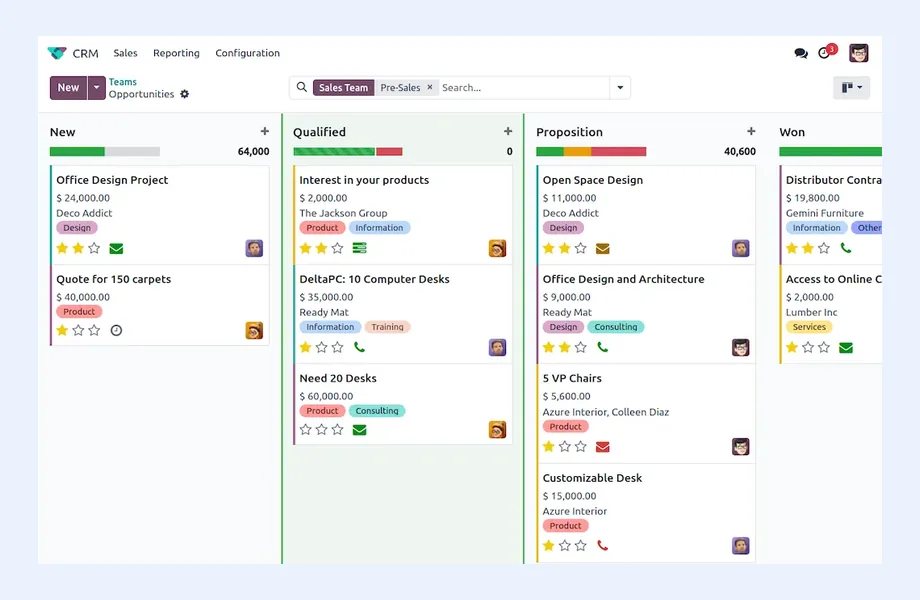
Point of Sale for showrooms, cafes or outlets connected to central purchasing and stock, with delivery platform orders and card settlements reconciled into the right company.

Requirements prepared before Kuwaiti or regional implementers quote, followed by a structured comparison of scope, custom development, migration effort and support commitments.
How I Work
Agree the group model
 Company and license register
Shared versus local masters
Intercompany transaction list
Owner reporting needs
Company and license register
Shared versus local masters
Intercompany transaction list
Owner reporting needs
Prove it on one company
Pilot company configuration
Fils rounding tests
Arabic print templates
Trial legacy data load
Add companies in waves
Next company onboarding
Intercompany go-live
Group report sign-off
Lessons fed into each wave
Odoo's multi-company feature lets several legal entities share one database while keeping separate journals, charts and documents. For a Kuwaiti group, that is the main attraction and the main risk. Badly drawn boundaries lead to users posting into the wrong company, shared products with conflicting costs, and consolidated reports that nobody trusts.
Before configuration I agree with the group finance manager and the owners:
This design work is where ERP solution design pays for itself. Changing entity structure after go-live in Odoo is possible but expensive and disruptive.
To my knowledge Kuwait still has no VAT, though that is worth reconfirming with your tax advisor before the design depends on it. The tax questions Kuwaiti groups do raise are about corporate income tax on foreign-owned interests, contributions that apply to some listed Kuwaiti companies, and rules that may affect members of large multinational groups. Odoo will not compute those obligations. What it can do is record transactions in an account and analytic structure your advisor can work from.
Whether Odoo ships a Kuwait fiscal package depends on the version you use, so check yours. If it does, look at what the chart of accounts and default taxes actually include before relying on them; if not, a generic chart is adapted with your accountant. For groups that also trade into GCC states with VAT, I configure fiscal positions so cross-border sales and purchases are taxed correctly in the entity that makes them.
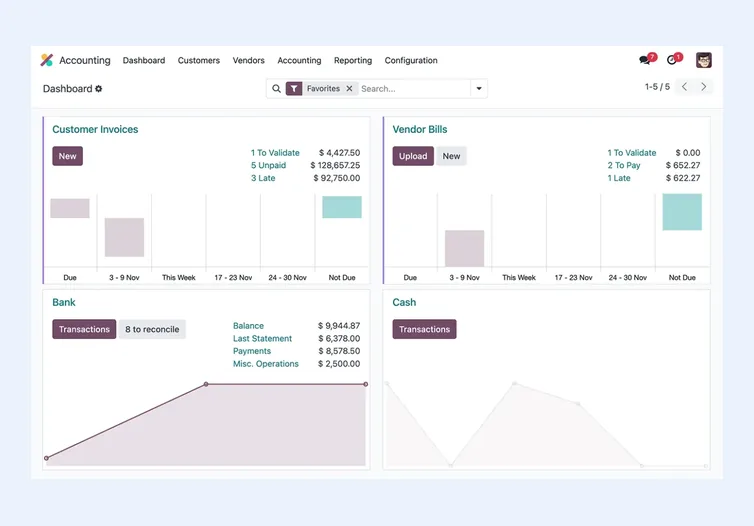
The Kuwaiti dinar is split into fils, which gives it one decimal place more than most currencies. Core Odoo respects currency precision, but I regularly find issues in product price precision, discounts, payment acquirers, bank statement imports and third-party modules built for two-decimal currencies. I run complete flows with real amounts, from quotation to reconciliation, before go-live. The finance side is described further on the Odoo Accounting page.
Ministries, cooperatives and large Kuwaiti customers frequently expect quotations, delivery notes and invoices in Arabic, often with English beside it. Odoo prints Arabic right-to-left, and a combined Arabic-English Gulf invoice format comes with certain releases. I have every template checked by a fluent reader, because product names, customer addresses and terms are where mixed-language layouts fail.
Hosting choices for a Kuwaiti group:
Enterprise brings Odoo's hosted services and many features that groups rely on, while Community keeps subscription spend low but leans on third-party modules for gaps. Which features fall on which side changes over time, so check it for the release you will run.
Kuwait has local Odoo implementers and many regional firms that serve it remotely. I work beside whichever you choose, writing requirements and reviewing proposals as described under ERP vendor selection.
Kuwaiti groups rarely move from a single system. A typical landscape might include a locally developed application for the trading company, an older on-premise ERP in contracting, a POS product in the outlets and spreadsheets for group consolidation. Some companies also run Tally or QuickBooks in smaller entities, or an early Odoo installation that a departed developer customized heavily.
That shapes the migration plan:
Where the trading company holds most of the stock, warehouse structure and valuation in Odoo Inventory are agreed before data moves. The ERP data migration page has the full method.
Odoo serves many Kuwaiti groups well, but I tell owners directly when I think it will not. The common cases:
In those situations I compare realistic alternatives with you rather than bending requirements to suit a product. For my wider Kuwaiti advisory work see the ERP consultant in Kuwait page and the Kuwait hub. For the platform in general, see the Odoo consulting page.

Tell me about your business and current systems. I’ll suggest the most sensible first step.
Book a Consultation
Not sure which ERP you need?
Share your business requirements with me and I will help you understand the right process, architecture and platform before implementation.
FAQ
Odoo supports many companies in one database with separate books and shared masters, plus intercompany rules for some transactions. Whether one database suits your group depends on how different the businesses are. I design the structure with your finance team and auditors before any configuration starts.
As far as I know Kuwait has no VAT in force, but check the current position with your advisor. You still need a clean tax setup if any company sells into GCC states that apply VAT, and an account structure that supports your corporate tax and other filings.
Core Odoo uses currency precision settings that can carry fils correctly. Problems tend to appear in price precision, discounts, payment providers, bank imports and third-party modules. I test complete document flows with real amounts before go-live so totals, tax lines and reconciliations agree.
No. My practice is independent: there is no partnership, reseller deal or Kuwaiti premises behind it. I work remotely, represent your group in decisions and in dealings with the implementer, and can attend key workshops in person by arrangement.
Every business is different. Share where you are today and what you want to fix, and I’ll tell you honestly whether and how I can help.
Book a Consultation
Insights
 Book a Consultation
Book a consultation to talk through your processes, systems and goals. I’ll reply with practical next steps - no obligation.