Contact Info

 Sweden
What does a B2B lead generation consultant for Sweden do?
A B2B lead generation consultant for Sweden designs how a company reaches and qualifies business buyers whose decisions are shared across a group. My remote work covers the ideal customer and buying group, public procurement and framework agreements, a mix of search, LinkedIn, email and events, outbound designed around Swedish marketing law and GDPR, and qualification in your CRM, measured by pipeline rather than promised lead volumes.
Last reviewed by Vikas Saroj
Selling to a Swedish company rarely means convincing one person. Decisions are anchored across a group, a process Swedes call förankring, and the people who sign often rely on colleagues who have read your material, compared you with others and checked your references. A lead that impresses one contact but leaves the rest of the group unconvinced stalls quietly.
Working remotely as an independent B2B lead generation consultant, I define who you should be reaching, design the mix of search, LinkedIn, email, content and tenders, set up qualification and handoff in your CRM and report on the pipeline those efforts produce.
The engagement runs in English. Swedish emails, ads and landing pages are drafted or reviewed by native speakers, whether colleagues of yours or a local partner.
 What I Do
The work starts with who decides and how they buy, then builds channels and follow-up around that, with the CRM as the single record.

A written profile of the companies worth pursuing and the roles involved in each decision, from the user who feels the problem to finance, IT and the person who finally signs.

A plan for municipalities, regions and agencies as buyers: monitoring procurements, deciding which to bid, and building the references and documentation that framework agreements tend to require.

A reasoned split between organic search, Google Ads, LinkedIn, email, webinars and events, based on where your buyers research and how much each channel costs to run properly.

Outbound sequences designed around Swedish marketing law and GDPR, separating company addresses from individuals and sole traders, with opt-out handling and a documented legitimate interest assessment.

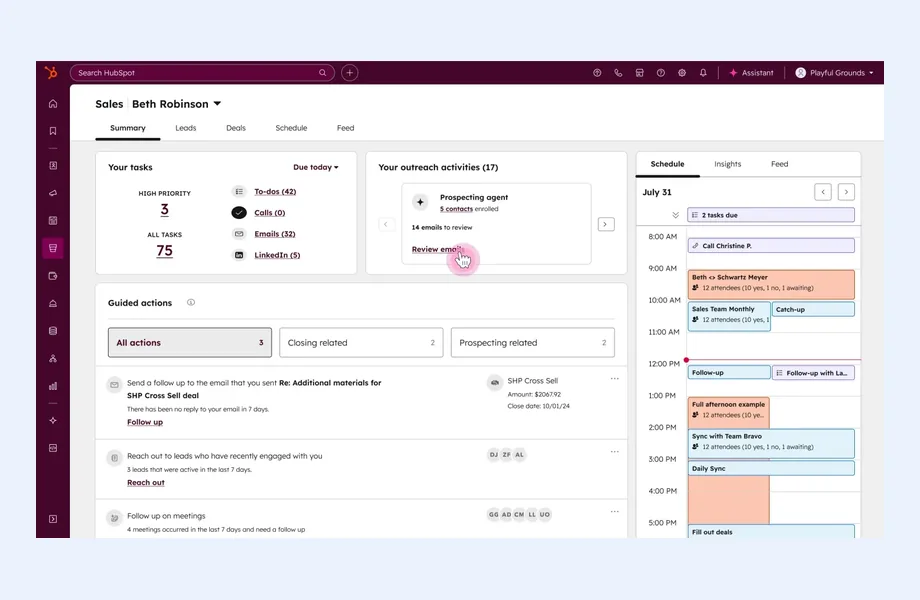
Shared definitions of a marketing lead and a sales-accepted lead, scoring that combines fit and engagement, and routing rules in the CRM so each lead reaches an owner with its history.

Email and content sequences for buyers who are not ready yet, and reports showing which sources create opportunities and won deals rather than downloads or followers.
How I Work
Agree who to reach and why
 Interviews with sales and founders
Won and lost deal review
Buying group and triggers
Lead definitions signed off
Interviews with sales and founders
Won and lost deal review
Buying group and triggers
Lead definitions signed off
Channels, content and CRM rules
Channel plan and calendar
Swedish offers and landing pages
Outbound rules documented
Scoring and routing configured
Measure, learn and adjust
Monthly pipeline review
Disqualification reasons analyzed
Nurture content refreshed
Budget moved toward results
Swedish organizations tend to be flat, and that changes how B2B lead generation should be designed. A department head may own the budget, but she will want her team, IT and often a controller to agree before committing. The evaluation can take months, and much of it happens without your sales team in the room.
I start by mapping the buying group for your typical deal with the people who sell and deliver it:
Each role needs something different from your marketing. The searcher needs to find you; the colleagues need material they can share internally in Swedish; the specialists need straight answers on data handling, hosting and terms; the signer needs a summary that makes the decision easy to defend.
I also look at the triggers that start a purchase in your market, such as a new manager, a merger, a system that is being retired, a regulatory change or a growth phase. Lead generation then aims at companies showing those signals rather than at every company of the right size. My B2B lead generation page covers the broader approach.
Swedish municipalities, regions and government agencies buy a great deal from private suppliers, and they do it through formal procurement under public procurement law. For many B2B companies this is a lead channel in its own right, with different rules from private sales.
Much of this buying runs through framework agreements, known as ramavtal. Once a framework is awarded, buyers call off from the suppliers on it, often for years, and companies outside it may have few chances to win that business until the next round. That makes timing and preparation important:
Public buyers also tend to expect electronic invoices, which the Sweden overview touches on. The procurement rules themselves are complex and change, so your legal advisor should confirm how they apply. My part is to make the public channel a planned, measured source of opportunities in the CRM, alongside the private market.
No single channel covers a Swedish buying group. I choose the mix based on where each role does its research and what your team can sustain:
Content ties these together: practical guides, method descriptions and short, factual case descriptions a buyer can forward to colleagues. I prefer fewer, deeper pieces in good Swedish over a high volume of thin posts. Each channel gets its own tracking parameters so its contribution can be seen in the CRM.
Outbound prospecting is possible in Sweden, but it has to be designed carefully. Swedish marketing law generally distinguishes between marketing emails sent to individuals and those sent to legal persons such as companies. Messages to individuals usually need prior consent, while messages to a company can generally be sent if the recipient can easily opt out. Sole traders may be treated as individuals. The details matter, and your legal advisor should confirm how they apply to your lists and messages.
GDPR applies whenever a named person's data is involved, including a work email address. For B2B outreach this usually means relying on legitimate interest, documenting that assessment, telling recipients where their data came from and honoring objections promptly. Sweden's tradition of public access to official records makes some company information easy to find, but that does not by itself make every use of it lawful.
In practice I design outbound around a few rules:
I am not a lawyer. I design the process so that compliance decisions are visible and easy for your advisor to check.
Lead generation fails most often at the handoff. Marketing counts form fills, sales says the leads are poor, and nobody agrees what a good lead is. I fix that first by writing down, with sales, what a qualified lead looks like for your business: company type and size, role, a real need, a plausible timeline and whether the buying group is known.
Those definitions become fields, scores and stages in your CRM:
Leads that are interesting but not ready go into nurture sequences by role or industry, written in Swedish by native speakers, rather than being dropped. Consent and opt-out status are respected in every sequence.
Reporting follows the pipeline rather than vanity metrics: sales-accepted leads, opportunities, deal value and won business by source, plus the time each stage takes. Routing between marketing, SDRs and account executives is covered on my CRM page for Sweden, and the wider systems picture sits on the ERP consultant page for Sweden. Contact me if you would like a review of your current lead flow.

Tell me about your business and current systems. I’ll suggest the most sensible first step.
Book a Consultation
Not sure which ERP you need?
Share your business requirements with me and I will help you understand the right process, architecture and platform before implementation.
FAQ
Often yes, to companies, with care. Swedish rules generally treat marketing emails to legal persons differently from those to individuals, and sole traders may count as individuals. GDPR still applies to named contacts, so a legitimate interest assessment, a clear source and a simple opt-out are needed. Your legal advisor should confirm the approach before any campaign starts.
It can be, if your offer fits the categories buyers procure and you can supply the references and documents they ask for. The effort is front-loaded and framework agreements can lock out suppliers for long periods, so I help you decide which procurements to pursue and track them as a separate channel in the CRM.
Mostly Swedish for material aimed at Swedish buying groups, especially anything colleagues will share internally, with English where your buyers are international or the topic is usually discussed in English. The engagement runs in English, and the Swedish text is written or checked by native speakers on your side or a local partner.
By what happens in the CRM after the lead arrives: how many are accepted by sales, how many become opportunities, the value of those opportunities and what is won, all by source. Clicks, downloads and followers are tracked but treated as early signals. I do not promise lead volumes, because markets and offers differ too much.
Every business is different. Share where you are today and what you want to fix, and I’ll tell you honestly whether and how I can help.
Book a Consultation
Insights
 Book a Consultation
Book a consultation to talk through your processes, systems and goals. I’ll reply with practical next steps - no obligation.