Contact Info

 Bahrain
How should a Bahrain-based B2B seller generate qualified leads?
B2B lead generation for a Bahrain company means finding and qualifying buyers who often sit in Saudi Arabia or elsewhere in the Gulf, not only on the island. I define the ideal customer and buying committee, combine search, LinkedIn, outreach, events and referrals, set qualification rules and the handoff into your CRM, and measure pipeline by market. Work is remote, outreach follows rules your advisor confirms, and no lead volume is promised.
Last reviewed by Vikas Saroj
A Bahrain company selling to other businesses rarely has enough buyers at home to grow on. The bank offering treasury services, the logistics firm moving cargo over the causeway, the software house, the industrial supplier and the advisory practice all end up chasing accounts in Saudi Arabia, Kuwait, Qatar or the UAE, where buyers have more choice and longer approval chains.
As an independent consultant, I design the lead generation process remotely: who you should be talking to, which channels reach them, what counts as a qualified lead and how it reaches the right salesperson in your CRM. I build the parts that need building and leave behind definitions and reports your sales staff can run without me.
Work happens in English. Arabic outreach messages and nurture emails are drafted by your own Arabic-writing staff or a partner, with my briefs as the starting point.
 What I Do
Each piece is designed for a seller whose best prospects may be a short drive or a short flight away, in a different country with different rules.

A written profile of the companies and roles worth pursuing in Bahrain, Saudi Arabia and the rest of the Gulf, built from your won and lost deals rather than assumptions, with approvers named for each segment.

Target accounts split by market and segment, with ownership agreed among salespeople, so whoever covers the Eastern Province is not unknowingly emailing the same procurement head as a colleague in Manama.

A plan that gives search, LinkedIn, outreach, events and referrals each a defined job, starting with the channels nearest to buyers who are already looking and adding broader awareness once follow-up works.

A CRM view of public tenders, private requests for proposal and vendor registration steps with large buyers, so bid dates, documents and outcomes sit in one place beside ordinary opportunities.

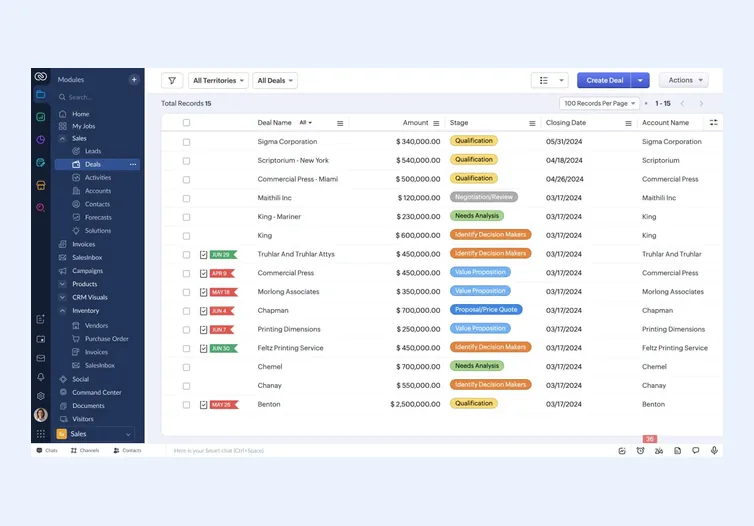
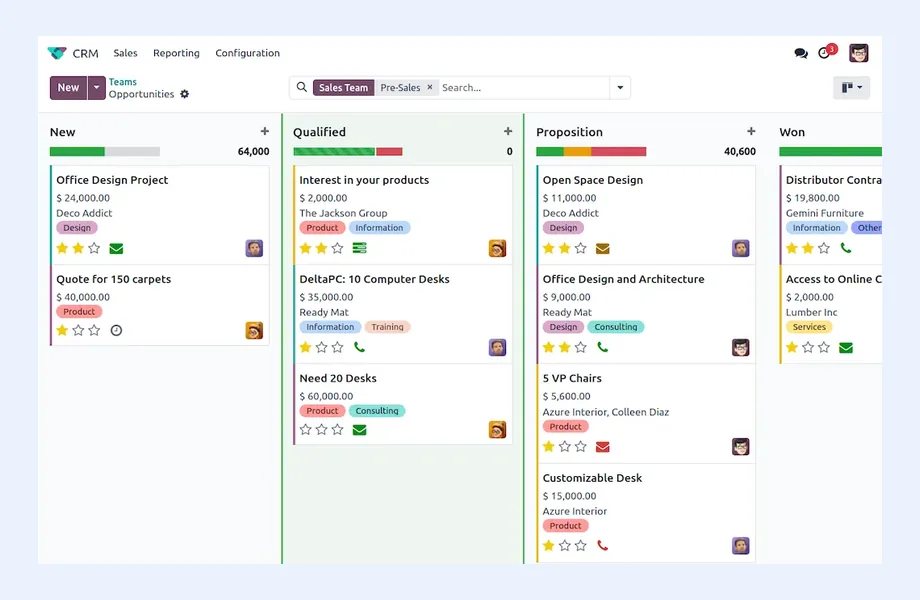
Lifecycle stages, qualifying questions and routing rules agreed with sales, plus a response standard for new inquiries, configured in the CRM so no lead depends on someone remembering to forward an email.

Follow-up sequences that keep slower buyers informed, plus reports showing qualified leads, opportunities and won business by country, channel and segment rather than raw form counts.
How I Work
Agree who is worth reaching
 Won and lost deal review
Buying committee by segment
Market priority by country
Qualified lead definition
Won and lost deal review
Buying committee by segment
Market priority by country
Qualified lead definition
Channels, rules and CRM setup
Account lists and ownership
LinkedIn and search campaigns
Outreach sequences and consent fields
Routing and response standards
Measure what reaches sales
Pipeline by country
Source of won deals
Disqualification reasons
Channel budget decisions
Lead generation goes wrong fastest when nobody has written down who the buyer is. For a Bahrain seller, the answer usually splits into several groups that behave differently. A family-owned Gulf group may let a general manager run the evaluation while a family member gives the final word. A multinational's regional office may shortlist suppliers locally but need procurement or legal sign-off from Dubai, Riyadh or further away. A government or semi-government entity buys through a formal process with a committee. A bank or insurer will put any new supplier through compliance and information security review before a contract is drafted.
I start from your closed deals, won and lost, and the people involved in each. From that I map a buying committee for every segment you sell to:
Each role needs something different from you, and that list shapes everything that follows: which job titles go into LinkedIn audiences, which questions your content must answer, and which documents sales should have ready before procurement asks for them.
Business buying in the Gulf still leans heavily on relationships. A recommendation from someone the buyer trusts, a familiar face from an exhibition or an earlier project, or an introduction through a mutual contact often opens the door. Lead generation for a Bahrain firm therefore supports those relationships rather than trying to replace them.
Several routes run side by side. Large buyers often require vendor registration or prequalification before they will accept a quote, which means a lead can be real but blocked until documents are approved. Public bodies publish tenders through official systems with fixed procedures. Regional exhibitions and conferences produce stacks of business cards and badge scans that are only valuable if someone follows up within days. Search and LinkedIn are where buyers check a supplier after hearing the name, and increasingly where they start when they have no recommendation at all; AI assistants are joining that research step too.
In practice I design a path for each route. Event contacts are entered into the CRM with the event as the source and a follow-up task assigned before the stand is packed. Referral introductions get their own source so you can see which partners send good business. Tender opportunities follow a bid process with go or no-go criteria. Website and campaign inquiries go through the same qualification as everything else, so management can compare routes fairly.
Each channel earns its place by doing a specific job. Paid and organic search catch buyers who are already describing their need; for a Bahrain firm that often means queries in English from Saudi or Gulf companies looking for a regional provider. The Google Ads page for Bahrain covers the paid side, and B2B SEO covers pages that answer evaluation questions.
LinkedIn reaches committees defined by role, seniority and company. Audiences built only inside Bahrain are small, so campaigns for most sellers combine Gulf markets and lean on account lists rather than broad filters. My LinkedIn Ads management page explains how targeting and lead forms are handled.
Outreach, by email or LinkedIn message, works when the list is short and the message is specific: a named problem the account is likely to have, a relevant capability and a modest next step. Sequences stop as soon as someone replies or opts out. Content gives all three channels something to point to, such as a capability statement, a clear explanation of how you work with Saudi clients from Bahrain, or a guide to a regulatory change that affects the buyer's sector. Claims in that content must be ones you can support, with real examples only where clients have agreed to be named.
Contacting business prospects in several countries means more than one set of rules. Bahrain has its own personal data protection law. Saudi Arabia and the UAE have their own, and a prospect who works for a European parent company may fall under GDPR and related electronic marketing rules. What each law requires for cold email, LinkedIn messages or phone calls to business contacts should be confirmed by your legal advisor, and the answer may differ by country and by channel.
My job is to build the process so it can follow that advice consistently:
Respecting these limits also protects deliverability. Domains that send unwanted email get filtered, and once that happens even replies to existing customers can land in spam. A smaller, cleaner list usually serves a Bahrain seller better than a large one of uncertain origin.
Leads lose value quickly when ownership is unclear. Sales and I settle what makes a lead qualified, for example a real need, a buyer within your target segments, a plausible budget owner and a timeframe, and turn those criteria into CRM stages and a few required fields. Routing rules then assign each lead by country, segment or product line, with an alert and a response standard so the first reply does not depend on who happens to check the inbox. How the CRM itself is organized is covered on my CRM consultant page for Bahrain.
Not every qualified contact is ready to talk. Nurture sequences keep in touch with useful material, timed around the buyer's stage rather than a fixed newsletter, and return the lead to sales when engagement or a direct reply shows the timing has changed.
Reporting focuses on pipeline rather than activity. I set up views that show qualified leads, opportunities and won business by country and original source, the reasons leads are disqualified, and how sales cycles differ between Bahrain, Saudi and other Gulf buyers. Those views decide where effort and budget go next. I do not promise a number of leads; the reports exist so you can see what each channel actually contributes. For systems questions behind all this, see the ERP consultant page for Bahrain or the Bahrain overview.

Tell me about your business and current systems. I’ll suggest the most sensible first step.
Book a Consultation
Not sure which ERP you need?
Share your business requirements with me and I will help you understand the right process, architecture and platform before implementation.
FAQ
Often, when your buyers are defined by role and company and deal values justify the cost per click. Because audiences inside Bahrain alone are small, campaigns usually combine Gulf markets and focus on named target accounts. If your buyers mostly search for what they need, search may deserve the budget first, with LinkedIn added once follow-up and tracking work.
It depends on your capacity to bid and how your margins compare. Tenders follow fixed procedures and can absorb a lot of preparation time; private buyers move on relationships and need consistent follow-up. I set both up as separate pipelines in the CRM with their own stages, so you can compare effort, win rate and sales cycle before shifting focus.
That is a legal question for your advisor, because Saudi and Bahraini data protection rules both need to be considered, along with any other country your prospects work in. Once the rules are confirmed, I build the process around them: recorded sources, a basis for contact, working opt-outs across channels and short, relevant sequences.
Through a planned route rather than a stack of cards. Before the event, we set up a capture method, a source value for that event and a follow-up task for each contact. Leads are qualified the same way as any other inquiry, and the report afterwards shows which events produced opportunities, not just conversations.
I cannot promise a number. Results depend on your offer, market, competitors, sales capacity and how quickly leads are followed up. What I commit to is a sound process and honest measurement, so that you can see which channels produce qualified opportunities in each country and decide where to invest further.
Every business is different. Share where you are today and what you want to fix, and I’ll tell you honestly whether and how I can help.
Book a Consultation
Insights
 Book a Consultation
Book a consultation to talk through your processes, systems and goals. I’ll reply with practical next steps - no obligation.