Contact Info

 B2B Leads Philippines
How does B2B lead generation work for Philippine companies?
B2B lead generation for Philippine companies means building a dependable flow of business buyers, whether local corporates and distributors or overseas clients of outsourcing firms. I define target accounts and decision-makers, plan the mix of search, LinkedIn, events, referrals and email, keep outreach within the Data Privacy Act and the rules of target countries, and route qualified leads into your CRM. Remote work, no promised lead numbers.
Last reviewed by Vikas Saroj
Philippine B2B companies tend to sell in one of two directions. Some sell inward, to conglomerates, retailers, developers, hospitals and government agencies, where getting accredited as a supplier and keeping relationships warm decides who wins. Others sell outward, like outsourcing and IT services firms competing for clients in the United States, Australia or Europe who may never visit the country.
I help both kinds of company design a lead generation process that fits how their buyers decide: target accounts, channels, outreach that respects privacy rules, qualification and a clean handoff into the CRM. I advise from outside the country with no vendor ties, in English, and count success in deals sales is actively working, never in list size.
 What I Do
Each service is designed to give your sales team fewer dead ends and more real conversations.

We agree which industries, company sizes, regions or overseas markets to pursue, the triggers that start a purchase and the signs that a lead will waste sales time.

For corporate and institutional buyers, I map the path from introduction to accredited supplier, including documents, presentations and approvals, so sales can track every step.

For outsourcing and services firms, a plan for reaching foreign buyers through search, LinkedIn, content, partners and outreach, with time zones and target-country rules built in.

Email and LinkedIn sequences with recorded contact sources, relevant messages and easy opt-outs, reviewed against the Data Privacy Act and any foreign rules that apply.

A short qualification step, scoring on fit and intent, and routing by product, region or account owner, with reminders when follow-up slips.

Useful follow-up for buyers not yet ready, and reports showing accepted leads, accreditations, proposals and won deals by source.
How I Work
Buyers, routes and definitions
 Ideal customer workshop
Decision-maker mapping
Lead source review
Qualified lead definition
Ideal customer workshop
Decision-maker mapping
Lead source review
Qualified lead definition
Routes to market and handoff
Inward and outward channel plans
Outreach and privacy rules
Accreditation tracking
CRM routing and reminders
Learn from pipeline data
Sales and marketing reviews
Disqualification analysis
Nurture updates
Effort shifted to proven sources
The first question is simple: are you selling to Philippine organizations, to foreign ones, or both? Companies selling within the Philippines face buyers who value relationships, referrals and proven reliability, and large organizations that require suppliers to be accredited before a purchase order can be issued. Companies selling outward, especially in outsourcing, IT services, creative and engineering support, face foreign buyers comparing them with providers in India, Latin America, Eastern Europe and their own country.
For each direction I work with your team to define:
Many firms sell in both directions at once. A Manila-based IT services company might pursue local banks and overseas software companies in parallel. In that case each direction gets its own targeting, messaging and measurement, because mixing them blurs what is working.
These definitions drive every later decision, from LinkedIn audiences to event choices.
The routes buyers use depend on who they are:
I review how existing clients first reached you before suggesting new spend, so the plan reinforces routes with a track record before testing new ones.
Reaching out to prospects who have not contacted you first is normal in B2B selling, yet it carries obligations. Philippine privacy law, with the National Privacy Commission as regulator, expects a lawful basis, a clear purpose and respect for each person's rights over their information. Whether and how that covers a work email or mobile number in your campaigns is for your privacy officer or lawyer to settle.
Outbound to overseas buyers adds the target country's rules. Commercial email to the United States falls under federal anti-spam law, Australia has its own spam legislation, Canada's anti-spam law is consent-based, and European buyers fall under GDPR and related electronic privacy rules. Each sets different expectations for consent, identification and opt-out, and your advisor should confirm what applies.
The outreach programs I put together therefore:
Restraint like this keeps your sending domain healthy and your name respected, which matter even more for outsourcing firms whose clients judge them on professionalism from the first message.
Leads in Philippine companies often travel through personal channels: a salesperson's Viber, a Messenger thread on the company page, a business card from an event. When that happens, managers cannot see the pipeline, and leads leave with staff who move on.
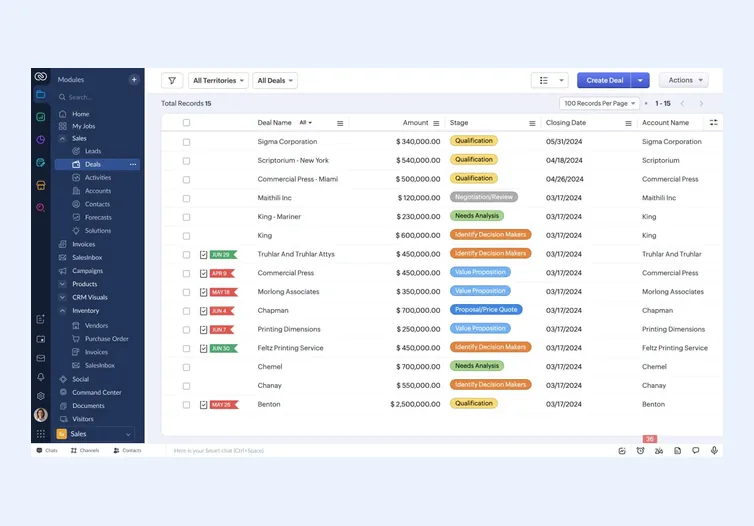
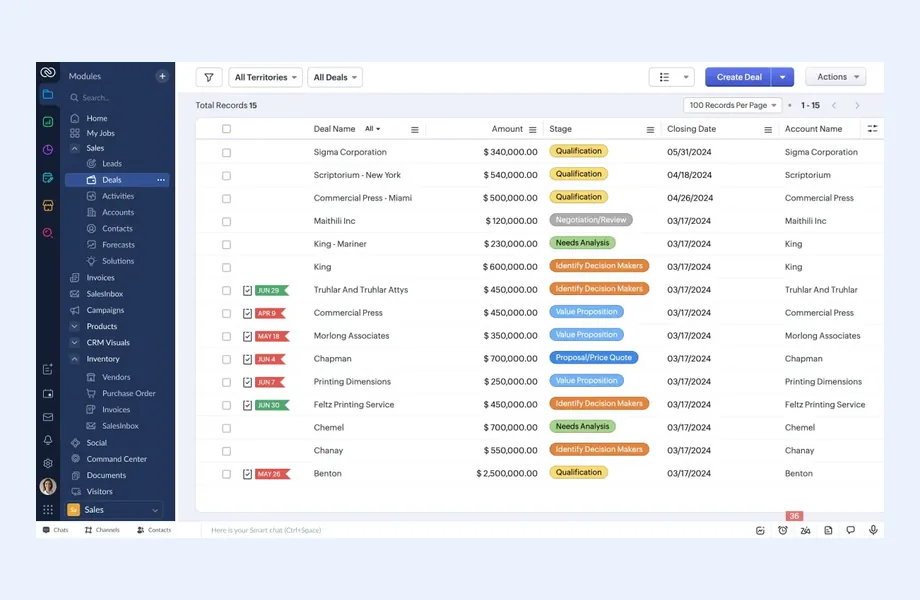
I design the path into the CRM with your sales team:
For corporate buyers, the CRM should also track accreditation as a sequence: introduction, documents submitted, presentation, accreditation approved, first purchase order. That turns a slow, opaque process into a visible one.
Deal stages and record design belong to my Philippine CRM consulting work. For paid search inside this mix, see Google Ads in the Philippines, and for LinkedIn, LinkedIn Ads management.
Activity numbers such as event visitors, page likes, LinkedIn connections and email opens are easy to report and say little about revenue. Owners and sales heads get reports built on commercial checkpoints instead:
For overseas client acquisition, I also separate results by target country, since a channel that works for Australian buyers may not work for American ones.
None of this works unless the origin of a lead is stamped on arrival and carried through to signature. I configure that stamping, the naming rules and the dashboards, and sit in on recurring reviews where sales and marketing read them together.
No lead count is ever promised; your sector, your offer, how many sellers you have and how fast they reply decide that. What changes is that you can finally see which effort pays. The general approach is on the B2B lead generation page, and my wider remote work for Philippine firms is gathered on the Philippines hub.

Tell me about your business and current systems. I’ll suggest the most sensible first step.
Book a Consultation
Not sure which ERP you need?
Share your business requirements with me and I will help you understand the right process, architecture and platform before implementation.
FAQ
Usually through a mix of search visibility for the services foreign buyers look for, LinkedIn targeting of decision-makers, partnerships with advisors in target countries and careful outreach. Each target country is tracked separately. The engagement covers strategy, tracking and CRM handoff, with outreach designed around both Philippine and foreign privacy rules.
Accreditation usually starts with an introduction or invitation, followed by documents, presentations and internal approvals. I help you identify target accounts and the people involved, prepare sales to provide what is needed, and track each step in the CRM so a stalled accreditation is spotted early.
Unsolicited business email is widespread, but Philippine privacy law still applies to the personal data involved, and emailing buyers abroad brings in their country's rules too. Have your privacy officer or lawyer confirm what is allowed. My outreach designs keep a source for every contact, stay specific to the recipient and make unsubscribing effortless.
Yes, with some discipline. Depending on your tools, chats can flow into the CRM through integrations or a shared inbox, or salespeople log new conversations with their source. Otherwise managers never see those deals, and they walk out the door with any salesperson who resigns.
No. Too much sits outside anyone's control, from your market to your follow-up speed. What I set up instead shows qualified leads, accreditations, proposals and won deals by source, so you can see which channels earn their cost and shift effort toward them.
Every business is different. Share where you are today and what you want to fix, and I’ll tell you honestly whether and how I can help.
Book a Consultation
Insights
 Book a Consultation
Book a consultation to talk through your processes, systems and goals. I’ll reply with practical next steps - no obligation.