Contact Info
 Odoo Inventory in Nigeria
What does an Odoo Inventory consultant set up for a Nigerian distributor?
An Odoo Inventory consultant in Nigeria designs the warehouse structure behind a factory, central store and regional depots: resupply routes, stock in transit on trucks, expiry-first picking for food and drinks, returns of damaged goods from the trade, landed costs on dollar imports and a scanning fallback for power or network failures. I deliver this remotely as an independent consultant, with no stake in licenses or implementers.
Last reviewed by Vikas Saroj
For Nigerian FMCG, beverage and food businesses, inventory problems tend to appear between locations rather than inside them. Trucks take days to reach a depot, goods arrive short or damaged, distributors return expired cartons, and no one is sure whether the missing stock is on the road, at the depot or written off.
Odoo Inventory can model every one of those situations with locations, routes and operation types. As a remote, freelance Odoo consultant, I design that model with your operations and finance leads, write it down for your implementer, and test it with your own movements before the first depot goes live.
 What I Do
These are the inventory design decisions that decide whether Odoo stock figures match the depots in a Nigerian distribution network.

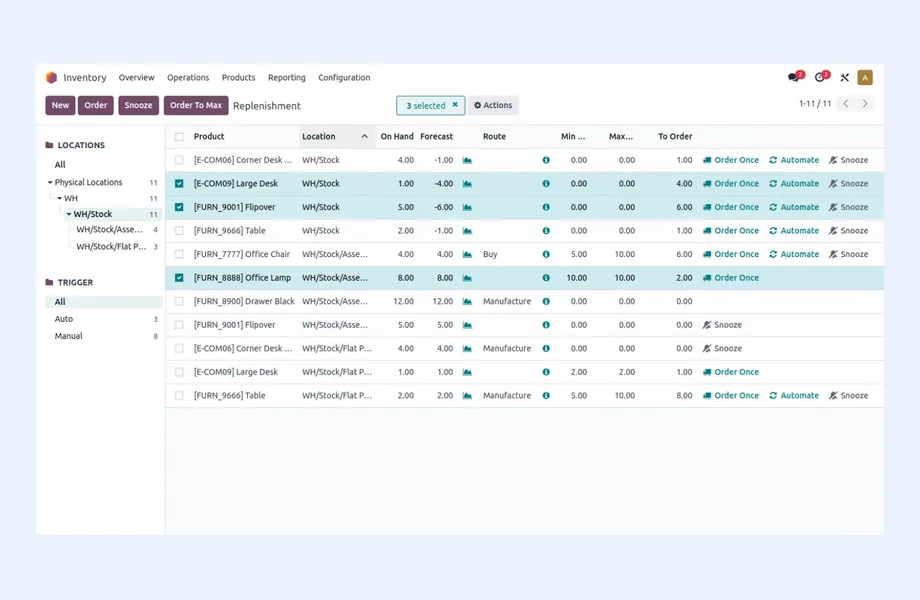
Factory store, central warehouse and depots set up as Odoo warehouses with resupply routes, so replenishment requests flow from depot demand rather than phone calls to the head office.

Transit locations for goods on trucks, receipt steps that record shortages and damages on arrival, and a documented route for investigating the difference before it becomes a write-off.

Lot and expiry tracking for food and beverage lines, removal strategies that pick the earliest expiry first, and alerts for stock approaching its date at any depot.

Return operations for distributors and retailers, with separate locations for resaleable, damaged and expired goods, a reason code on every return and a clear rule for credit notes in Accounting.

Freight, clearing, duty and port charges on imported inputs and finished goods allocated to receipts, with the edition and version confirmed before the costing method depends on it.

A tested fallback for receiving and dispatching when power or the network fails, and a routine to enter and reconcile those movements once Odoo is reachable again.
How I Work
Every movement from factory to customer
 Locations and depots listed
Transfer and transit times noted
Return reasons collected
Import cost lines gathered
Locations and depots listed
Transfer and transit times noted
Return reasons collected
Import cost lines gathered
Routes, rules and valuation agreed
Warehouses and resupply routes
Lot and expiry policy
Return locations defined
Valuation per product category
Prove it with real movements
Depot transfer with shortage
Expired return processed
Landed cost posted and checked
Outage fallback drill run
A typical Nigerian distribution setup has a production site or import warehouse feeding a central store, which resupplies depots in other states, which in turn serve distributors and key accounts. In Odoo Inventory, each of those sites can be its own warehouse with its own stock locations, and resupply routes define which warehouse refills which.
The design choices I settle with your operations team:
Odoo also supports multi-company stock where depots belong to a separate legal entity, with intercompany rules creating the matching documents. Whether that structure is right is a decision for your accountant. The global Odoo Inventory page explains routes and steps in general terms.
Food, beverage and household products sold through Nigerian distributors carry expiry dates, and the cost of a recall or a pile of expired stock at a depot is real. Odoo Inventory supports lot numbers and expiry dates on products set for tracking, with removal strategies that propose the earliest expiry first when a picker prepares an order.
Returns are where the setup is usually thinnest. Distributors and retailers send back goods for many reasons: damaged in transit, near expiry, wrong product, unsold promotional stock. Each reason needs a different outcome. I design return operations that route goods into separate locations:
Each return also needs a commercial outcome, usually a credit note or replacement, which Odoo can link to the original order. The credit policy is your sales director's decision; the system records it consistently. Scrap and destruction then post through stock valuation, so finance sees the cost of returns by reason and by customer. My inventory and warehousing page covers return design more generally.
Many Nigerian businesses import raw materials, packaging or finished goods paid in dollars, then sell in naira. The cost of a received item is more than the supplier invoice: freight, insurance, port charges, clearing agent fees and duty all belong in the product cost if margins are to mean anything.
Odoo can allocate these extra costs to receipts through landed costs, splitting them by quantity, weight, volume or value. Whether it behaves the way your finance team expects depends on the edition and release, so I try it in a test database before the costing approach leans on it. With your accountant, I settle:
How duty and import charges are treated for tax remains your advisor's call. Revaluation and the exchange rate trail sit with Odoo Accounting in Nigeria.
Odoo's Barcode app, which is an Enterprise feature, lets warehouse staff receive, pick, pack and count with scanners or phones. It works in a browser and needs a connection to the database. In a Nigerian depot, that connection depends on grid or generator power, the local network and the internet link, and any of them can fail during a dispatch.
The hosting choice changes what fails. A server on the warehouse network keeps scanning running through an internet cut, provided the server and network stay powered. A cloud database survives a local power cut on the server side but stops scanning the moment the depot loses its link. I compare these with your IT lead and write the result into the go-live plan.
Whatever the hosting, each depot needs a fallback procedure:
We rehearse the fallback before go-live so it is a routine, not an improvisation. The Odoo in Nigeria page discusses hosting options in more depth.
Odoo Inventory produces delivery slips and transfer documents, while VAT appears on the customer invoice created by Sales and Accounting. That split matters in Nigeria because distributors may expect specific information on a waybill or delivery note, and the tax treatment on the invoice depends on the product and customer.
Here is what I check, and with whom:
Where the localization lacks something, the gap is closed by configuration first, then a maintained module, then custom work. Third-party logistics providers and dropship from manufacturers can also be modeled as routes; I agree how their stock reports reconcile with Odoo. Broader context is on my ERP consultant Nigeria page and the Nigeria overview.

Tell me about your business and current systems. I’ll suggest the most sensible first step.
Book a Consultation
Not sure which ERP you need?
Share your business requirements with me and I will help you understand the right process, architecture and platform before implementation.
FAQ
Yes, if the design includes a transit location for each route. Goods dispatched from the central warehouse move into transit and stay there until the depot receives them, recording any shortage or damage. Stock on the road is then visible and valued, rather than missing from both sites.
Odoo supports lot and expiry tracking with removal strategies that propose the earliest expiry first when an order is picked. It needs products set for tracking, expiry dates captured on receipt and pickers following the proposed lots. I test the setup with real lots before go-live.
The Barcode app needs a connection to the database, so a power or network failure stops it. A server on the warehouse network survives internet cuts but not power loss. I write and rehearse a fallback using printed pick lists and numbered dispatch notes, with catch-up entry afterward.
The core Inventory app is in Community, including warehouses, routes and lot tracking. Barcode scanning and some advanced features are Enterprise, and landed costs depend on edition and version. Confirm the current split with Odoo or your partner for the version you plan to run.
The work is delivered remotely. Your operations lead and I walk through each site's flow over video, using photos, layouts and sample documents. A visit can be considered by arrangement, but most of the design and testing works without one.
Every business is different. Share where you are today and what you want to fix, and I’ll tell you honestly whether and how I can help.
Book a Consultation
Insights
 Book a Consultation
Book a consultation to talk through your processes, systems and goals. I’ll reply with practical next steps - no obligation.