Contact Info

 Odoo in Nigeria
How does an Odoo consultant help a company in Nigeria?
For a Nigerian business, an Odoo consultant decides between Community and Enterprise, picks a hosting model that copes with unstable power and connectivity, configures VAT and withholding tax with the accountant, records dollar imports at an agreed naira rate and sets up stock across plants and depots. I advise as a freelance consultant with no reseller interest, and the whole engagement is delivered remotely.
Last reviewed by Vikas Saroj
Odoo attracts Nigerian companies that have outgrown an accounting package because one platform can run purchasing, production, warehouses, sales and finance. The open-source core also appeals to owners wary of foreign currency subscriptions. Those same strengths raise early decisions that are hard to reverse: which edition, where the database runs, and how much custom code the business is willing to maintain.
My role is that of a freelance Odoo consultant working remotely. I help Nigerian teams settle those questions on evidence, write the requirements an implementer will build against, and stay on the client side through testing, cutover and the first weeks of live use, when most of the practical problems surface.
 What I Do
These services focus on the Odoo decisions that cost Nigerian companies the most when they are made casually.

I compare what Community and Enterprise give your business in accounting, manufacturing, barcode and reporting, and what you would rely on third-party modules for, so the subscription question is answered on facts.

Odoo Online, Odoo.sh, an international cloud or a server you run yourself, compared on uptime during local outages, backups, upgrades and who can restore the database when something fails.

I check whether a Nigerian localization package exists for your version, then build or verify the chart of accounts, VAT taxes and withholding rules with your accountant before any transaction is posted.

Dollar purchase orders, freight, clearing and port charges brought into product cost at the agreed rate, so margins on imported raw materials and finished goods are believable in naira.

Bills of materials, work orders, scrap, quality checks and by-products configured around how your plant really runs, with Odoo Manufacturing features matched to the edition you choose.

I read Odoo implementation quotes line by line: custom modules, migration effort, upgrade responsibility and support hours, so you understand what each partner is really committing to deliver.
How I Work
Edition, hosting and scope agreed
 Process walkthroughs per department
Edition and module fit list
Hosting and backup choice
Tax scenarios signed by accountant
Process walkthroughs per department
Edition and module fit list
Hosting and backup choice
Tax scenarios signed by accountant
Configure and rehearse in staging
Fiscal settings and taxes
Warehouses, routes and BOMs
Rate and landed cost rules
Two trial data migrations
Go live and steady the operation
Cutover with stock count
First month-end close review
Outage fallback procedure tested
Upgrade and support plan
Odoo Community is free to use and Enterprise is a per-user subscription, and Nigerian owners naturally ask whether Community is enough. Sometimes it is, but the gap matters more than many demos suggest. The full Accounting application, the barcode app, Studio and several manufacturing extras such as quality and maintenance are Enterprise features. Community users fill these gaps with third-party modules, which then have to be maintained through every upgrade by whoever wrote them.
I approach the decision as a list, not a debate:
Localization is part of the same check. Look at whether a Nigerian fiscal localization exists for the version you plan to use, and what it actually includes. If it is thin or missing, the chart of accounts and tax setup are built manually with your accountant. My global Odoo consulting page explains the editions in more general terms.
Where an Odoo database lives is a bigger decision in Nigeria than in markets with steady grid power. A server in the office depends on generators, inverters and someone being present to restart it. A cloud deployment depends on the link from each site. Neither is wrong, but each needs a plan.
The options I compare with clients:
For each, I ask what happens to a depot dispatch or a production run when the connection drops, how quickly backups can be restored and who does it. Odoo's mobile and barcode screens still need a connection, so a written fallback procedure for outages is part of go-live. Data location is also reviewed against Nigeria's data protection rules with your legal advisor.
Odoo calculates VAT through tax records attached to products, customers and fiscal positions. Withholding is less standard: depending on version and localization it may be handled with dedicated withholding taxes, negative tax lines on payments, or a module. I agree the approach with your accountant and test it on real cases, including customers who pay net of tax and send the supporting credit note later.
The federal tax authority has also been phasing in electronic invoicing. I ask your implementer or Odoo directly how invoices would reach the national system for your version and edition, whether a connector exists or has to be built, and who maintains it. Until that is demonstrated, the safe step is clean data: customer tax identification numbers, consistent invoice sequences and credit notes linked to the invoice they reverse. Scope and timing for your company are for your tax advisor to confirm.
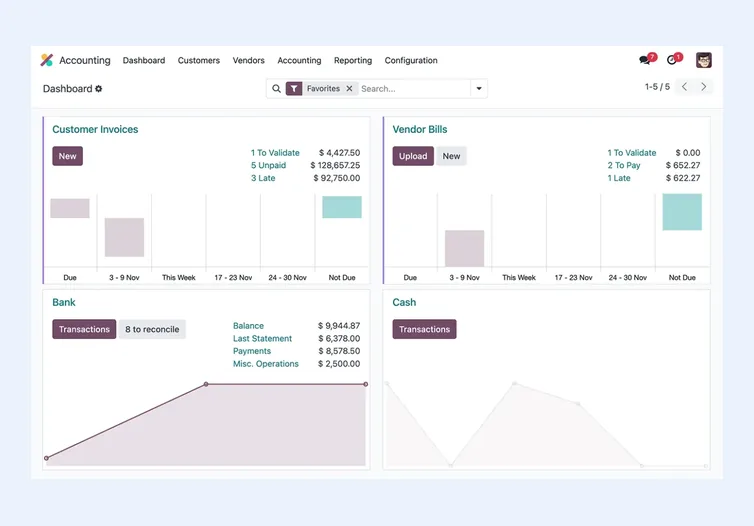
Currency gets the same discipline. Odoo stores a rate per currency per day and can pull rates from a provider or accept manual entries. I set which source is authoritative, who can change it and how month-end revaluation is posted. See Odoo Accounting for the broader finance design.
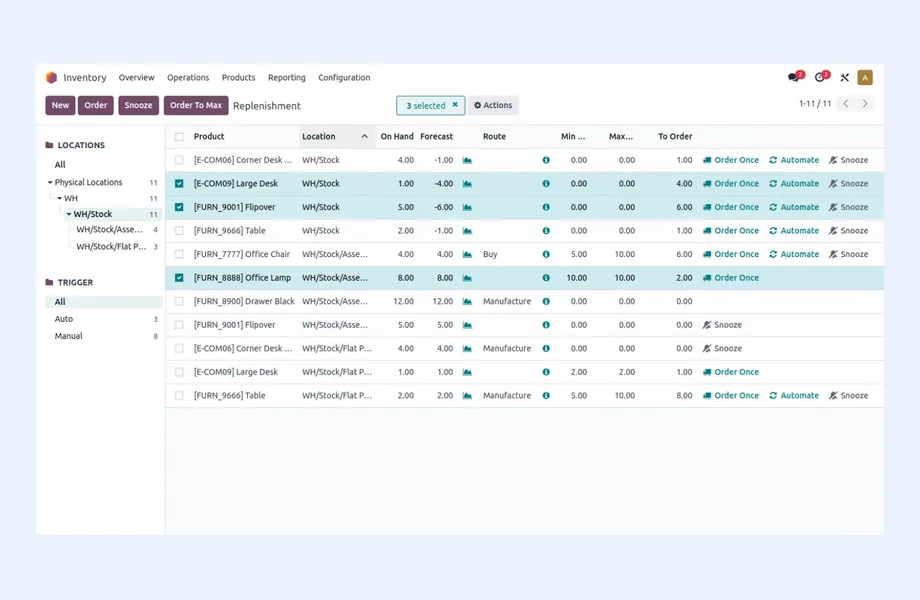
Nigerian Odoo projects often combine a production site, a central warehouse and several regional depots. I map how materials are received, issued to production and converted to finished goods, then how stock moves out to depots and on to distributors. Odoo Manufacturing and Odoo Inventory handle these flows well when routes, reorder rules and lot tracking are designed before data is loaded rather than patched in afterward.
Many companies arrive with records in a desktop accounting package plus spreadsheets for stock and production. We agree which records come across, how much history is worth keeping and how opening balances and quantities will be proven before sign-off, which my ERP data migration service describes.
Odoo implementers serve Nigeria both locally and from abroad, and some build heavily customized systems that only they can upgrade. I do not resell Odoo or take referral fees. I write the requirements, review proposals, watch for unnecessary custom code and lead acceptance testing, working alongside whichever partner you appoint. The Nigeria ERP consultant page describes my wider work in the market.
Odoo is broad, but breadth is not always what a Nigerian company needs. I recommend against it, or at least ask for a second look, in these cases:
Saying this early is cheaper than discovering it during user testing. If you are still choosing, an ERP vendor selection engagement compares Odoo with the alternatives using scripted demonstrations of your own scenarios. The Nigeria overview gives the wider market picture.

Tell me about your business and current systems. I’ll suggest the most sensible first step.
Book a Consultation
Not sure which ERP you need?
Share your business requirements with me and I will help you understand the right process, architecture and platform before implementation.
FAQ
It can be, if your accounting needs are modest and you accept third-party modules for gaps. For many distributors, full accounting, barcode scanning and stronger reporting are the deciding reasons to consider Enterprise. I list your critical processes, show which edition covers each and what the alternative would cost to maintain, and you decide with that in front of you.
It depends on where your outages happen. An office server keeps working on the local network during an internet cut but stops when power fails. Cloud hosting survives office outages but needs connectivity at every site. I compare both against your sites, backup arrangements and the people available to manage the server.
Check the localization list for the specific version you plan to use, because coverage changes between releases. Where a package exists, I verify what it includes. Where it is missing or thin, I build the chart of accounts, VAT and withholding setup manually with your accountant and test it before go-live.
Yes. A rate can be set on the transaction or loaded for the day, and landed costs bring freight and clearing charges into product cost. I agree which rate source is authoritative, restrict who can override it and require the bank document to be attached, so every naira figure can be traced.
No. I design requirements, choose between configuration and custom code, and review what developers deliver. Custom development is done by your implementer or in-house developers. Keeping that separation means someone on your side is always questioning whether each piece of custom code is really necessary.
Every business is different. Share where you are today and what you want to fix, and I’ll tell you honestly whether and how I can help.
Book a Consultation
Insights
 Book a Consultation
Book a consultation to talk through your processes, systems and goals. I’ll reply with practical next steps - no obligation.