Contact Info

 Denmark
What does a Danish B2B lead generation consultant do?
A B2B lead generation consultant for Denmark builds pipeline in a market where unsolicited marketing email is generally restricted even toward businesses. I work remotely on the buyer profile and buying group, inbound search and content, LinkedIn, events, partners and public tenders, consent records and qualification in your CRM, and reporting that follows opportunities and revenue, without promising lead volumes.
Last reviewed by Vikas Saroj
Denmark is one of the European markets where unsolicited marketing email is generally restricted even when the recipient is a business. That single rule reshapes B2B lead generation. Volume outreach of the kind used in some other markets is generally not an option, so pipeline has to come from being found, being recommended and earning permission to follow up.
I work with Danish companies remotely as an independent consultant on that problem. I define the customers and buying roles worth pursuing, build a mix of search, LinkedIn, content, events, partners and public tenders, set up consent capture and qualification in the CRM, and report on the pipeline each source creates.
The engagement runs in English. Danish content and campaign copy are written or approved by native speakers, from your own staff or a partner in Denmark.
 What I Do
Every service assumes permission matters and trust is earned slowly, and every result is traced to opportunities in the CRM.

A shared description of the companies to target and the people involved in buying, built from won and lost deals and interviews with your sales and delivery staff.

Search, content and conversion paths that bring researching buyers to you, with offers such as guides, assessments or webinars that earn a documented opt-in.

A routine for monitoring Danish and EU notices, deciding which to pursue, preparing evidence and tracking bids and framework places as their own pipeline.

Organic and paid LinkedIn aimed at named accounts and roles, plus a plan for trade fairs and industry meetings that turns conversations into consented contacts.

Forms, opt-in wording, consent records and suppression lists set up in the CRM and marketing tools, so your advisor can see exactly what each contact agreed to.

Agreed lead definitions, scoring, routing to sales and reports that link each source to accepted leads, opportunities and won revenue.
How I Work
Who buys and how they decide
 Sales and delivery interviews
Won and lost deal analysis
Buying roles documented
Lead criteria agreed
Sales and delivery interviews
Won and lost deal analysis
Buying roles documented
Lead criteria agreed
Channels that earn contact
Danish offers and content
Opt-in forms and records
Tender monitoring routine
LinkedIn and event plans
Measure and refine
Source to revenue reports
Sales feedback reviewed
Nurture tracks updated
Channel budget rebalanced
Danish companies are known for flat hierarchies and high levels of trust between colleagues. In buying terms, that often means decisions are discussed openly across a team, specialists have real influence and a manager expects her people to agree before she signs. A supplier who only builds a relationship with the most senior contact can find the deal stalling below.
I build the ideal customer profile with your sales and delivery staff, using won and lost deals rather than assumptions. It covers:
Danish B2B buyers also tend to value a supplier's directness about limitations. Content that says clearly what you do not do, or when another approach would suit better, often builds more credibility than broad claims.
The profile becomes the reference for every channel decision that follows, and it is shared with sales so marketing and sales chase the same accounts. Sector-specific considerations, such as life sciences documentation or maritime project buying, are included where they apply to you. The general approach is set out on my B2B lead generation page.
Danish marketing law is generally read as requiring prior consent before sending marketing by email or text message, and unlike in some neighboring countries, that protection is understood to cover businesses as well as consumers. Cold marketing emails to companies are therefore risky in Denmark, even when they would be acceptable elsewhere in the Nordics. Rules on unsolicited phone calls are different again, and GDPR applies to any named contact's data. There are exceptions and fine print, so check the specifics with your own lawyer. I am not a lawyer.
Rather than trying to work around this, I design lead generation that respects it:
The upside is that permission-based contacts tend to be warmer. The CRM records how and when each person agreed to hear from you, which also protects you if a complaint arises. How permissions sit next to data location questions is covered on my CRM page for Denmark.
Danish municipalities, regions and state bodies buy through formal procurement, and much of their purchasing runs through framework agreements, including those set up by central purchasing bodies. A place on the right framework can bring repeated business, while companies outside it may wait a long time for another chance. For suppliers with an offer that fits public buying, this is a lead channel worth managing deliberately.
I set up the tender channel in four parts:
Public buyers expect structured electronic invoices, which the Denmark overview mentions. The procurement rules are detailed and change, so legal questions on any bid go to your advisor.
Partner channels deserve the same discipline. Danish B2B markets often run through distributors, integrators, consultancies and industry networks. A partner who recommends you can be the strongest lead source you have, but only if referrals are recorded, followed up quickly and credited, so partners keep sending them. I design partner lead registration and reporting in the CRM alongside your direct channels.
With outbound email limited, inbound and relationship channels carry most of the weight. I plan the mix around where each member of the buying group does research:
Each piece of content has a clear next step that earns permission: a sign-up, a request for an assessment or a meeting. Source tags on every channel make its share of pipeline visible in the CRM. I prefer a smaller number of channels run well over a long list run thinly, especially for companies with a small marketing team.
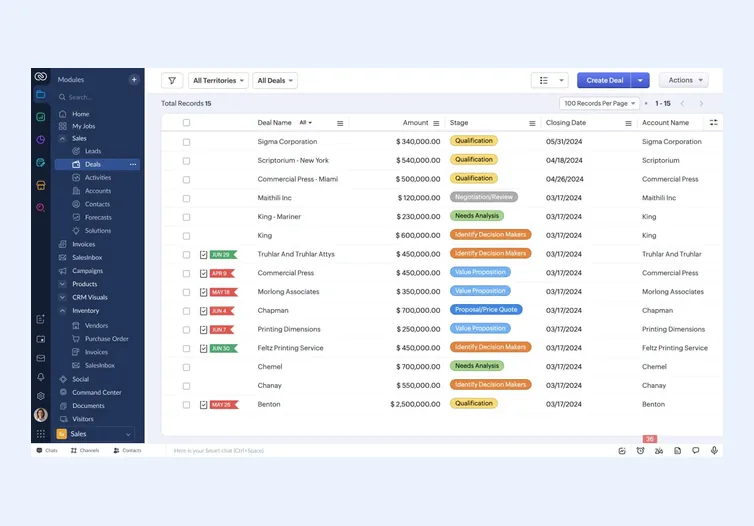
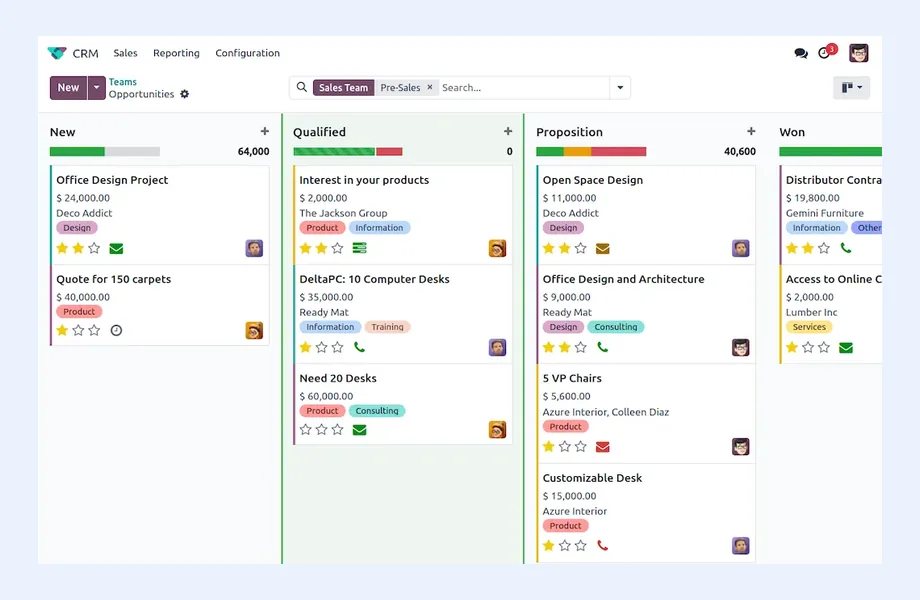
Lead generation is judged by what sales can do with it. I agree with sales what makes a lead worth pursuing, typically a company that matches the profile, a role involved in buying, a real need and some idea of timing, and turn those criteria into fields and scores in the CRM.
Leads then move through defined stages:
Contacts who have opted in but are not ready go into nurture tracks by role or industry. Because consent is the foundation in Denmark, each track respects the exact permission given, and anyone who withdraws is suppressed across every tool.
Reports focus on pipeline: accepted leads, opportunities, deal value and won revenue by source, plus the time leads spend in each stage. Downloads, followers and clicks are tracked as early signals, not as success. Lead volumes are not something I promise; they depend on market, offer and sales capacity. Where won deals are invoiced from an ERP, revenue can be traced back to the original source; the Denmark ERP consultant page covers that systems side. Contact me to discuss your current lead process.

Tell me about your business and current systems. I’ll suggest the most sensible first step.
Book a Consultation
Not sure which ERP you need?
Share your business requirements with me and I will help you understand the right process, architecture and platform before implementation.
FAQ
Generally it is risky. Danish marketing law is usually read as requiring prior consent for marketing emails, and that protection is understood to extend to businesses, which is stricter than some neighboring countries. There are nuances, so your legal advisor should confirm your position. I design lead generation around permission-based channels instead.
Partly. LinkedIn lets you reach named roles through your experts' profiles, personal messages and paid campaigns, and it can lead to a conversation in which the person agrees to further contact. It works best combined with useful content and events. Messages should still be relevant and personal, not automated volume.
Each form, event list or sign-up should store what the person agreed to, when, where and with which wording. That record lives in the CRM or marketing tool and is linked to the contact. Withdrawals go onto a suppression list respected by every system. Your data protection advisor should approve the wording and process.
I cannot promise lead numbers. What I can provide is a clear plan, channels set up properly, honest tracking from first contact to won revenue and regular reviews that shift effort toward what works. Early signals often appear before pipeline does, and I report both separately.
Every business is different. Share where you are today and what you want to fix, and I’ll tell you honestly whether and how I can help.
Book a Consultation
Insights
 Book a Consultation
Book a consultation to talk through your processes, systems and goals. I’ll reply with practical next steps - no obligation.