Contact Info
 Odoo in Chicago
What does an Odoo consultant do for a Chicago company?
An Odoo consultant helps a Chicago company decide whether Odoo fits its operations and then designs manufacturing, inventory and accounting around real work. Here that typically means job shops sending parts out for plating or heat treat, food processors tracing ingredient lots, and distributors moving stock between warehouses across the Midwest. I work remotely as an independent consultant, with no Odoo license or partner interest.
Last reviewed by Vikas Saroj
Odoo often enters the conversation in the Chicago area when a manufacturer or distributor has outgrown an older on-premise system and wants something modern without the cost profile of a large enterprise suite. It brings manufacturing, inventory, purchasing, sales and accounting into one application, and it can be extended. Whether it fits depends on the details of your floor and your warehouse.
I work remotely as a freelance Odoo consultant. I test Odoo against your own parts, recipes and orders, design how its manufacturing and inventory apps should be configured, and work beside the implementer you choose. Odoo pays me nothing, so my recommendation is not tied to it.
 What I Do
The focus is the part of Odoo that decides success here: how production and stock actually move.

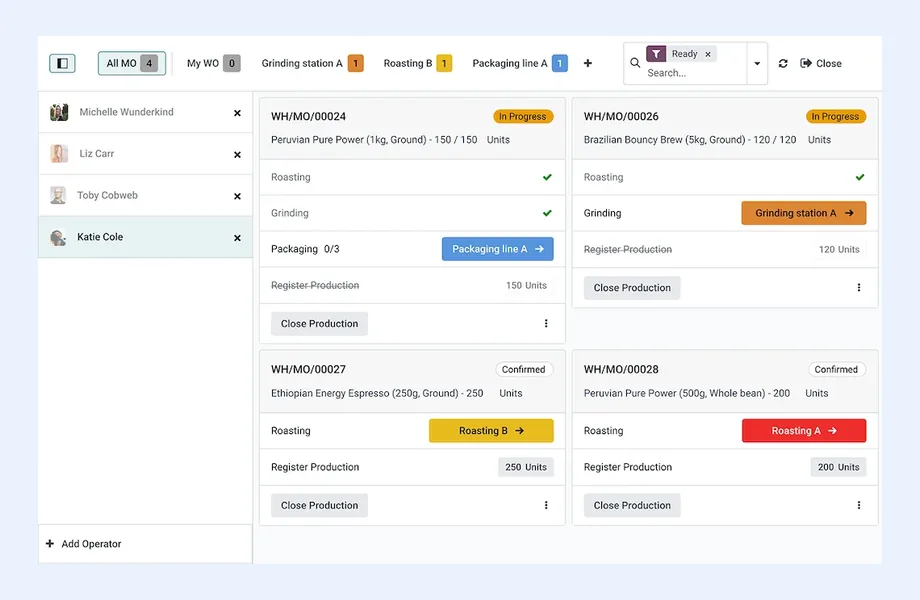
I define work centers, routings, bills of materials and job costing in Odoo Manufacturing so estimates, schedules and actual hours line up, and operators can record progress at the machine.

Parts often leave for plating, heat treating, powder coating or machining at another shop. I design the subcontracting flow so components, purchase orders and returned goods stay traceable and costed.

For bakeries, ingredient blenders and specialty food makers, I configure lots, expiration dates, first-expired-first-out picking and traceability reports, then test a mock recall with your own data.

For distributors with sites in Illinois and neighboring states, I design receiving, put-away, cross-dock and replenishment routes plus inter-warehouse transfers, using Odoo's barcode tools on the floor.

When an aging on-premise MRP is retired, I plan which item, routing, customer and open-order data moves into Odoo, how it is cleaned, and how opening stock and balances are verified.

I review the implementer's Odoo design, check customizations against standard features, write acceptance tests and keep a decision log, so you understand what was built and why.
How I Work
Run your cases in Odoo
 Load sample parts and recipes
Walk a real job through
Check outside processing
List gaps honestly
Load sample parts and recipes
Walk a real job through
Check outside processing
List gaps honestly
Design the configuration
Set routes and locations
Define costing method
Plan migration and EDI
Brief the implementer
Check before go-live
Write acceptance tests
Run a mock recall
Check opening stock
Support early weeks
The industrial parks and corridors around Chicago hold many small and mid-sized metalworking, plastics and assembly shops. Plenty of them build to customer drawings, quote every job and run a mix of repeat parts and one-offs. For them, Odoo's appeal is that quotes, manufacturing orders, purchasing and accounting live in one database.
The design work is in the detail. I set up work centers that match your machines and cells, routings that reflect real setup and run times, and a costing method that lets you compare quoted hours with actual hours. Operators can record progress through Odoo's shop floor screens, which only helps if the screens fit how people actually work at a press or a lathe, so I test them with your operators over video.
Outside processing is common in the region. Parts leave for plating, anodizing, heat treating or powder coating and come back days later. Odoo has a subcontracting flow for this, and I configure it so the components sent, the vendor's charge and the returned parts all stay linked to the job. Without that, outside work becomes a cost nobody can trace. The product detail is on my Odoo Manufacturing page.
Chicago's food sector includes bakeries, spice and seasoning blenders, candy makers, sauce producers and ingredient suppliers to larger food companies. Odoo can track lots and serial numbers from receipt through production to shipment, apply expiration dates, and pick by first-expired-first-out. Recipes are modeled as bills of materials, with by-products where they apply.
Before recommending Odoo to a food business, I run a recall drill in a test database: receive a few ingredient lots, produce several finished lots, ship to a few customers, then ask the system to trace forward and backward. If that is quick and clear, the core fits. If it requires exports and manual matching, something in the design or the platform choice is wrong.
Some food requirements need extra scrutiny in Odoo. Catch weight, where product is sold by actual weight rather than nominal units, may need configuration workarounds, an add-on or custom development, so I test it explicitly. Allergen sequencing in the schedule and customer-specific labels also need a clear design. Food safety record requirements should be confirmed with your food safety team or advisor, and I make sure what they specify is testable in Odoo.
Distributors based in Chicago often run several warehouses: one in the city or near O'Hare, others in the southwest suburbs, northwest Indiana or southern Wisconsin. Stock moves between them by company trucks and carriers, and sales reps want to promise from whichever site can ship first.
Odoo Inventory supports multiple warehouses, multi-step receiving and delivery, cross-dock routes and replenishment rules. I design those routes to match your actual buildings: whether goods are inspected on arrival, whether picking happens in waves, which items cross-dock straight from inbound trailers to outbound loads, and how transfers between sites are requested and received. Barcode scanning on the floor is configured and tested with your real labels.
Freight cost is the other issue. Distributors here want to see delivery cost against the order that caused it. I define how carrier charges and own-fleet costs are captured and allocated, and where a separate transportation system should stay. The country view of Odoo for US companies, including sales tax and hosting options, is on my US Odoo consultant page.
Many Chicago-area manufacturers and distributors have run the same on-premise system for a long time. It often still works, but the vendor support is thin, reports come from a single person who knows the database, and remote access is awkward. Odoo is one of the options considered when the decision to replace it is finally made.
Migration from these systems takes planning. Item masters may hold years of obsolete parts, customer records may be duplicated across divisions, and routings may live partly in the system and partly on paper at the machine. I decide with you what moves into Odoo and what is archived, define cleansing rules, and plan trial loads so the team can check results before the real cutover.
Open work is the riskiest part: jobs in progress, open purchase orders, partially shipped sales orders and stock already allocated. I write a cutover checklist that names who counts what, which documents are closed in the old system and how opening balances are verified. The general approach is in my ERP data migration service; here it is applied to the specific shape of an Odoo cutover.
Suppliers around Chicago frequently trade with large customers electronically. Automotive and equipment makers send forecasts and releases; retailers and food service distributors send orders and expect advance ship notices and invoices back. Odoo does not handle these exchanges on its own in most setups. They usually run through an EDI provider or connector, and I scope that piece early, with each customer's document requirements listed.
Other limits deserve honest attention. Highly regulated process manufacturing, heavy engineer-to-order work with complex revisions, or very high transaction volumes may push Odoo toward extensive customization, which then has to be maintained through upgrades. When I see that pattern, I compare Odoo with alternatives, including ERPNext for Chicago companies, and explain the tradeoffs.
I am independent of Odoo and its partner network. You still need an implementer for configuration and development on most projects, and I work beside them as your reviewer. For the broader picture of ERP in the region, see my Chicago ERP consultant page, or read about the platform on the main Odoo consulting page.

Tell me about your business and current systems. I’ll suggest the most sensible first step.
Book a Consultation
Not sure which ERP you need?
Share your business requirements with me and I will help you understand the right process, architecture and platform before implementation.
FAQ
Yes. Odoo has a subcontracting flow that tracks components sent to an outside processor, the vendor's charge and the parts that come back, all linked to the job. I configure it with your real vendors and parts and test that costs and stock stay correct through the round trip.
Lot tracking, expiry dates and recall tracing work well in Odoo. Catch weight is the area to test carefully, since it may need configuration workarounds, an add-on or custom development. I run your real products through a test database before you commit, so you know exactly what is standard and what is not.
Usually through an EDI provider or connector rather than Odoo on its own. I list each customer's required documents, such as forecasts, releases, ship notices and invoices, and make sure the connector and Odoo design cover them, with tests based on real sample transactions.
For most projects, yes. A partner or developer configures and extends Odoo, while I design the requirements, review their work and run acceptance testing on your behalf. On smaller projects the split can be different, and I explain the options at the start.
Every business is different. Share where you are today and what you want to fix, and I’ll tell you honestly whether and how I can help.
Book a Consultation
Insights
 Book a Consultation
Book a consultation to talk through your processes, systems and goals. I’ll reply with practical next steps - no obligation.