Contact Info

 Odoo Inventory, South Africa
What should a South African company design first in Odoo Inventory?
A South African company should first design its warehouses and routes, then decide where lots or serials are required, how consignment stock at customer sites such as mines is owned and counted, how third-party warehouses exchange data, and how scanning continues through load-shedding. VAT on invoices comes through Odoo Accounting and the localization. I work through these points remotely and independently, including which ones depend on Enterprise.
Last reviewed by Vikas Saroj
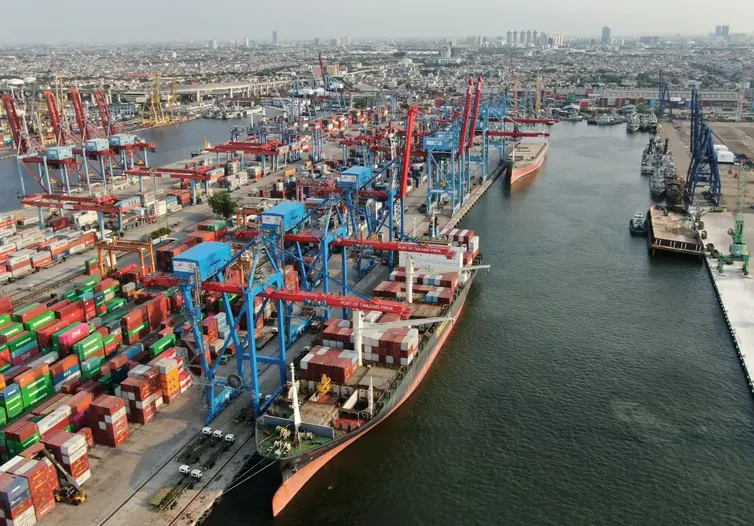
South African distributors of mining spares, industrial consumables, electrical goods or food products face a stock picture that stretches beyond their own walls. Stock sits in a Gauteng distribution center, at a coastal branch, in a rented third-party warehouse and sometimes in a store room at a customer's mine or plant.
Odoo Inventory can model every one of those places, with rules for replenishment, ownership and counting. The work is choosing a structure your branches can run when power and connectivity are not guaranteed.
The design sessions run remotely with your operations, branch and finance leads, and I am independent of Odoo and of any implementer.
 What I Do
Each piece of work is tested on your own products and documents in a copy of Odoo before branches depend on it.

Warehouses for each distribution center and branch, with receipt, put-away, pick and dispatch steps sized to the operation, and resupply routes between branches made visible.

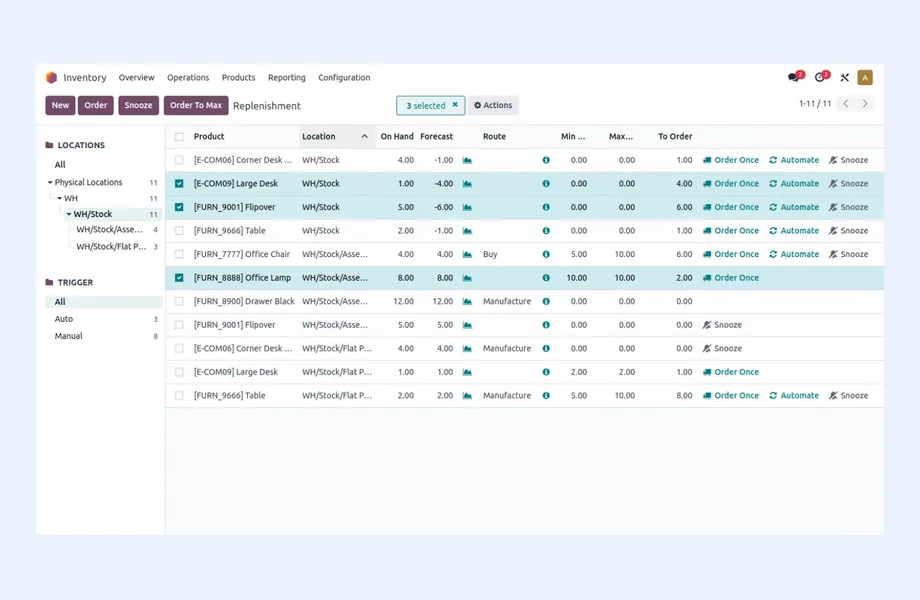
Reordering rules for slow-moving spares and fast-moving consumables, set with your buyers and reviewed on a routine, so critical items do not run out while dead stock grows.

Consignment store rooms at mines or plants held as your locations, with usage reports turned into deliveries and invoices, and periodic counts with the customer's stores team.

Serials on equipment and components with warranty history, lots and expiry on food or chemical products, applied only where traceability is really required.

Third-party warehouses modeled with an agreed data exchange, and dropship routes for supplier deliveries straight to project or mine sites without touching your floor.

Hosting, scanner and network choices reviewed against load-shedding, with a written fallback for receiving and dispatch when a branch loses power or connectivity.
How I Work
Follow stock through every location
 Distribution center walkthrough
Customer-site stock list
Outsourced and dropship flows
Outage fallback today
Distribution center walkthrough
Customer-site stock list
Outsourced and dropship flows
Outage fallback today
Locations, rules and documents
Warehouses and routes built
Reordering rules seeded
Consignment flow tested
Tax invoice output reviewed
Edition gaps logged
Counts that match the ledger
Opening count at pilot
Cycle count routine
Valuation tied to ledger
Further branches added
Suppliers to mining and heavy industry often agree to keep stock close to the customer: a consignment store on the mine, a container of wear parts at a plant, or a vendor-managed bin of consumables. The goods stay yours until the customer draws them. If the system does not know they are there, they are easy to forget and hard to count.
In Odoo I model each customer site as a location in your stock, with:
For slow-moving spares at your own warehouses, min-max needs care. A critical spare used rarely still needs a minimum, while fast-moving consumables can follow demand. I set rules with your buyers and agree how often they are reviewed. Product background is on the Odoo Inventory page; whether Odoo suits a South African business overall is discussed on my Odoo consultant South Africa page.
A typical South African network has a main distribution center in Gauteng, branches in coastal or regional centers and possibly space rented from a logistics provider near a port. Odoo routes define how stock flows between them. I keep receipt and dispatch steps as simple as the operation allows: a small branch does not need multi-step receiving.
Design decisions I settle with operations:
Imports through Durban or other ports bring freight, duties and clearing costs; Odoo's landed costs feature adds them to product cost, while import VAT is handled in the accounting setup with your tax practitioner. My Odoo Accounting South Africa page covers that side.
Scanning is where load-shedding hurts inventory most. A warehouse that receives and picks with handheld scanners stops when the Wi-Fi access points or the server lose power, and paper workarounds create errors that surface weeks later in counts.
Edition is the first hurdle: recent Odoo versions have placed the barcode app in Enterprise, so a Community setup has to scan some other way. Beyond the edition question, I review:
Whether any offline behavior in the barcode app covers your process is something I test in your version rather than assume. Where outages are frequent, I also recommend keeping cycle counts in the routine so errors are caught quickly. The inventory and warehousing solution page covers related designs.
Odoo Inventory records movements; the VAT on a sale is calculated and reported in Odoo Accounting using the South African fiscal localization. A distributor's delivery note and tax invoice therefore come from different apps, and both need checking.
Points I verify with your tax practitioner and implementer:
The localization's depth differs by version and edition. I install it in a test database for your target version and confirm with Odoo or the partner what it provides. Where something is missing, such as a report your practitioner needs, I record the gap with a proposed solution and an owner through gap analysis.
Odoo Inventory is flexible, but it is not always the right answer for a South African business. I advise looking elsewhere, or demanding a stronger proof of concept, when:
No Odoo commission or license margin shapes this advice; the requirements do. If you are still choosing a platform, the South Africa ERP consultant page is the place to start. Manufacturers can continue to Odoo Manufacturing South Africa, and service firms to Odoo Projects South Africa. All work is remote, with site visits only by arrangement.

Tell me about your business and current systems. I’ll suggest the most sensible first step.
Book a Consultation
Not sure which ERP you need?
Share your business requirements with me and I will help you understand the right process, architecture and platform before implementation.
FAQ
Yes. Each customer site becomes a location in your stock, replenished without an invoice. Usage reports turn into deliveries and invoices, and joint counts reconcile the balance. I design the usage capture, min-max rules and count routine with your team and test them on real data.
Scanning needs both the database and the warehouse network to be reachable. Cloud hosting plus backup power for network equipment keeps most operations running. I test device and app behavior in your version and agree a written fallback for full outages.
VAT is handled in Odoo Accounting through the South African localization, not in Inventory itself. I confirm what the localization covers in your version and edition with Odoo or your partner, and your tax practitioner confirms invoice content and treatment of exports.
Community covers warehouses, routes, reordering rules, lots and serials. In recent versions the barcode app and some reporting have been Enterprise features. I list your required features by edition so the decision rests on your needs rather than a sales pitch.
Every business is different. Share where you are today and what you want to fix, and I’ll tell you honestly whether and how I can help.
Book a Consultation
Insights
 Book a Consultation
Book a consultation to talk through your processes, systems and goals. I’ll reply with practical next steps - no obligation.