Contact Info

 Zoho CRM in Nigeria
How can a Zoho CRM consultant help Nigerian channel sales?
A Zoho CRM consultant in Nigeria shapes the CRM around channel selling: key distributors, sub-dealers and retailers grouped by depot and territory, field reps logging visits and orders from a phone, trade conversations captured through a tested messaging connector, consent recorded for personal contacts, and confirmed orders handed to Zoho Books for invoicing. I design this independently and remotely, with no Zoho license income.
Last reviewed by Vikas Saroj
Nigerian B2B sales rarely follows a neat funnel. A territory manager visits a key distributor, agrees a stock order over the phone, chases a sub-dealer about an unpaid balance and promises a retailer a promotion, all in one afternoon. Most of that lives in notebooks and chat threads, so head office sees results weeks later and cannot tell which accounts are slipping.
I help Nigerian distributors, manufacturers selling through dealers and B2B service firms turn Zoho CRM into the shared record of those relationships. The work is remote: I map the channel with your sales leadership, design the CRM structure, and either guide a contained build myself or review an implementer's configuration on your behalf.
 What I Do
Each item addresses a gap I look for when a Nigerian sales operation moves from notebooks and chats into Zoho CRM.

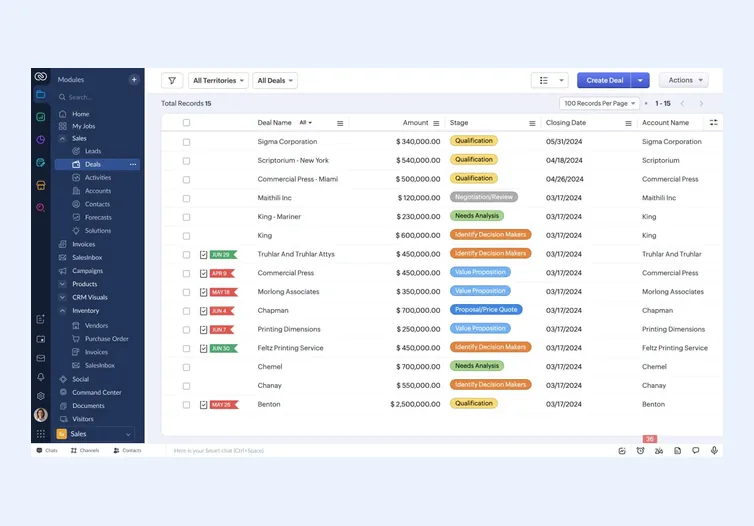
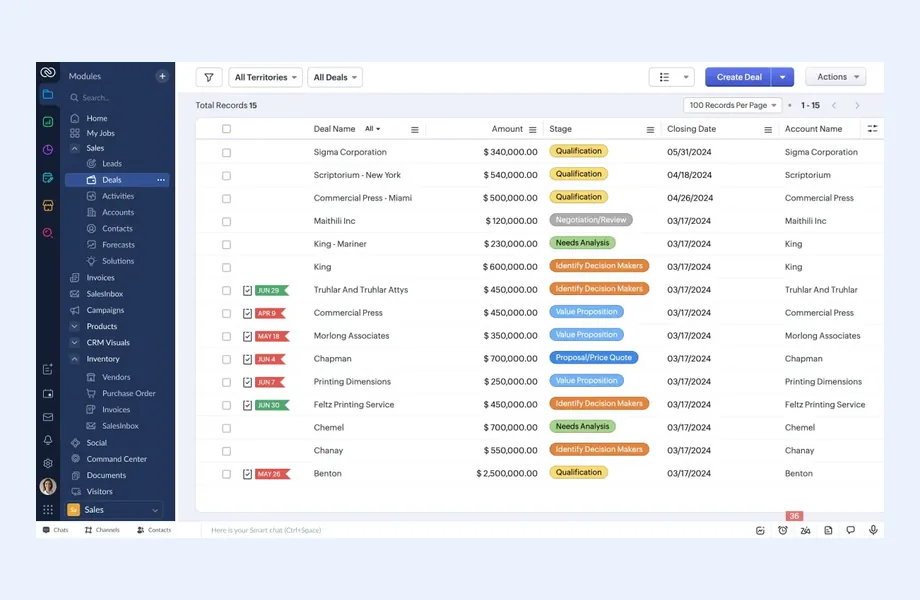
Parent and child accounts linking key distributors to the sub-dealers and retail outlets they serve, so a manager can see total business through a channel rather than scattered unrelated records.

Assignment rules that tie each account to a region, depot and territory manager, with reassignment steps for when a rep leaves, so customers are never orphaned and handovers are recorded.

Visit plans, check-ins, short call reports and photo capture in the Zoho CRM mobile app, kept brief enough that reps finish them between stops instead of at the end of the week.

Assessment of WhatsApp Business options that integrate with Zoho CRM, covering which numbers are linked, what gets logged and who administers templates, tested before rollout rather than taken from a brochure.

Fields and workflows that record how and when a personal contact agreed to be messaged, plus access by role, built on the conclusions your legal advisor reaches about Nigerian data protection rules.

Confirmed deals or sales orders pushed to Zoho Books or your ERP with customer, items and terms intact, while invoices, VAT and receipts stay with finance and flow back as status only.
How I Work
Follow orders from rep to depot
 Ride-along calls with territory managers
Channel and account hierarchy draft
Current chat and phone habits
Consent questions for legal advisor
Ride-along calls with territory managers
Channel and account hierarchy draft
Current chat and phone habits
Consent questions for legal advisor
Build and test in a sandbox
Layouts, territories and assignment
Mobile visit forms trialed
Messaging connector proof run
Books handoff tested end to end
Make the CRM the habit
Short recorded lessons per role
Weekly territory review dashboard
Duplicate and dormant account checks
Manager coaching on adoption
A Nigerian manufacturer or importer selling consumer or industrial goods usually reaches customers through layers. A small number of key distributors buy in volume, they supply sub-dealers in surrounding towns, and those sub-dealers serve shops, workshops or contractors. Head office often knows the first layer well and the rest only by rumor. A CRM that treats every buyer as a flat list cannot answer the questions managers actually ask.
In Zoho CRM I model the channel explicitly:
This structure is agreed on paper with your sales and commercial leads before any field is created. Getting it wrong means rebuilding reports later, so it deserves a workshop of its own. The distribution industry page explains the wider operational flow behind it.
Most CRM data in a Nigerian distribution business has to be captured away from a desk: in a dealer's shop, at a market, in a vehicle between towns. The Zoho CRM mobile app supports viewing accounts, logging calls and visits, adding notes and photos and creating records on a phone. The design question is how little a rep has to type to give management useful information.
My approach for field teams:
Managers then review visits per territory each week in a simple dashboard. If a rep consistently logs nothing, that becomes a coaching conversation rather than a surprise at quarter end. Training is recorded so new reps can learn the routine without waiting for a live session.
Dealers and distributors in Nigeria often place orders, query balances and request promotions through WhatsApp or a quick call. If those conversations stay on personal phones, the company loses the history whenever a rep moves on, and disputes about what was promised become one person's word against another.
Zoho CRM can work with WhatsApp Business through integrations and connectors, but options and their terms change, so I treat this as something to prove rather than assume. Before recommending a route, I check:
Phone calls get the same scrutiny. If your team uses a cloud telephony service that offers a Zoho CRM integration, call logs can land on the record automatically; if not, a quick manual call log with an outcome picklist is better than nothing. Where reps keep using personal phones, we agree a written rule for logging outcomes, and managers check it in the weekly review.
Many CRM records in a Nigerian B2B business belong to individuals: the owner of a dealership, a buyer at a hospital, a site engineer who orders materials. Nigeria has a data protection law and a regulator that oversees how personal data is collected and used. The detailed obligations for your company are a question for your legal advisor, and I do not interpret the law. What I can do is make the CRM capable of following their advice.
Typical design elements:
Data location is a separate question about where the Zoho account itself is hosted. That is covered on my Zoho consultant Nigeria page rather than repeated here. Inside the CRM the practical principle is simple: capture what sales genuinely uses, and make it easy to show how each contact entered the system.
A Zoho CRM quote or sales order is a commercial document. The tax invoice, with VAT applied and any withholding implications handled, belongs in Zoho Books or your ERP, where finance controls numbering and tax codes. Keeping that boundary sharp avoids two invoice sequences and arguments about which total is correct.
How I usually connect the two:
Zoho CRM is not always the answer. A business whose reps mainly take van-sales orders and collect cash may need a dedicated distribution app feeding the ledger, with the CRM limited to key accounts. I say so when that is the case. The Zoho CRM overview, my CRM consulting page and the Nigeria ERP consultant page give the wider picture, and the Nigeria hub explains how I work remotely.

Tell me about your business and current systems. I’ll suggest the most sensible first step.
Book a Consultation
Not sure which ERP you need?
Share your business requirements with me and I will help you understand the right process, architecture and platform before implementation.
FAQ
Yes, if the account hierarchy is designed for it. Sub-dealers and outlets are linked to the distributor that supplies them, and reports roll activity and orders up through that link. I agree the hierarchy and account types with your commercial team before configuration, because changing it after go-live means rebuilding reports and views.
The mobile app covers visits, notes, photos and record updates, but offline behavior depends on the app and edition, so we test it on your reps' own phones in real locations. Where gaps remain, we agree a simple rule for logging visits once the connection returns, and managers check compliance weekly.
Messages from company-owned WhatsApp Business numbers can be logged through integrations that work with Zoho CRM. Options and terms change, so I run a proof with your numbers and templates before recommending one. Personal-phone chats are not picked up by the integration, which is why a logging rule is part of the design.
Generally no. Zoho CRM handles quotes and sales orders, while the invoice with VAT and finance numbering comes from Zoho Books or your ERP. Confirmed orders pass across automatically, and payment status flows back to the account, so sales and finance stay aligned without a second invoice series.
Yes. Workshops, configuration reviews and training run over video, with short recorded lessons for reps who travel. Managers get a weekly review routine to keep adoption on track. If a particular milestone would benefit from meeting in person, that can be discussed by arrangement.
Every business is different. Share where you are today and what you want to fix, and I’ll tell you honestly whether and how I can help.
Book a Consultation
Insights
 Book a Consultation
Book a consultation to talk through your processes, systems and goals. I’ll reply with practical next steps - no obligation.