Contact Info
 Odoo Inventory in Ireland
How should an Irish company set up Odoo Inventory?
An Irish company should set up Odoo Inventory around its real stock locations and routes: a main warehouse in the Republic, any stock held in Northern Ireland or Britain, third-party logistics sites and dropship suppliers. Lot and expiry tracking for food and medical supplies, landed costs on imports and barcode use need early decisions. I design this remotely and confirm edition and localization coverage with Odoo or your partner.
Last reviewed by Vikas Saroj
Irish stock rarely sits in one place. A distributor may hold the main range near Dublin, carry fast movers in a Northern Ireland depot, keep sterling-priced stock at a British third-party warehouse and have some suppliers ship straight to customers. Each of those places changes how goods are received, moved and documented.
Odoo Inventory can model that, but only when warehouses, locations and routes mirror physical reality. I map how goods actually arrive, get checked, stored, picked and dispatched, then turn it into a stock design your implementer can configure and your warehouse team can follow.
Working remotely, and owing nothing to Odoo or any implementer, I sit with your operations lead and your accountant together, because every stock decision in Odoo also lands in the ledger.
 What I Do
Each item is written up as a design note your implementer can configure and your team can test.

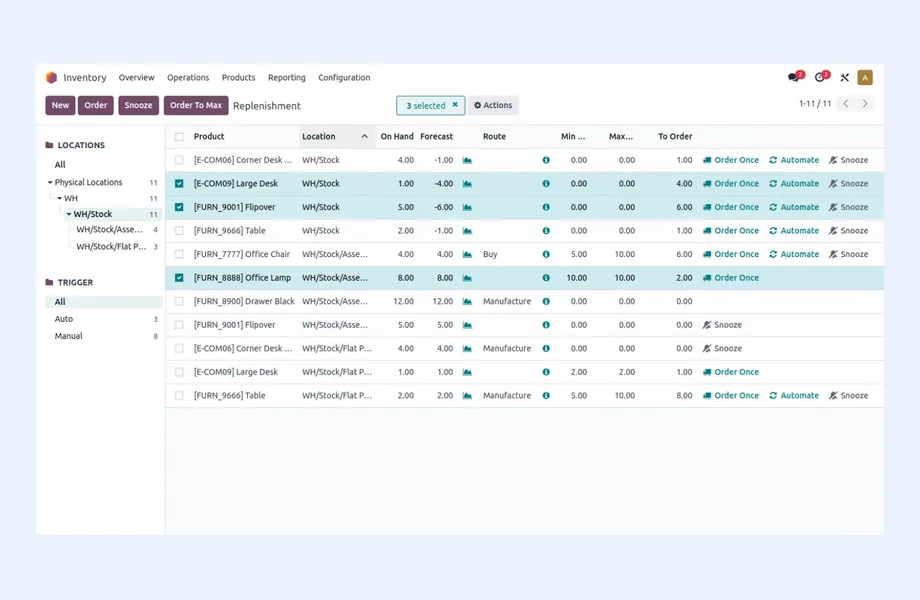
A diagram of every place you hold or move stock, including Northern Ireland depots, British third-party sites, consignment stock and goods in transit, turned into Odoo warehouses and locations.

Receipt and delivery steps that match real physical actions, plus dropship, resupply between warehouses and make-to-order routes, with no step that nobody scans or validates.

Which product groups need lots, serials or expiry dates, how they are captured at receipt and how a recall query is answered from Odoo within a working session.

A method for spreading freight, duty, broker and haulage charges across receipts, tested with real shipments, and confirmed against what your Odoo version and edition provide.

Rules for goods stored by an outside logistics firm in Ireland or Britain: which system is the master record, how inbound and outbound movements are confirmed, and who investigates a count difference.

Costing method and valuation mode agreed with your accountant for each product category, test postings checked against the stock accounts and opening values reconciled to the balance sheet before go-live.
How I Work
Follow goods through every site
 Inbound routes listed by origin
Storage and picking described
Tracked product groups agreed
Third-party roles written down
Inbound routes listed by origin
Storage and picking described
Tracked product groups agreed
Third-party roles written down
Warehouses, routes and rules in Odoo
Locations mirror real shelves
Routes tested with samples
Landed cost method proven
Edition gaps recorded
Counted stock, clean opening values
Physical count by location
Lots loaded with dates
Values reconciled to ledger
First weeks reviewed
The first design question for an Irish Odoo rollout is how many warehouses to create. My rule is one Odoo warehouse for each physical site with its own receiving and dispatch, and locations inside it for zones that matter, such as a chilled area, a quarantine bay or a returns cage. A Northern Ireland depot and a British third-party site each become their own warehouse, even if the British stock is managed by someone else.
That structure lets Odoo show availability per site, run resupply routes between them and keep a record of goods in transit. When stock crosses between the Republic and Britain, or into Northern Ireland, the movement may need customs data, commodity codes and origin details on the paperwork. Odoo stores some of this on the product, such as the commodity code and country of origin, but the customs declarations themselves are usually prepared by your broker. I define which data Odoo must hold so the broker receives it without rework.
If the British or Northern Ireland stock belongs to a separate company in your group, the design moves to multi-company stock, with intercompany rules handled in Odoo Accounting for Irish groups. The distinction between a second warehouse and a second company must be settled with your accountant before configuration starts.
Ireland has a strong food and drink sector and a dense medtech supply base, and both care about traceability. EU food law expects businesses to know where ingredients came from and where products went, and medical device distributors may need serial or lot records that support field safety actions. Your quality lead and regulatory advisor define what is required. Odoo provides the tools to record it.
In Odoo, tracking is set per product: none, by lot, or by unique serial number. Expiry dates can be added to lots, and a first expired, first out removal strategy can steer pickers toward the oldest usable stock. Which of these options appear in your version, and whether they need Enterprise, gets checked in a sandbox and confirmed by Odoo or the partner.
I apply tracking only where it is needed, because each tracked product adds a step at receipt, picking and returns. Then we rehearse a recall together: choose one batch, list each customer it reached and each inbound receipt behind it, and note how long that took. If it is slow or incomplete, the process changes before go-live. Odoo is not a validated quality system, so medtech firms with strict regulatory obligations may need a dedicated quality tool alongside it. The food and beverage page covers the wider industry view.
Irish distributors buy from Britain, the rest of the EU and further afield, and the true cost of a product includes freight, duty on non-EU goods, broker fees and inland haulage. Odoo offers landed cost entries that add such charges to received goods and spread them by quantity, value, weight or volume. I test this with a few real shipments, including a freight invoice that covers several purchase orders and a broker bill that arrives weeks after the goods.
Purchases in sterling add exchange rate questions. Odoo values the receipt using the rate on the relevant date, and the difference against the paid amount is handled in accounting. Your accountant decides how those differences and any landed cost adjustments are posted, and I check that the stock accounts reconcile after each test.
The costing method follows. Average cost suits most distributors whose purchase prices move, while FIFO may suit lot-tracked goods where cost per batch matters. With automated (perpetual) valuation, each stock movement creates a journal entry, which gives live figures but demands that receipts and deliveries are validated on time. I agree the method with finance, record it per product category and tie the opening stock value back to the ledger before the switch. The product-level detail is on the Odoo Inventory page.
Many Irish importers use a logistics provider for some or all of their stock, often with a separate British provider for UK orders. Odoo can treat that stock as a warehouse you own but do not operate. The design question is which system holds the truth. If the provider runs its own warehouse system, I specify each message the two systems swap: advance shipping notices for inbound goods, receipt confirmations with quantities and lots, pick instructions and dispatch confirmations with tracking numbers.
Dropship is simpler. Odoo can create a purchase order to the supplier when a sales order is confirmed, and the goods never touch your stock. I check that the customer invoice, the supplier bill and any VAT treatment for cross-border dropship are tested with your accountant, because the tax side can differ from a normal sale.
In your own warehouse, scanning changes accuracy more than any configuration. With the Odoo Barcode app, staff can book receipts, picks, packs and stock counts on a handheld scanner or phone, and has normally come with Enterprise rather than Community. I get that verified for the version you plan to run, check that your labels and supplier barcodes are usable, and test the flows with the people who will use them. Integration with carriers and providers is part of my ERP integration work.
Stock movements are not taxed by themselves, but they feed documents that are. Delivery slips, invoices raised from delivered quantities and intra-EU movement reporting all draw on Odoo Inventory data, while the tax rules come from the Irish fiscal localization and Odoo Accounting. Whether your version includes reporting for intra-EU goods movements, and in which edition, needs confirming with Odoo or the partner instead of being assumed, and your accountant decides what must be filed.
Odoo Inventory reaches its limits in a few Irish settings. High-volume warehouses with conveyors, automated storage or labor planning usually need a dedicated warehouse management system connected to Odoo. Pharmaceutical wholesale with strict good distribution practice requirements may need validated processes and records beyond standard Odoo. And if your group mandates another ERP for stock, a separate Odoo instance for the Irish entity can create more reconciliation than it saves.
When those signals appear, I say so before the build starts and compare options on my ERP consultant in Ireland page or through the best ERP for distribution comparison. For lighter trading needs, Zoho Inventory in Ireland can also be worth a look.

Tell me about your business and current systems. I’ll suggest the most sensible first step.
Book a Consultation
Not sure which ERP you need?
Share your business requirements with me and I will help you understand the right process, architecture and platform before implementation.
FAQ
Yes. Each site becomes its own warehouse with routes between them, and stock in transit stays visible. If those sites belong to a separate company in your group, the setup moves to multi-company stock with intercompany rules. Customs declarations are usually prepared by your broker from data Odoo holds.
Odoo supports lot and serial tracking and can record expiry dates on lots, with removal strategies that pick the oldest usable stock first. Which options your version includes, and in which edition, should be confirmed with Odoo or your partner. Your quality lead defines what must be traced.
Yes, through an integration or agreed file exchanges. I agree with you and the provider which side holds the master stock count, what is exchanged for receipts and dispatches, how lots and tracking numbers come back and how differences are investigated. Without that agreement, stock in Odoo and at the provider drift apart.
Barcode scanning in Odoo has normally been part of Enterprise. Community users often rely on third-party modules for scanning. The current position for your release should be confirmed with Odoo or your implementer, and I test the flows with your warehouse staff before you buy scanners.
When the warehouse is highly automated and needs a dedicated warehouse management system, when pharmaceutical wholesale requires validated records beyond standard Odoo, or when the group already mandates another ERP for stock. In those cases I compare alternatives before any build begins.
Every business is different. Share where you are today and what you want to fix, and I’ll tell you honestly whether and how I can help.
Book a Consultation
Insights
 Book a Consultation
Book a consultation to talk through your processes, systems and goals. I’ll reply with practical next steps - no obligation.