Contact Info

 India
India
What does a CRM consultant do for an Indian business?
A CRM consultant designs how leads, deals and customer conversations should be recorded before any software is picked. For Indian firms that means mapping direct, dealer and distributor sales, routing marketplace and WhatsApp inquiries, agreeing pipeline stages, passing confirmed orders to the ERP or Tally, and handling consent with the DPDP Act in mind. I work remotely, compare CRM options without vendor bias and take no commissions.
Last reviewed by Vikas Saroj
In many Indian companies the real pipeline lives on a sales head's phone: WhatsApp threads with dealers, a missed-call list, a diary of tender dates and a spreadsheet that accounts rebuilds every week. Buying a CRM does not change any of that by itself. The selling process has to be written down first, and the system shaped to match it.
I am a platform-neutral CRM consultant based in India. I map how you actually sell, design the pipelines, lead rules and order handoff, then help you choose between CRM options or repair the one you already pay for. Delivery is remote, with workshops held online during the Indian working day and visits possible by arrangement.
No vendor pays me, so the advice can point to a different product, a smaller rollout or simply a cleanup of what you own.
 What I Do
Each piece of work starts from your sales routes and paperwork, not from a vendor's default template.

I document every route to revenue: direct key accounts, dealers and distributors, inside sales, marketplace inquiries and tenders, with who owns each customer and where those records sit today, so the CRM follows real channels.

Separate pipelines only where the selling motion genuinely differs, such as project sales, dealer onboarding and repeat orders, each with stages defined by buyer actions and a short list of fields required before a deal moves.

Rules that send inquiries from your website, marketplace listings, ads, missed calls and trade fairs to the right person by product, state or language, with response expectations agreed by sales leadership rather than set by the tool.

A defined moment when a won deal becomes a sales order in the ERP or Tally, with the customer's GSTIN, billing and shipping addresses and price list checked so accounts neither re-keys nor corrects it.

Fields and steps for recording where a contact came from, what they agreed to and how WhatsApp and SMS conversations are logged, designed with the DPDP Act in mind and confirmed by your legal advisor.

A scored comparison of CRM options against your design, covering mobile use by field staff, messaging integration, the ERP connection, data location and running cost drivers. No vendor rewards me for the outcome.
How I Work
See how each channel sells
 Interview sales heads and accounts
Trace inquiries from source to order
List spreadsheets, groups and tools
Note consent and data questions
Interview sales heads and accounts
Trace inquiries from source to order
List spreadsheets, groups and tools
Note consent and data questions
Write the CRM blueprint
Define pipelines and stage criteria
Set routing and ownership rules
Specify the ERP or Tally handoff
Agree reports for management
Select, roll out, review usage
Score CRM options neutrally
Guide configuration by your partner
Test with real sales scenarios
Review adoption after launch
Before discussing software, I draw the sales map. Indian companies rarely sell through one route, and each route leaves its information in a different place. A manufacturer might sell directly to a handful of large buyers, appoint distributors for each state, give dealers a scheme every quarter and still take inquiries from marketplace listings and its own website.
The questions I work through with your sales and accounts heads include:
The answers become a channel map and an account structure: parent companies, branches, contacts and the partner or salesperson responsible for each. That structure matters more than any feature list. If a CRM is configured before it exists, dealers end up recorded as customers, branches as separate accounts and the same buyer appears several times under different spellings. Getting this right is the core of my CRM consulting approach, adapted here to Indian channel structures.
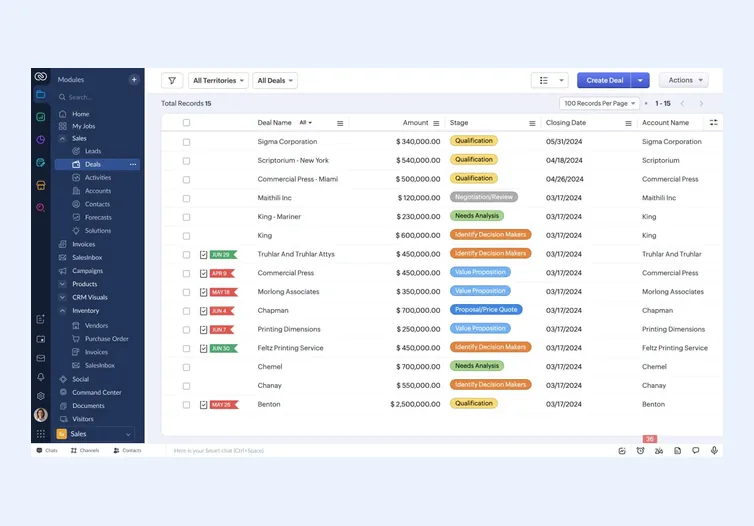
Once the channels are clear, I design pipelines that a sales review meeting can actually use. A project sale to an EPC contractor, a new dealer appointment and a repeat order from an existing distributor move through very different steps, so forcing them into one pipeline produces stages nobody believes. On the other hand, too many pipelines make management reporting difficult. I aim for the smallest number that reflects genuine differences.
Each stage is defined by something the buyer has done, such as sharing a drawing, approving a sample or issuing a purchase order, rather than by how hopeful the salesperson feels. For every stage I list the few fields that must be complete before the deal moves forward, and nothing more.
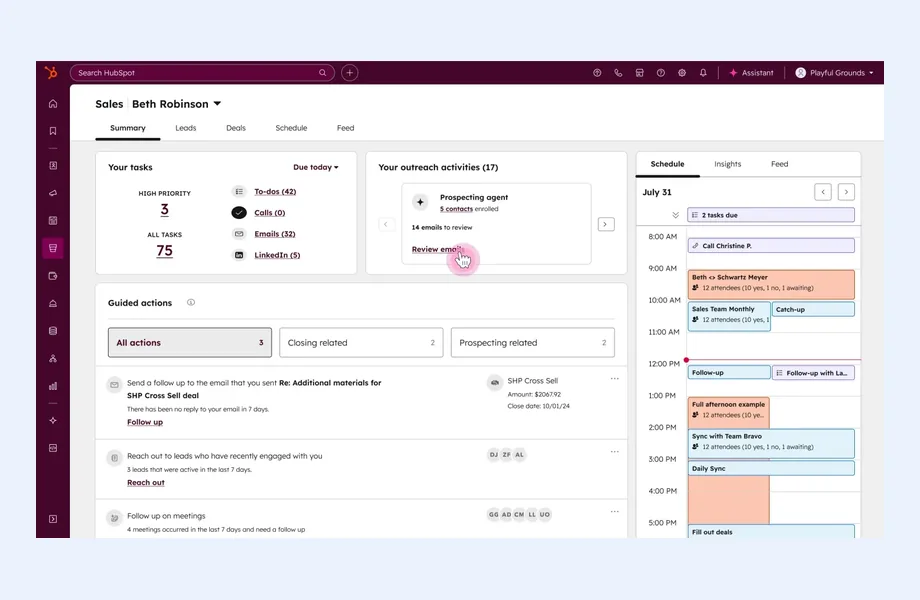
Routing gets the same care. Many Indian leads arrive with only a name and a mobile number, so the mobile number often becomes the main duplicate check. Rules then assign the inquiry by state, product line, customer type or preferred language, with an escalation path when nobody responds in the agreed time. Marketplace inquiries, IVR calls and web forms can all feed the same queue, provided the source is captured on arrival. That source field later lets you compare channels on closed revenue rather than on inquiry counts, which is where CRM work connects with lead generation.
For many Indian buyers, WhatsApp is the main sales channel, not an extra one. That creates two problems a CRM design has to solve. First, conversations held on salespeople's personal numbers leave with them when they move on. Second, it becomes hard to show what a contact agreed to and when.
On the first point, I lay out the options and their trade-offs: a business messaging account connected to the CRM, shared team numbers, or a lighter rule that key conversations are summarized as activities on the deal. Each has different cost, setup and adoption implications, and the right choice depends on volume and how much the business relies on the channel.
On consent, India's Digital Personal Data Protection Act sets expectations for how personal data is collected, used and withdrawn, and the detailed rules have been rolling out in stages. The CRM design can support compliance by recording for each contact:
I also ask each shortlisted vendor where data is stored and processed, because some buyers and group companies ask that question. Whether your process satisfies the Act is a judgment your lawyer makes; my part is making sure the CRM can store their decisions and enforce them.
A CRM earns trust in the accounts department when won deals arrive complete. In India that handoff carries more detail than in many markets, because a sales order eventually becomes a tax invoice and, for many businesses, an e-invoice and e-way bill.
I design the handoff point by answering a short list of questions with sales and finance together:
My usual recommendation is that tax calculation and invoicing stay in the accounting or ERP system, with the CRM sending a clean order and receiving status updates. The tax treatment itself belongs with your chartered accountant. For the engineering of these links, including e-invoice and bank connections, see how I approach the work as a system integration consultant in India.
Indian businesses have a wide choice of CRM products and implementers, and every demo looks good. I compare options against your written design rather than a generic checklist. Depending on the business, the shortlist might include Zoho CRM, Odoo CRM or ERPNext CRM where the ERP decision points that way, as well as HubSpot or Salesforce for teams with different needs. The country platform pages go deeper into each product; this page stays neutral.
Criteria that tend to decide the outcome in India include how the mobile app behaves on weak connections, licensing costs for large field teams, messaging integration, how easily the CRM connects to your accounting system, data location and whether a capable implementer is available for that product in your region.
Adoption is planned from the start. I keep mandatory fields to a minimum, give field executives a simple mobile view, and build the dashboards that management will use in its weekly review, so the meeting runs from the CRM instead of from a separate spreadsheet. After launch, I review usage and adjust what people are avoiding. The work is remote; for the wider picture see my India overview and ERP consultant page for India.

Tell me about your business and current systems. I’ll suggest the most sensible first step.
Book a Consultation
Not sure which ERP you need?
Share your business requirements with me and I will help you understand the right process, architecture and platform before implementation.
FAQ
Usually yes, but the CRM has to accept that WhatsApp is where conversations happen. The goal is not to move buyers onto email. It is to make sure deals, follow-ups and key messages are recorded against the right account, so the pipeline survives when a salesperson leaves and managers can see what is open without asking.
Sometimes. A partner portal or limited login makes sense when dealers register leads, report secondary sales or request quotes. It adds licensing, training and data-sharing questions, so I weigh it against simpler options such as a shared order form or a periodic upload. The answer depends on how much you need to see beyond your own invoices.
The accounts or ERP system should own it, because that is where invoices and returns are produced. The CRM can capture the GSTIN early, during qualification or onboarding, and pass it across for verification. What matters is that the number is edited in one place only, so the two systems never disagree.
No. That is a legal question for your advisor. What I do is turn their guidance into CRM fields, capture forms, withdrawal steps and access rules, and test that the system behaves as intended. If their guidance changes as the rules develop, the design makes it easier to adjust.
No. I recommend whatever fits the design we agree, and I do not take referral fees or commissions from any vendor or implementer. Sometimes the best answer is to keep the CRM you already have and fix its setup, which is cheaper than another migration.
Every business is different. Share where you are today and what you want to fix, and I’ll tell you honestly whether and how I can help.
Book a Consultation
Insights
 Book a Consultation
Book a consultation to talk through your processes, systems and goals. I’ll reply with practical next steps - no obligation.