Contact Info

 Odoo CRM, Kenya
Why would a Kenyan company run its CRM inside Odoo?
A Kenyan company runs its CRM inside Odoo when the same database handles stock, sales orders and invoices, so a buyer inquiry becomes a priced quotation, an order and an invoice sent through your version's eTIMS route, with M-Pesa or bank payment status visible to the rep. It needs pipelines per buyer type, consent records and an edition check. The setup is done remotely, with no tie to any implementer.
Last reviewed by Vikas Saroj
Kenyan processors and suppliers sell to very different buyers: supermarkets and wholesalers at home, export buyers abroad, and institutions such as schools, hospitals and county-linked bodies that buy through formal processes. Each group needs its own pipeline, but all of them end in an invoice that must pass through KRA's eTIMS.
Odoo CRM is worth considering when Odoo already runs the stock and finance, because the deal and the tax invoice share one customer record.
I work remotely as an independent consultant, within Kenyan business hours, and the engagement runs in English.
 What I Do
The work treats the CRM as the front of the order-to-cash chain, not a separate contact list.

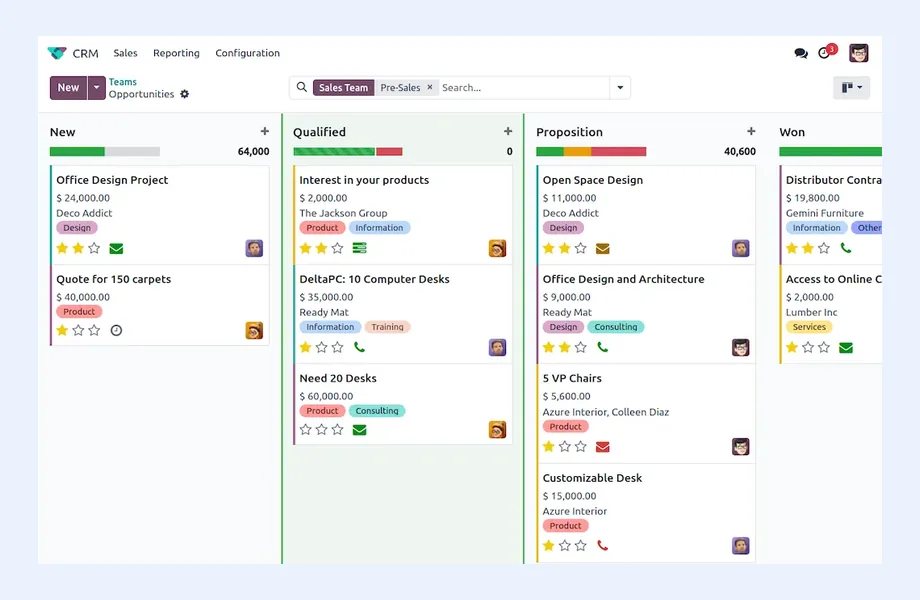
Separate sales teams and stages for local trade, export buyers and institutional customers, so a long export negotiation and a quick wholesaler reorder are each tracked properly.

Opportunities for overseas buyers tracking samples, specifications, certifications requested and shipment windows, with activities that keep follow-up from slipping between seasons.

Customer PIN, registered name and address recorded at the qualification stage, since the eTIMS invoice later reads from that very record.

Templates for price lists, institutional bids and export offers in English, with Kiswahili lines, where used, drafted or reviewed by fluent colleagues in your business.

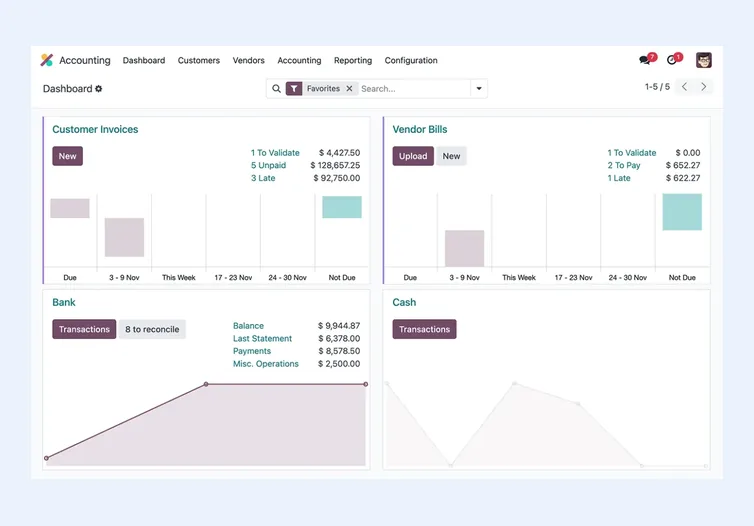
Invoice and payment status, including matched M-Pesa or bank receipts, shown on the customer so reps know whether to chase payment before taking the next order.

Contact source, consent and opt-out fields plus export restrictions, designed with your data protection lead and legal advisor under Kenya's data protection law.
How I Work
How each buyer group really buys
 Sales team interviews
Buyer groups defined
Quote approval steps
Customer data gaps listed
Sales team interviews
Buyer groups defined
Quote approval steps
Customer data gaps listed
Pipelines and templates in a test copy
Teams and stages set
Templates drafted
eTIMS path confirmed
Consent fields agreed
Edition gaps logged
Managers review from Odoo
Pilot team live
Weekly pipeline meeting
Data quality checks
Next team added
I start with this question because the answer is not automatically Odoo. Odoo CRM earns its place when Odoo is, or will be, your ERP. Once won, the deal turns into a quote priced from live stock and price lists, then a sales order, a delivery and an invoice, all on one customer record. In Kenya, where every invoice must be valid for eTIMS, removing the step of retyping customer details from a CRM into accounting removes a real source of rejected or corrected invoices.
A separate CRM may suit you better when:
For an agro-processor, manufacturer or importer already planning Odoo, the integrated route is usually simpler. For CRM features in general, read the Odoo CRM page; whether Odoo suits Kenya overall is covered on my Odoo consultant Kenya page.
A Kenyan agro-processor selling packaged tea, coffee, nuts, juices or dried fruit may deal with several quite different buying processes. Odoo CRM handles this best with a sales team per buyer group, each with stages that reflect how that group buys.
Lost reasons per group, such as price, capacity or certification, give management something to act on. Where buyers pay in dollars, Odoo can quote in foreign currency, with rate handling agreed with finance. The CRM consultant Kenya page covers sales process design beyond Odoo itself.
The strongest argument for CRM in Odoo in Kenya is the path from quote to invoice. The invoice must be transmitted through KRA's eTIMS, and that depends on how your Odoo version connects. Kenyan eTIMS integration work has appeared in Odoo's localization over recent versions, but what it covers, whether it requires Enterprise and how it behaves when the connection fails all vary. I confirm this in a test database with Odoo or your partner, and your tax advisor confirms what each invoice must contain.
What I check on the CRM and sales side:
The accounting configuration, including withholding in both directions, is covered on my Odoo Accounting Kenya page.
In many Kenyan businesses, sales reps are expected to chase payment before taking the next order. That only works if they can see, on the customer, which invoices are open and which payments have arrived. When M-Pesa receipts are matched to invoices in Odoo Accounting, the customer record in CRM shows the same status.
Design points I agree with sales and finance:
Some businesses also send quotes and payment reminders through messaging apps. Odoo's messaging integrations have been tied to Enterprise in recent versions, so I confirm availability for your version before designing around them.
Kenya's Data Protection Act covers the personal data a CRM holds: names, phone numbers and notes about individuals. How it applies to your marketing, especially messages to people who are not yet customers, is a question for your data protection lead and legal advisor. In Odoo I build contact source, consent and opt-out fields, mailing list subscriptions that honor unsubscribes, export restrictions and a retention rule your advisor sets. Where Odoo is hosted outside Kenya, cross-border transfer questions also go to your advisor.
Standard Odoo covers the pipeline basics: stages, teams, activities and quotation templates. The points I verify with Odoo or your partner, given your version, edition and hosting, are:
Since I hold no Odoo partnership and earn nothing from license sales, the answers are reported as found. For system choice across platforms, start with the Kenya ERP consultant page; for stock and production, see Odoo Inventory Kenya and Odoo Manufacturing Kenya. Market context is on the Kenya hub.

Tell me about your business and current systems. I’ll suggest the most sensible first step.
Book a Consultation
Not sure which ERP you need?
Share your business requirements with me and I will help you understand the right process, architecture and platform before implementation.
FAQ
The CRM itself does not; invoices are posted in Odoo Accounting and transmitted through whatever eTIMS route your version supports, whether the localization, a third-party module or middleware. Coverage and edition requirements vary, so I confirm the route with Odoo or your partner and test it on real invoices.
Yes, once M-Pesa receipts are matched to invoices in Odoo Accounting, the customer record shows open and paid invoices. I design how receipts enter Odoo, how customers reference payments and what reps are allowed to see, then test the matching with a month of real Paybill statements.
If Odoo is your ERP, Odoo CRM keeps quotes, orders and eTIMS invoices on one customer record. If your sales are mainly field reps visiting dealers and your ERP is something else, Zoho CRM may suit better. I compare both against your sales process.
Yes. Document templates in Odoo can hold more than one language, so Kiswahili lines can sit beside the English terms. The engagement runs in English, and the Kiswahili text comes from, or is proofread by, a native speaker among your staff before it reaches a customer.
Every business is different. Share where you are today and what you want to fix, and I’ll tell you honestly whether and how I can help.
Book a Consultation
Insights
 Book a Consultation
Book a consultation to talk through your processes, systems and goals. I’ll reply with practical next steps - no obligation.