Contact Info

 Dublin
What kind of ERP help do Dublin businesses need?
Dublin businesses usually need ERP help shaped by one of three patterns: Irish-founded software companies billing customers in several currencies, importers whose goods arrive through Dublin Port and now face customs on trade with Great Britain, and aviation or financial firms running many legal entities. I define the requirements for your pattern, compare platforms independently and oversee implementation, working remotely with visits by arrangement.
Last reviewed by Vikas Saroj
I work remotely with businesses in Dublin and the surrounding counties. The city is Ireland's capital, its main port and the base for much of the country's technology, financial and aviation activity, with the Docklands, the IFSC and the south city tech district all within a short distance of each other.
Most of the Dublin businesses I would expect to help are growing fast and selling far beyond Ireland. Their finance teams are small, their customers are global and their processes were set up for an earlier, simpler stage. I help them define what the next system must do before a vendor defines it for them.
 What I Do
Software scale-ups, port-side importers and asset-heavy financial businesses each need a different shape of system. This is where I usually come in.

For software companies moving beyond a startup accounting setup, I design how contracts, subscriptions, invoices and revenue schedules connect, so month-end and investor reporting stop depending on spreadsheets.

I define the point at which a closed deal in the CRM becomes a contract and an invoice, which fields carry across, and who owns pricing, renewals and upgrades along the way.

For goods coming through Dublin Port, I specify how freight, duty, broker fees and storage attach to each shipment, and how customs details from your agent are kept with the record.

Aviation, leasing and fund-related businesses often run many companies. I design entity structures, intercompany flows and consolidation so adding another entity is routine rather than a project.

I convert requirements into scripted demos and a scoring model, then recommend the platform that suits your processes, with honest notes on where it will need configuration or add-ons.

Once a partner starts the build, I check their design against the requirements, prepare acceptance scenarios and keep scope changes visible until the first close on the new system is signed off.
My Consulting Journey
Business first, technology second. You can hire me for one step - a BRD, a gap analysis, a vendor shortlist - or for the whole journey.
How I Work
Understand revenue, stock and entities
 Map quote to cash
List entities and currencies
Review current tool stack
Find the manual workarounds
Map quote to cash
List entities and currencies
Review current tool stack
Find the manual workarounds
Requirements and platform choice
Document requirements by team
Demo with real contracts
Score fit and gaps
Plan CRM and bank links
Oversee build and cutover
Review partner configuration
Reconcile migrated balances
Test billing and revenue runs
Support the first close
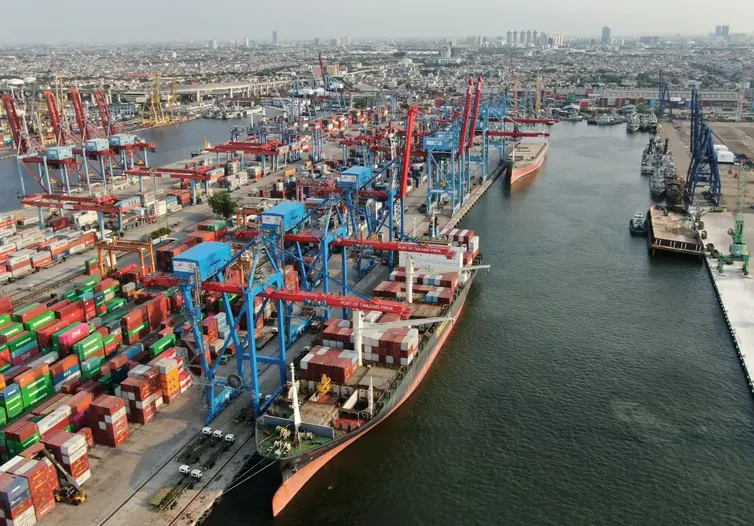
Dublin is home to the European operations of many international technology and pharmaceutical companies, a large financial services sector centered on the IFSC, and one of the world's main centers for aircraft leasing. It also has a lively community of Irish-founded software and technology companies, many of which sell into the United States and the rest of Europe from an early stage. Dublin Port is Ireland's main freight port, handling much of the trade with Great Britain and continental Europe.
Large multinationals generally run group-wide systems chosen by head office, so the decisions that shape their Irish operations are often made elsewhere. My Ireland ERP consultant page covers how I help local entities of foreign groups, along with VAT and data protection points that apply nationally.
This page looks at three types of Dublin business where the choice of system is usually made locally and where a wrong choice costs a great deal: software scale-ups, importers and distributors working through the port, and multi-entity aviation and financial businesses. Each needs something different from an ERP, and part of my job is to stop one model being forced onto another.
An Irish software company that started with a simple accounting package and a payment provider can grow quickly into a business with customers on several continents, annual and monthly plans, usage charges, discounts, partner resellers and invoices in euro, sterling and dollars. At that point finance spends each month rebuilding revenue figures from exports.
The core design question is the flow from deal to revenue. A closed opportunity in the CRM should create a contract record with its products, prices, term and billing schedule. Invoices should follow that schedule automatically, payments should be matched from the bank and payment provider, and revenue should be recognized according to the policy your accountant approves, not the invoice date. Changes mid-term, such as upgrades and cancellations, need clear rules.
I document these rules, decide whether billing should sit in the ERP or in a specialist subscription tool connected to it, and test candidates with your own contract examples. Research activity may support tax credit claims, and the system should hold project coding that makes those claims easier to evidence, though eligibility is for your tax advisor to judge. See ERP for SaaS companies for the broader model.
Many Irish distributors of food, building products, consumer goods and industrial supplies receive their stock through Dublin Port. Since the United Kingdom left the European Union, goods arriving from Great Britain are generally subject to customs formalities, and products sourced in Britain may face questions about origin and duty that did not arise before. Arrangements for Northern Ireland differ again. The rules are detailed and change, so your customs broker and advisor should confirm what applies to your goods.
Inside the ERP, the effect is a heavier landed cost. Freight, duty, broker fees, port charges and storage all need to attach to the right shipment and spread across the right products, often after the goods are already on sale. Supplier and product records need fields for origin and commodity codes so your broker receives accurate information without a fresh spreadsheet each time.
I design shipment tracking from supplier to quay to warehouse, define allocation rules for each cost type, and plan the data exchange with your broker or logistics provider. Distributors serving both the Republic and Northern Ireland get particular attention in testing. My distribution ERP page and the multi-currency page cover related needs.
Dublin's aircraft leasing and asset finance firms typically hold each asset or financing arrangement in its own company, so a modest-sized business may have a long list of entities. Funds, investment managers and the service companies around them often have similar structures. Specialist leasing and fund platforms usually handle the asset and investor side; the ERP holds the general ledger, payables, intercompany balances and management reporting.
The design challenges are structural. Adding an entity should take minutes, not a project. Intercompany loans, recharges and settlements should post on both sides automatically. Many of these businesses report in US dollars while paying some costs in euro, so functional currency and revaluation must be agreed with your auditors before configuration. Approvals for payments across many entities need clear, auditable controls.
I map the boundary between the specialist platform and the ERP, define which system is the master for each data set, and design the entity template, chart of accounts and consolidation approach. Accounting policy stays with your finance team and auditors. More on group structures is on the multi-company ERP page, while ERP integration covers the interfaces.
Dublin keeps the same clock as London, so the Irish working morning falls in my afternoon in India. I put live work there: workshops with finance and operations leads, demo sessions with vendors and acceptance testing with users. My earlier hours go into documents, configuration review and preparing the next session, so each meeting builds on finished work.
Fast-growing companies have busy people, and I adapt to that. Each workshop sticks to a single process and ends on time. A shared decision log records who agreed what, and recorded walkthroughs let colleagues in New York or Berlin catch up without another call. Where a parent company or investors need to review the recommendation, I write it so it can be read without me in the room.
The engagement runs in English, and if any documents or customer-facing text are needed in Irish, your team or a local partner prepares them. A visit to Dublin for a kickoff or leadership workshop can be arranged when it adds value. For the national picture, visit the Ireland hub; to talk about your own systems, use the contact form.

Tell me about your business and current systems. I’ll suggest the most sensible first step.
Book a Consultation
Not sure which ERP you need?
Share your business requirements with me and I will help you understand the right process, architecture and platform before implementation.
FAQ
No. My base is India and every Dublin engagement is run online. We meet during the Irish morning, which lines up with my afternoon, and the documents keep moving in the hours between calls. If a kickoff or leadership workshop in Dublin would make a real difference, we can agree a visit for that purpose.
That turns on pricing complexity and the pace of change. Straightforward annual or monthly plans can run inside many ERPs. Metered usage, frequent plan changes and self-service upgrades often justify a specialist billing tool feeding the ledger. I test both routes against your real contracts and recommend the lighter option that still holds up.
The ERP will not file declarations, but it can hold the data your broker needs, such as origin and commodity codes, and capture duty and fees against each shipment so landed costs are accurate. I design that record structure and the exchange with your broker, who confirms the customs treatment.
Many ERP platforms cope well with a long list of entities, as long as the structure is planned before the first company is created. I prepare an entity template, a shared chart of accounts and automatic intercompany postings so new companies are added quickly, while asset-level detail stays in your specialist leasing system.
Every business is different. Share where you are today and what you want to fix, and I’ll tell you honestly whether and how I can help.
Book a Consultation
Insights
 Book a Consultation
Book a consultation to talk through your processes, systems and goals. I’ll reply with practical next steps - no obligation.