
Contact Info

 Dallas
Why would a Dallas company hire an independent ERP consultant?
Dallas-Fort Worth companies often run a corporate headquarters or shared services center over several operating units, or ship nationally from central distribution centers. An independent ERP consultant designs how entities, approvals, intercompany flows and order fulfillment should work before a platform is chosen, then checks that the implementer delivers it. The work is remote from India; a visit to Texas happens only when we agree it in advance.
Last reviewed by Vikas Saroj
I work remotely with businesses in Dallas, Fort Worth and the suburbs between and around them: corporate headquarters and the shared services teams that support them, distributors running national networks from North Texas warehouses, telecom and technology firms in the corridor north of the city, and financial services and insurance operations. Face-to-face workshops can be set up by arrangement.
The common thread in DFW is scale through structure. Many companies here have grown by acquisition or by adding regions, and each addition brought its own chart of accounts, approval habits and spreadsheets. Before talking about software, I document how the group actually operates and agree which processes should be the same everywhere and which should stay local.
 What I Do
Headquarters, distribution and technology businesses in North Texas each push an ERP toward different limits. These are the engagements that come up most often.

I map procure-to-pay, order-to-cash and record-to-report as they run across units today, then define one target process with clear handoffs between the central team and local managers.

When an acquired business arrives with its own software, I assess whether to migrate it, connect it or leave it alone for now, and set out the steps for each choice.

I design the entity list, account and dimension structure, intercompany rules and consolidation approach so headquarters gets comparable numbers from every unit without manual mapping.

For distributors shipping across the country from North Texas, I scope order allocation between warehouses, drop shipment, carrier connections and replenishment rules that keep stock where demand is.

Network service, installation and technology companies need project costing, field work orders, recurring billing and equipment tracking. I define how these connect to finance cleanly.

I read implementer proposals line by line, compare scope against your requirements, and highlight assumptions, exclusions and staffing gaps before you sign a statement of work.
My Consulting Journey
Business first, technology second. You can hire me for one step - a BRD, a gap analysis, a vendor shortlist - or for the whole journey.
How I Work
See how every unit runs today
 Interview central and local teams
Compare processes across units
Catalog systems and interfaces
Find duplicate effort and delays
Interview central and local teams
Compare processes across units
Catalog systems and interfaces
Find duplicate effort and delays
Agree the target operating model
Define common processes
Set entity and account structure
Write approval and control rules
Select the platform with evidence
Move units onto the model
Plan unit-by-unit waves
Oversee data conversion
Coordinate testing across units
Track adoption after go-live
North Texas has become a favored location for corporate headquarters, and many companies have moved their main office or a large support function to Dallas, Plano, Irving, Frisco or Fort Worth. With those headquarters came shared services centers handling accounting, payables, payroll coordination and customer service for operations spread across the country. Add a busy market for acquisitions by investor-backed groups, and you get many organizations that are a collection of businesses with different habits, all reporting to one finance team.
That shapes ERP work in a specific way. The difficult questions are organizational before they are technical. Which processes will the central team own? Which approvals stay with local managers? Should every unit use the same item codes, customer terms and account structure, or only report on a common basis? How quickly must a newly acquired company move onto the group platform?
I answer those questions with leadership first, then document them as a target operating model that any platform must support. Only then do I score vendors. Topics that apply to every American business, like multi-state tax handling and GAAP statements, live on the national ERP page for the US, leaving this page free for what is distinctive about the DFW market.
A shared services center only delivers value when the processes behind it are consistent. If one unit sends paper invoices, another uses purchase orders for everything and a third never uses them, the central payables team spends its time working around differences instead of processing work. The same goes for month-end close, intercompany charges and customer credit decisions.
I start by documenting each core process as it runs in every unit, using business process consulting methods: swimlane maps, a list of handoffs between local and central staff, and the controls that exist on paper versus in practice. From there I propose one standard version, with documented exceptions where a unit genuinely needs to differ. That becomes the basis for requirements and, later, for testing.
For groups that buy companies regularly, I also write an onboarding playbook: how a new entity's chart of accounts is mapped, how its open balances and master data are converted, which interfaces are needed in the meantime, and who signs off at each step. With that in place, each acquisition becomes a repeatable project rather than a fresh scramble, and the ERP solution design is built to absorb new units.
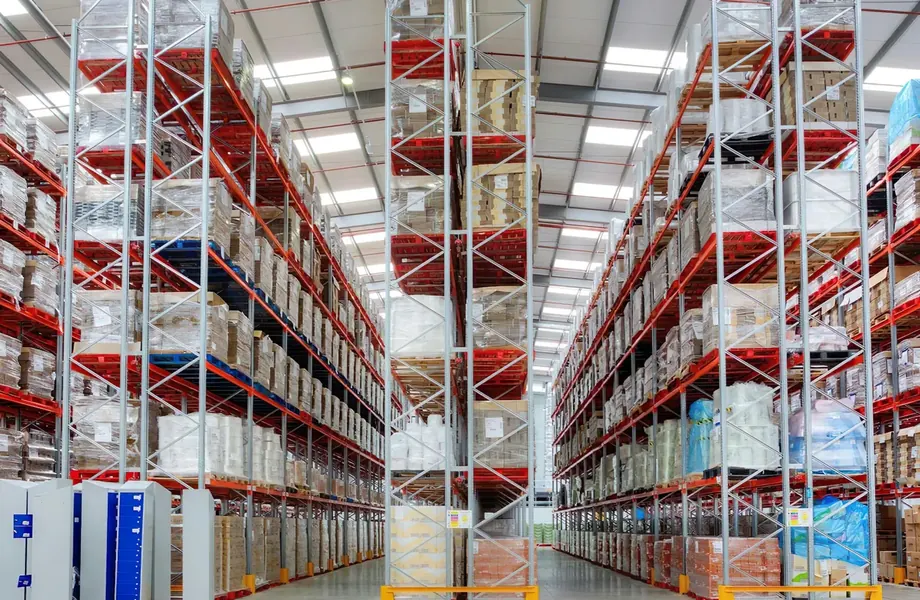
Its central location, interstate links, major cargo airport and inland rail facilities make the DFW area a natural base for distribution centers that serve both coasts. Distributors here often promise delivery times to customers nationwide, which turns order allocation into a real design decision. Should an order ship from the closest warehouse, the one with full stock, or be split? When should a supplier ship directly to the customer instead?
I document these rules explicitly and then test candidate platforms against them, along with replenishment between distribution centers, cross-docking, backorder handling, carrier rate shopping and integration with warehouse management systems or third-party logistics providers. Customer-specific pricing, rebates and contract terms are common in industrial, building products and medical supply distribution, so I make sure those are modeled in the ERP rather than in a separate spreadsheet that only one person understands.
My distribution ERP framework gives the starting checklist. The output is a requirements set that a vendor must demonstrate with your own items, warehouses and customer agreements, not a generic feature tour.
The corridor running north from Dallas through Richardson and Plano has long hosted telecom equipment, network services and technology companies, and the region now includes many software, data and IT services firms. Their ERP needs center on projects and recurring revenue: network build or installation jobs with crews, materials and subcontractors, field work orders, equipment held at customer sites, and subscription or managed service contracts billed monthly. I define how those operational records feed project costing, revenue and billing so the finance team is not rebuilding them each month. The IT services ERP page covers the general requirements I work from.
Banks, insurers, lenders and fintech companies also run large operations in the area. Their core platforms handle accounts, policies and loans, which an ERP should not try to replace. What they often need from an ERP is the corporate side: general ledger, payables, fixed assets, procurement, project spend and management reporting, fed by clean summarized data from the core systems. For regulated firms I document control and audit trail requirements carefully and leave the regulatory interpretation to your compliance team. Professional firms in the city have similar needs, covered on the professional services ERP page.
Dallas runs on Central time. The first hours of your business day overlap with my evening in India, and that is where I place workshops, steering meetings and vendor demonstrations. For larger programs with several business units, I keep a standing weekly slot for each workstream so central and local teams know when decisions will be made.
While your offices are closed, I produce the written work: process maps, requirement drafts, design decisions, test scenarios and reviews of implementer deliverables. Your team arrives to a short summary of what changed and what needs their input, which keeps momentum without long meetings.
When a unit goes live, I extend my hours further into the Dallas day to help with issue triage and to keep the central finance team informed. An on-site steering meeting or kickoff can be arranged in advance where it genuinely helps. You can find my full range of services for American companies on the USA page, or share a few lines about your group structure and we can talk through where to begin.

Tell me about your business and current systems. I’ll suggest the most sensible first step.
Book a Consultation
Not sure which ERP you need?
Share your business requirements with me and I will help you understand the right process, architecture and platform before implementation.
FAQ
No. I am based in India and support Dallas-Fort Worth organizations remotely, with scheduled video sessions, shared workspaces and written decision records. For a kickoff or steering meeting, an in-person visit can be planned by arrangement, but engagements are structured so that remote delivery covers everything essential.
Yes. I document how each unit handles payables, receivables, close and purchasing today, propose a standard process with agreed exceptions, and define who does what between central and local teams. That becomes the basis for system requirements and for training the shared services staff.
I write a repeatable onboarding approach: assess the acquired company's systems, decide whether to migrate, integrate or wait, map its accounts and master data to the group model, and plan the cutover. Each acquisition then follows the same steps and sign-offs instead of starting from nothing.
Many platforms can apply allocation rules by location, stock availability, delivery promise or cost, but the rules have to be defined clearly first. I document how your business wants to allocate, split or drop ship orders and test each shortlisted system against those rules using your own data.
Usually not. Core banking and policy systems do specialized work. An ERP typically handles the corporate side such as general ledger, payables, procurement and fixed assets, receiving summarized data from the core platforms. I help define that boundary and the control requirements around it.
Every business is different. Share where you are today and what you want to fix, and I’ll tell you honestly whether and how I can help.
Book a Consultation
Insights


 Book a Consultation
Book a consultation to talk through your processes, systems and goals. I’ll reply with practical next steps - no obligation.

