Contact Info

 Zoho Inventory in Spain
Is Zoho Inventory a good fit for a Spanish distributor or online seller?
Zoho Inventory fits Spanish distributors and online sellers that need stock by warehouse, lots, purchase and sales orders and marketplace sync without a full ERP. Two Spanish points need checking first: which system issues invoices under the invoicing software rules, and how shipments to the Canary Islands, Ceuta or Melilla are handled. I map the flow, test those cases and work remotely and independently.
Last reviewed by Vikas Saroj
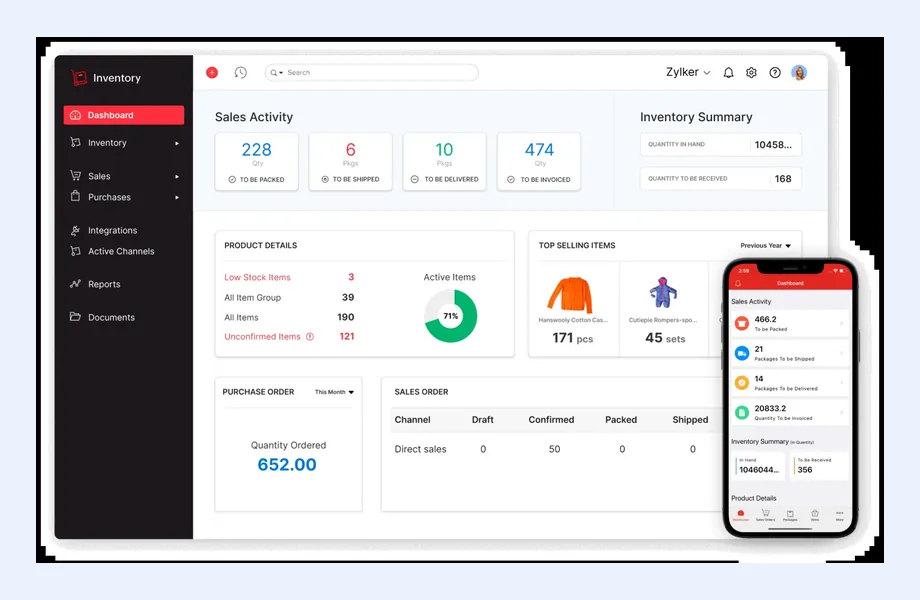
Spanish wholesalers, food and drink producers, importers and online shops often run stock across a mix of spreadsheets, a desktop program and the back office of their web store. Zoho Inventory can bring items, warehouses, lots, orders, packing and channel sync into one place, connected to Zoho Books and Zoho CRM.
Two things make Spain different. Invoices now come under rules that apply to the software issuing them, so it matters whether Zoho Inventory and Books or a Spanish program produces them. And Spain is not a single tax territory: an order for Tenerife or Melilla is not treated like one for Valencia.
I design around both, remotely and independently, with your asesor fiscal and gestoría confirming every tax setting before any order goes live in the new system. Zoho pays me nothing, so the recommendation follows your operation, even when that means a different product.
 What I Do
Six areas where a Spanish Zoho Inventory project needs more than the default configuration.

A written decision, backed by Zoho's answer and your asesor fiscal's review, on whether invoices from sales orders come from Zoho Books or are passed to a Spanish invoicing program.

Customer and shipping address data that flags mainland, Balearic, Canary Islands, Ceuta and Melilla deliveries, so tax treatment and customs paperwork are triggered correctly downstream.

Batch and best-before tracking for wine, olive oil, cured ham, cosmetics or supplements, applied only where traceability is needed and rehearsed with a mock recall.

Item fields for packaging material and weight where your advisor says plastic packaging or producer responsibility reporting needs them, so the data exists when the return is prepared.

Web shop, marketplace and courier connections checked for availability in Spain, with native integrations where reliable and a connector or API where they are not.

A count plan per warehouse and lot, opening values agreed with finance and the gestoría, and channels connected only after the counted stock is loaded.
How I Work
Goods, documents and territories
 Warehouse and channel list
Invoice issuer question
Island and export cases
Lots and packaging data
Warehouse and channel list
Invoice issuer question
Island and export cases
Lots and packaging data
Configure and test real orders
Item master cleaned
Warehouses and transfers
Territory test orders
Courier and shop trials
Gestoría review of values
Switch on a counted stock
Count and load
Open orders migrated
Channels enabled last
First month stock review
In Spanish trade, goods often travel with an albarán, the delivery note the customer signs, and invoices are issued later, sometimes grouping several deliveries. Zoho Inventory handles sales orders, packages and shipments, and when it is linked to Zoho Books, invoices can be raised from those orders. That last step is where Spanish rules come in.
Spain now sets requirements for software that issues invoices, covering record integrity, chaining, a QR code and, in one mode, sending records to the tax agency as invoices are issued. On top of that, SII reporting binds some companies, while Basque and Navarre taxpayers deal with regional invoice control schemes. Dates have shifted before, so I plan around evidence, not assumed deadlines.
For a Zoho Inventory project I settle:
The finance side of this decision is on Zoho Books in Spain.
A Spanish seller shipping from a mainland warehouse may serve customers in the Balearic Islands, the Canary Islands, Ceuta and Melilla as well as other EU countries. Mainland VAT does not apply in the same way in all of them: the Canary Islands have their own indirect tax and goods moving there pass through customs formalities, while Ceuta and Melilla have separate arrangements. Your asesor fiscal and customs broker define the treatment; Zoho Inventory needs to carry the right information so the rest of the chain can apply it.
In practice I set up:
EU sales from Spain also feed Intrastat and recapitulative statements, which your advisor prepares; the system's job is to hold consistent commodity codes, weights and country of origin on items. The general product page, Zoho Inventory, covers multi-warehouse features.
Spanish food and drink sellers, from olive oil and wine to cured meats and preserves, need lot traceability for recalls and for buyers such as supermarket chains that ask for it. Zoho Inventory supports batch tracking with manufacturing and expiry dates on chosen items. The design questions are practical:
Packaging is a newer data need. Spain has introduced obligations around plastic packaging and producer responsibility for packaging waste, and some sellers must report quantities of packaging material placed on the market or bought from abroad. Which obligations apply to you is for your advisor to confirm. If they do, I add item-level fields for packaging type and weight, keep them maintained when products change, and build a report that gives the advisor the totals they ask for. It is far easier to collect this data on the item master than to reconstruct it from supplier invoices at the end of a period.
Where production with recipes and yields is involved, Zoho Inventory's composite items may not be enough, and an ERP becomes the better base.
A Spanish distributor may import through Valencia, Algeciras or Barcelona and sell through a combination of field reps, a web shop and marketplaces. Three integration areas decide whether Zoho Inventory holds one reliable stock figure.
Landed cost. Sea freight, duties, customs agent fees and port charges all belong in the unit cost. I review what the current Zoho Inventory and Zoho Books versions support for allocating those costs, then agree with the gestoría or your accountant how they reach valuation. A documented allocation routine beats an approximate margin.
Marketplaces and web shops. Native connectors exist for a number of shop platforms and marketplaces, yet the set on offer for Spanish accounts may not match other countries and is revised by Zoho. I confirm what is available for your Spanish accounts, name the system in charge of prices, stock and product texts in Spanish and other languages, and enable sync only after opening stock is confirmed.
Couriers. Label printing and tracking depend on whether your carriers connect natively in Spain. Where they do not, a connector or the courier's own portal is used, with tracking numbers recorded on the shipment so customer service can answer "where is my order" without calling the warehouse.
Every integration gets an owner and a failure routine, following my ERP integration method. If your sales team works in Zoho, Zoho CRM in Spain covers the order intake side.
Zoho Inventory suits trading and ecommerce. I recommend a fuller ERP, or a specialist system, when the evidence points there:
I write these conclusions up so the decision is transparent. The engagement runs in English, with remote sessions in the Spanish morning, warehouse walkthroughs by video and visits by arrangement. The Spain hub, Zoho in Spain and best ERP for distribution pages add background.

Tell me about your business and current systems. I’ll suggest the most sensible first step.
Book a Consultation
Not sure which ERP you need?
Share your business requirements with me and I will help you understand the right process, architecture and platform before implementation.
FAQ
Invoices in a Zoho Inventory setup are raised through Zoho Books, so it depends on whether Zoho confirms in writing that its Spanish edition meets the invoicing software rules your advisor says apply to you. If that is not clear, shipments in Zoho Inventory pass to a Spanish invoicing program, which issues the invoice and returns its number.
It can hold the territory, prices, warehouse and shipment details for those orders, but the tax treatment and customs formalities are defined by your advisor and broker. I design customer and address data so island orders are identified reliably and test them end to end, including the invoice route and the customs document reference.
Yes. Zoho Inventory supports batch tracking with dates on items you choose. I agree which products need it, how lots are captured on receipt and picking, and rehearse a recall before go-live, listing from Zoho alone each buyer who received the chosen lot.
Some connections are native and others need a connector or API work. Availability differs by country and changes over time, so I confirm current options for your specific marketplaces and carriers in Spain before designing the flow, and I decide which system owns stock and prices.
Every business is different. Share where you are today and what you want to fix, and I’ll tell you honestly whether and how I can help.
Book a Consultation
Insights
 Book a Consultation
Book a consultation to talk through your processes, systems and goals. I’ll reply with practical next steps - no obligation.