Contact Info

 Odoo CRM in New Zealand
Should a New Zealand producer run its sales pipeline in Odoo CRM?
Odoo CRM makes sense for a New Zealand food producer, beverage brand or small manufacturer when sales, stock and production already run in Odoo, or soon will. Opportunities for grocery ranging, foodservice accounts, Australian buyers and export distributors then turn into quotes and orders against real stock. The design also decides whether Xero or Odoo Accounting issues the GST invoice. I set this up remotely and independently.
Last reviewed by Vikas Saroj
A New Zealand artisan cheese maker, a craft beverage brand or a maker of outdoor equipment sells through very different channels at once: a ranging review with a supermarket buyer, direct trade accounts with cafes and retailers, an Australian distributor and perhaps an importer in Asia. Each channel has its own sales cycle, but all of them depend on what can actually be produced and shipped.
I work remotely with New Zealand founders, sales managers and general managers who want that pipeline in Odoo, beside the stock and production data it depends on. The goal is a CRM a small sales team keeps up to date because it saves them time, not because head office insists.
Nothing in my position depends on Odoo sales: no license margin, no arrangement with a New Zealand or Australian implementer and no fee tied to the edition you choose.
 What I Do
These are the CRM decisions that matter most when a New Zealand product business runs sales inside Odoo.

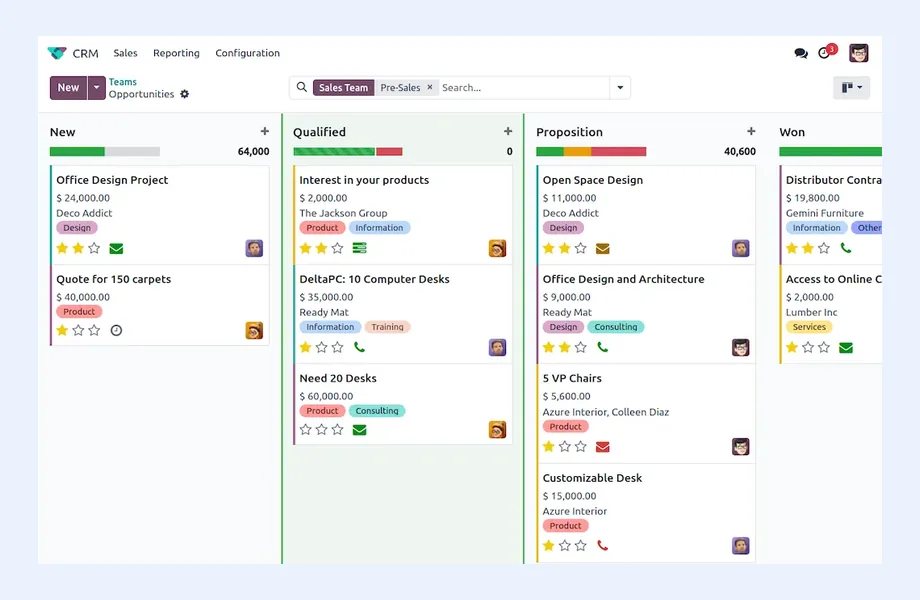
Separate sales teams and stages for supermarket ranging, foodservice and trade accounts, and export distributors, so each channel's progress is visible without mixing very different sales cycles.

Customer records with NZBN, delivery instructions, price list and payment terms agreed with finance, created when a lead converts so orders can be entered straight away.

NZD and AUD price lists, export pricing for other markets and fiscal positions that apply GST only where your accountant says it applies, carried from quote to invoice.

Sample orders, tasting kits and launch promotions tracked against the opportunity, so the cost of winning a new listing or account is visible next to its value.

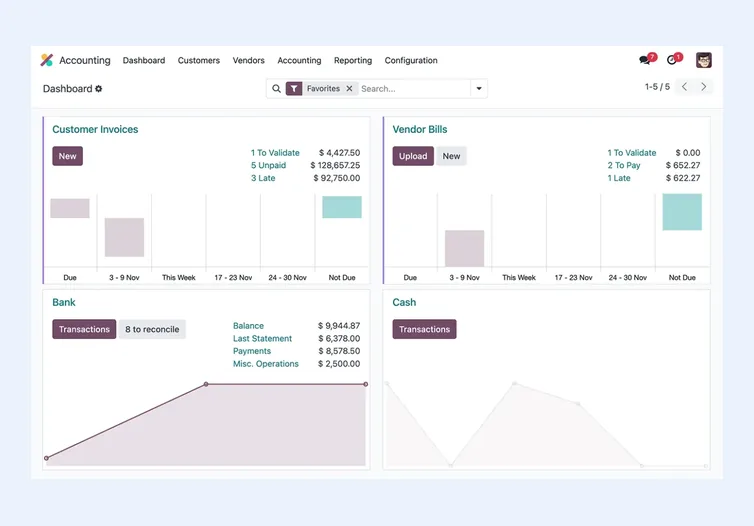
A clear decision on whether Xero stays as the ledger with orders synced from Odoo, or Odoo Accounting issues GST invoices directly, with the connector or setup tested.

Website forms, trade show contacts and newsletter sign-ups tagged by source, with consent and unsubscribes stored on each contact in exactly the way your privacy advisor recommends.
How I Work
How each channel actually buys
 Channels and buyers mapped
Sales cycle per channel
Current spreadsheets reviewed
Ledger decision framed
Channels and buyers mapped
Sales cycle per channel
Current spreadsheets reviewed
Ledger decision framed
Teams, stages and price lists
Stages per channel
Trade account fields
NZD and AUD pricing
Quote templates prepared
Routines the team keeps
Open deals imported
Weekly review agenda
Invoice handoff tested
Gaps listed for later
Food and beverage producers in New Zealand often win their largest volume through a small number of grocery buyers, while their margin comes from cafes, specialty stores, hospitality groups and online sales. Those channels move at very different speeds. A supermarket ranging decision may follow a category review cycle, with samples, pricing negotiations, promotional commitments and a listing date. A cafe account can be opened after one visit.
Putting all of that in one pipeline makes forecasting meaningless. I set up Odoo CRM with:
Each team gets its own activities and lost reasons. For grocery deals, I also link the expected first order quantity to production planning, because winning a listing you cannot supply is worse than losing it. The general design of stages and assignment rules is on the Odoo CRM page; whether Odoo suits your business more broadly is covered on Odoo in New Zealand.
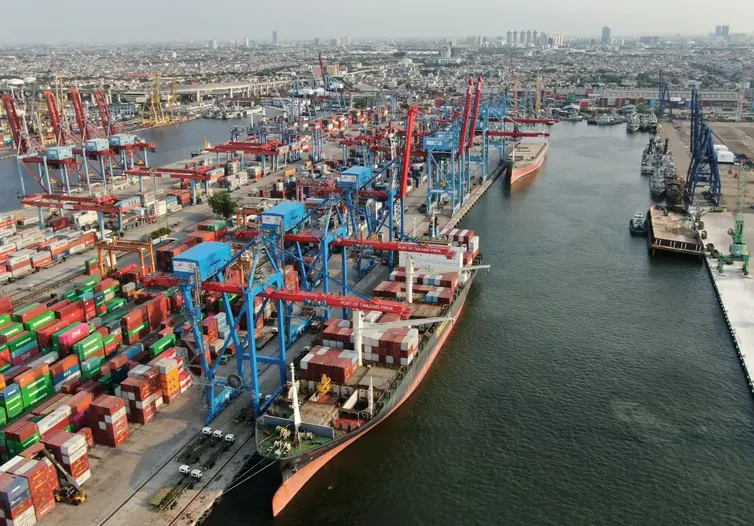
For many New Zealand producers, Australia is the first and largest export market, followed by Asia, the Pacific and North America. Distributors and importers behave differently from domestic customers: they negotiate exclusivity, ask for export documentation and order in larger, less frequent shipments.
In Odoo CRM, I design the export side around:
Export certification and official documents for food products are handled through government and industry systems outside Odoo; the CRM only tracks that they are needed and done. Where an Australian entity sits in the same Odoo database, the accounting design is on Odoo Accounting in New Zealand.
Many New Zealand businesses arrive at Odoo with Xero already running their books, and an accountant who is comfortable with it. That shapes the CRM design, because the question is which system issues the GST tax invoice the customer receives.
Two workable patterns:
Neither is right for everyone. The choice depends on how much the accountant relies on Xero's ecosystem, whether payroll and bank feeds stay there, and how many transactions flow through. I lay out both with your accountant before CRM design is final. Comparing ledgers more generally, see Zoho Books vs Xero for the kinds of trade-offs involved.
Small New Zealand brands rely heavily on newsletters, trade show sign-ups and website inquiries. Those contacts are personal information under the Privacy Act, and commercial email and text messages are covered by rules on unsolicited electronic messages, which generally expect consent and a working unsubscribe. Applying those rules to your own lists is a judgment your privacy advisor or lawyer makes.
Within Odoo, I set up:
SMS and some marketing apps run on paid credits or depend on edition, so I confirm costs before suggesting them. Paid campaigns and lead capture are where my paid marketing work joins the CRM, so you can see which ads lead to trade accounts.
Put these questions to Odoo or the implementer, for the exact version you intend to deploy, before signing:
Odoo CRM is probably not the right choice when a New Zealand business uses Odoo only lightly and runs its operations elsewhere, when the sales model is long-cycle professional services with no stock behind it, or when a small team is happy with a simpler CRM linked to Xero. In those cases a dedicated CRM is often easier to keep alive; my Zoho CRM in New Zealand page covers one such route, and CRM consulting in New Zealand covers platform choice. For the wider picture, see the New Zealand hub and ERP consultant in New Zealand.

Tell me about your business and current systems. I’ll suggest the most sensible first step.
Book a Consultation
Not sure which ERP you need?
Share your business requirements with me and I will help you understand the right process, architecture and platform before implementation.
FAQ
Yes. Odoo can run opportunities, quotes, orders and stock while invoices or sales summaries pass to Xero through a connector. The connector then needs careful testing for GST codes, credit notes, payments and currencies. I compare that with moving fully to Odoo Accounting, together with your accountant.
As a separate key account team with stages such as range review booked, samples sent, terms negotiated and listing confirmed. Linking the expected first order to production planning helps avoid winning a listing you cannot supply. Trade and export channels get their own pipelines.
Yes. Odoo supports multiple currencies and price lists, so AUD prices can sit beside NZD ones, with exchange rate rules agreed with finance. Fiscal positions apply the GST treatment your accountant sets for exports. If you have an Australian company, it can run in the same database.
Odoo can record lead source, consent and subscriptions, and its Email Marketing app honors opt-outs. It does not decide what the law requires. Your privacy advisor confirms how the Privacy Act and the unsolicited messages rules apply, and I configure Odoo to follow that advice.
Every business is different. Share where you are today and what you want to fix, and I’ll tell you honestly whether and how I can help.
Book a Consultation
Insights
 Book a Consultation
Book a consultation to talk through your processes, systems and goals. I’ll reply with practical next steps - no obligation.