Contact Info
 Odoo MRP in Italy
Can Odoo Manufacturing run an Italian factory?
Odoo Manufacturing can run production for many Italian machinery builders, food producers and fashion or textile workshops, provided its bills of materials, work centers, outside processing and lot tracking are designed around how each plant really works. I map those flows, check which features need Enterprise in your version, and say plainly when a specialist system fits better. The advice is remote and independent.
Last reviewed by Vikas Saroj
A packaging machine builder, a pasta or cheese producer and a knitwear workshop can all run Odoo Manufacturing, yet they need very different configurations. The machine builder lives with deep, changing bills of materials and one-off orders. The food plant lives with recipes, lots and shelf life. The fashion producer lives with sizes, colors, seasons and outside laboratories.
I start from the plant you actually have, not from a template. Sessions with production, the technical office, purchasing and finance run remotely, with the engagement in English and shop-floor documents in Italian prepared or reviewed by your own people.
 What I Do
The items below concern production design inside Odoo, from the technical office to the cost of each finished item.

I agree how deep bills of materials go, which assemblies are phantom kits and which are stocked, and how the technical office releases changes without breaking orders already in progress.

Operations, work centers and capacity defined at the level the plant can actually record, so planned and real times can be compared without burying operators in data entry.

Subcontracting flows for heat treatment, coating, embroidery or sewing at outside laboratories, with the components sent, the finished goods returned and the transport documents each movement needs.

Lots from raw material to finished product for food and cosmetics, and serial numbers on machines and key components, tested with a mock recall exercise before go-live.

Standard or real cost per product, labor and overhead rates per work center, and a variance view finance can explain, agreed with your controller and commercialista.

A list of the manufacturing features you need, marked Community or Enterprise, with Odoo or the partner asked to confirm each one in writing for your version and hosting.
How I Work
Follow real orders through the plant
 Sample orders walked through
BoM and drawing practice
Outside processing list
Costing method today
Sample orders walked through
BoM and drawing practice
Outside processing list
Costing method today
BoMs and routings in staging
Product families modeled
Work centers and times
Subcontract flows tested
Mock recall run
First orders on the new system
Pilot line selected
Operator screens checked
Cost variance reviewed
Issues logged and owned
Italian machinery builders, from packaging and food processing lines to woodworking and plastics equipment, often sell machines that share a base design but differ for each customer. The technical office keeps drawings and part lists in a CAD or PDM system, and production needs a bill of materials it can build from. The gap between those two worlds is where the Odoo design succeeds or fails.
The decisions I work through with the technical office:
Engineering change control with versioned BoMs and approvals is a product lifecycle feature that may sit in Enterprise; the partner should show what your version includes before you plan around it. For long, one-off projects, the manufacturing order is only part of the picture, and a project view may be needed alongside it, covered on Odoo Projects in Italy. The generic mechanics are on my Odoo Manufacturing page.
Italian food production covers pasta, dairy, cured meats, baked goods, sauces, wine and oil, each with its own way of working. Odoo models a recipe as a bill of materials, and it can track lots on ingredients and finished goods, record expiry dates and produce by-products. That covers many discrete and batch producers well. It covers continuous or highly variable processes less naturally.
Points I test with the production and quality managers:
Quality control points and alerts may be Enterprise features, so I confirm availability before designing around them. Which food safety and labeling rules apply is for your quality manager and advisors to state; I make sure the system records what they need. Where processes depend on variable raw materials, such as milk solids or grape must, a process manufacturing ERP may fit better than Odoo, and I say so early. The food and beverage page sets out the wider requirements.
Italian fashion, knitwear, leather goods and footwear producers depend on networks of outside laboratories for cutting, sewing, finishing and embroidery. A single collection can include many models, each in several colors and a full size range, produced in short seasonal runs. Odoo can model this, but the configuration needs discipline.
The questions I resolve with the product and production teams:
Odoo's subcontracting feature handles the basic send-and-receive cycle; how it fits multi-step outside processing, where one laboratory passes work to another, needs testing on your real flow. Fashion businesses with complex sample development, tech packs and size grids may also need a dedicated fashion PLM or a sector ERP, with Odoo running finance and distribution. I set out both options so you can compare them on the same requirement list.
Italian manufacturers often know their margins from a spreadsheet the controller maintains outside the system. Moving costing into Odoo means agreeing how cost is built and when it is updated, so the figures in Odoo and in the controller's model tell the same story.
My costing design covers:
I test the result with a handful of real orders and reconcile them to the controller's figures. Differences are explained, not hidden. Year-end inventory values and work in progress then flow into Odoo Accounting, where the Italian localization and your advisor's requirements apply, as described on Odoo Accounting in Italy. A costing design that finance does not trust leads straight back to spreadsheets, so their sign-off is part of the plan, not an afterthought.
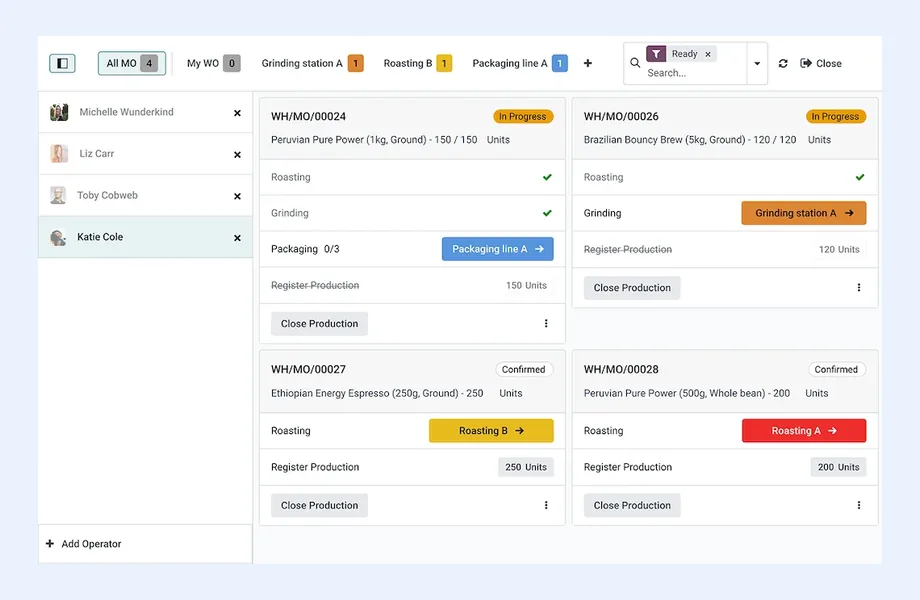
Manufacturing as an application is available in Odoo Community, but several features Italian plants ask for may depend on Enterprise: the shop floor or tablet view for operators, product lifecycle management with engineering change orders, quality control points, maintenance and some planning tools. What is included also changes between versions and between Odoo Online, Odoo.sh and self-hosting. Each requirement gets its expected edition noted beside it, and the implementing partner answers line by line, on paper, before contracts are signed.
Odoo Manufacturing is not always the right answer. I would recommend looking elsewhere, or combining systems, when:
In those cases Odoo may still run sales, purchasing and accounting while a specialist tool runs the plant, linked by integration. If you are comparing open source options, ERPNext vs Odoo for manufacturing is a useful starting point. I am independent of every vendor, earn no commissions, and work remotely, with plant visits only by arrangement.

Tell me about your business and current systems. I’ll suggest the most sensible first step.
Book a Consultation
Not sure which ERP you need?
Share your business requirements with me and I will help you understand the right process, architecture and platform before implementation.
FAQ
Yes, Odoo's subcontracting feature sends components to a vendor and receives finished goods back, with stock at the vendor visible. Multi-step processing across several laboratories needs testing on your real flow, and the transport documents for goods sent out depend on your Italian modules, so I confirm both before you rely on them.
Odoo supports product variants by attributes such as size and color, and BoMs can be shared across variants. Grid-style order entry and size-dependent consumption may need extra modules or configuration. I test your real collection structure and say whether a fashion PLM or sector ERP should sit alongside Odoo.
Features such as the operator shop floor view, PLM with engineering changes, quality control points and maintenance may be Enterprise only, and packaging changes between versions. My feature list goes to Odoo or the partner, and their written reply on edition, hosting and version becomes part of the project file.
It can handle recipes, lots, expiry and by-products for many food producers. Where yields depend on variable raw materials or processes are continuous, a process manufacturing system may fit better. I test your hardest cases in staging and give you an honest view before you commit.
Every business is different. Share where you are today and what you want to fix, and I’ll tell you honestly whether and how I can help.
Book a Consultation
Insights
 Book a Consultation
Book a consultation to talk through your processes, systems and goals. I’ll reply with practical next steps - no obligation.