Contact Info
 Odoo MRP in the UAE
What should a UAE factory configure in Odoo Manufacturing?
A UAE factory usually needs Odoo Manufacturing configured for make-to-order fabrication and joinery, imported raw materials with long sea lead times, coating or galvanizing done by outside vendors, mill and test certificates attached to lots, and labels or work instructions in Arabic and English. I design those flows as an independent consultant, remotely on Gulf hours, and agree the costing method with your finance manager before go-live.
Last reviewed by Vikas Saroj
Production in the Emirates is often tied to projects. An aluminum fabricator builds windows and facades for a particular tower, a joinery shop makes fit-out packages for a hotel, a steel processor cuts and bends to a contractor's schedule. Alongside them, food, plastics and packaging plants run repeat production for GCC distributors. Odoo can serve both, but not with the same setup.
The configuration questions are practical: whether each project gets its own BoM, how offcuts and remnants are handled, how profiles sent for powder coating or anodizing are tracked, which certificates contractors expect with every delivery, and how planning copes with raw materials that arrive by sea from Asia and Europe.
As an independent consultant, I work remotely with UAE manufacturers on Gulf Standard Time, running sessions with the plant, the stores and finance, and recording walkthroughs for supervisors on other shifts so nobody is left out of the design. Your implementer, if you have one, joins the sessions that affect configuration.
 What I Do
These are the areas where UAE manufacturers most often need Odoo Manufacturing designed rather than simply switched on.

Manufacturing orders created from project sales orders and tied to the project for reporting, so material, labor and coating costs for each tower, villa or fit-out package can be compared with the contract.

Units of measure for profiles, sheets and coil, cut quantities on the BoM, and an agreed rule for usable offcuts and scrap, since standard Odoo does not keep remnants by length.

Powder coating, anodizing and galvanizing vendors set up as subcontractors with their own locations, so profiles sent out and returned finished are visible in stock and in job cost.

Mill certificates, test reports and conformity documents attached to receipts and lots, with quality checks at goods receipt and final inspection where your edition supports them.

Lead times, security days and reorder points for billets, coil, granules and ingredients shipped from overseas, with buyers confirming replenishment suggestions on a weekly rhythm.

Delivery notes, batch labels and work instructions in Arabic and English, with Odoo's interface language chosen per user to suit supervisors, storekeepers and operators across the plant.
How I Work
Projects, products and vendors
 Project and repeat product split
Cutting and offcut practice
Outside coating vendors
Certificate demands by customer
Edition and hosting check
Project and repeat product split
Cutting and offcut practice
Outside coating vendors
Certificate demands by customer
Edition and hosting check
Pilot one project end to end
Project BoM and routing
Coating vendor cycle tested
Certificates attached to lots
Costing trial in dirhams
Live with plant and stores
Next projects onboarded
Stores and supervisor coaching
Weekly project cost review
Improvements logged and ranked
The first design decision for a UAE plant is how production relates to projects. For fabricators and joinery shops working on construction and fit-out, each project brings its own drawings, quantities and delivery phases. For food, plastics and packaging plants, products repeat and planning follows stock levels and distributor orders.
For project work I usually configure:
For repeat production the setup sits closer to Odoo's standard: stable BoMs, reordering rules on finished goods and key inputs, and planning by work center capacity.
Many UAE manufacturers run both, for example a fabricator that also sells standard doors from stock. That works in one database when the routes are kept distinct. I document the split during business analysis, and my general Odoo Manufacturing page explains the building blocks behind it.
Aluminum and steel fabricators deal with materials bought by length, weight or sheet and consumed as cut pieces. Odoo can hold units of measure for profiles, sheets and coil and convert between them, and BoM quantities can be expressed in whichever unit makes sense for each component. What standard Odoo does not do is optimize cutting or keep a register of usable offcuts by length. Most plants handle this with a cutting optimization tool that exports quantities, plus a simple rule for returning usable remnants to stock as a separate product or writing them off as scrap. I agree that rule with the plant manager and finance, because it affects both yield reporting and inventory value.
Outside finishing is the second common gap. Profiles go to a powder coating or anodizing vendor, steel goes for hot-dip galvanizing, and finished items come back for assembly or go straight to site. In Odoo I usually set each finishing vendor up as a subcontractor with its own stock location, make the finished profile a separate item with a subcontracting BoM, and let the receipt from the vendor record consumption of the raw profile and the coating charge. The result answers a question many UAE plants struggle with: how much of our material is sitting at the coater right now, and what has coating added to this project?
Contractors and consultants on UAE projects routinely ask for mill certificates, test reports and conformity documents with each delivery, and food buyers expect halal documentation, production and expiry dates and Arabic labeling. Odoo can support this when traceability is switched on at the right level:
Labels and delivery notes in Arabic and English are a report design task rather than a configuration switch, so I specify them early. Third-party inspection visits on large project orders can be recorded as a quality check with the inspector's report attached. Each item becomes a line in the requirements and is tested with real lots during UAT.
Almost every UAE plant depends on imported inputs, mostly by sea, with lead times that stretch whenever shipping routes are disrupted. Odoo will only plan well if its lead times reflect that. I set the vendor lead time on each supplier line from recent shipments, add purchase security days for less reliable routes, and size reordering rule minimums to container or pallet quantities. Planners then review suggested purchases in the replenishment view each week rather than letting rules confirm orders on their own.
Costing is agreed with your finance manager before any product is configured. Average cost is common in UAE plants buying in several currencies, because freight, duty and clearing added as landed costs flow into item cost. Standard cost suits plants with stable repeat products and the discipline to review standards. Either way I settle:
A trial month is reconciled to the ledger before go-live. The VAT and ledger side is covered on Odoo Accounting UAE.
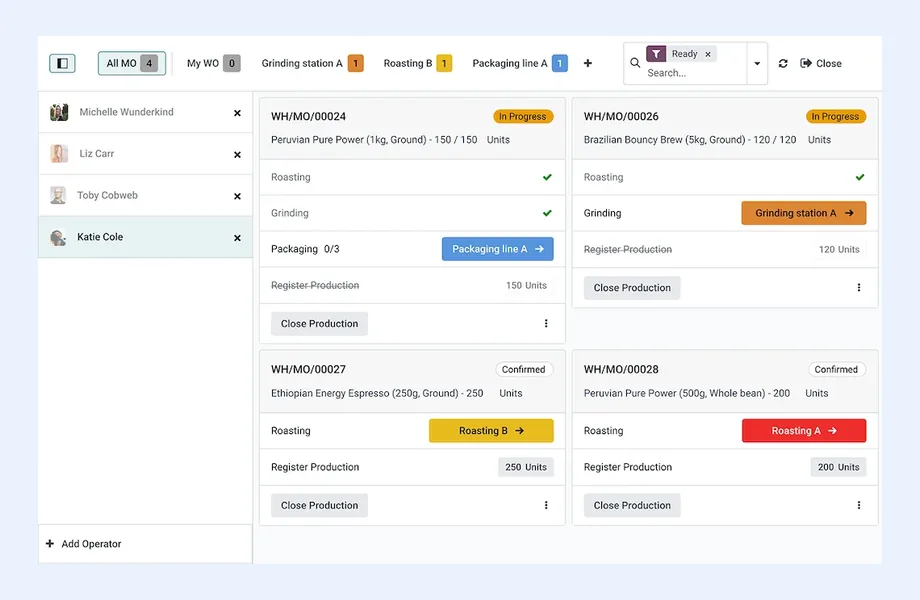
UAE shop floors are multilingual, so work order screens and instructions must be simple. Odoo lets each user choose an interface language, and work instructions can carry pictures and short steps. Tablet-based shop floor screens with start, pause and finish buttons are generally an Enterprise feature; in Community, operators or supervisors record progress on the standard work order view, which works but takes more training. I confirm which applies before anyone buys tablets.
Community also lacks Quality, the Master Production Schedule and PLM, which matter more to manufacturers than to traders. If the plan is Community plus third-party modules, I list exactly which modules and who will maintain them through upgrades.
Odoo MRP is not the right answer here when:
In those cases I compare alternatives neutrally. For the country-level view see Odoo consultant UAE and manufacturing ERP UAE; my broader advisory work is on ERP consultant UAE and the UAE hub.

Tell me about your business and current systems. I’ll suggest the most sensible first step.
Book a Consultation
Not sure which ERP you need?
Share your business requirements with me and I will help you understand the right process, architecture and platform before implementation.
FAQ
Yes. Each finishing vendor can be set up as a subcontractor with its own stock location, and the coated item gets a subcontracting BoM. Profiles sent out and items returned are both recorded, so you can see what sits at each coater and what the coating has added to cost.
Not natively by length. Odoo converts between units of measure and records scrap, but it does not keep a register of usable remnants or optimize cutting. Most plants use a cutting tool alongside it and return usable offcuts to stock as a separate item. I agree that rule with your plant manager and finance.
Yes, with design. Manufacturing orders created from project sales orders can carry a project reference, through analytic distribution where your version supports it, so material, labor and subcontract costs can be compared with contract value. I test the report with your finance manager on a pilot project before rollout.
Odoo supports Arabic and can print documents in Arabic and English, but bilingual layouts need report design work. I specify the templates your buyers and contractors expect, including batch, production and expiry details, and test them with real lots before go-live.
Yes. I work remotely within Gulf working hours, with workshops by video and recorded walkthroughs for supervisors on other shifts. Factory visits are possible by arrangement, for example before cutover, but most configuration review and testing is done remotely through shared screens.
Every business is different. Share where you are today and what you want to fix, and I’ll tell you honestly whether and how I can help.
Book a Consultation
Insights
 Book a Consultation
Book a consultation to talk through your processes, systems and goals. I’ll reply with practical next steps - no obligation.