Contact Info

 Jeddah
How can an ERP consultant help a Jeddah business?
In Jeddah, an ERP consultant helps importers using the Red Sea port, family-owned trading houses, food and consumer goods distributors, hotels and caterers get control of buying, storing, selling and collecting. Common needs are goods in transit, van sales with route settlement, batch and expiry tracking, key account rebates, governance across related family companies and planning for pilgrimage-season demand. I design around those patterns and work with Jeddah teams remotely.
Last reviewed by Vikas Saroj
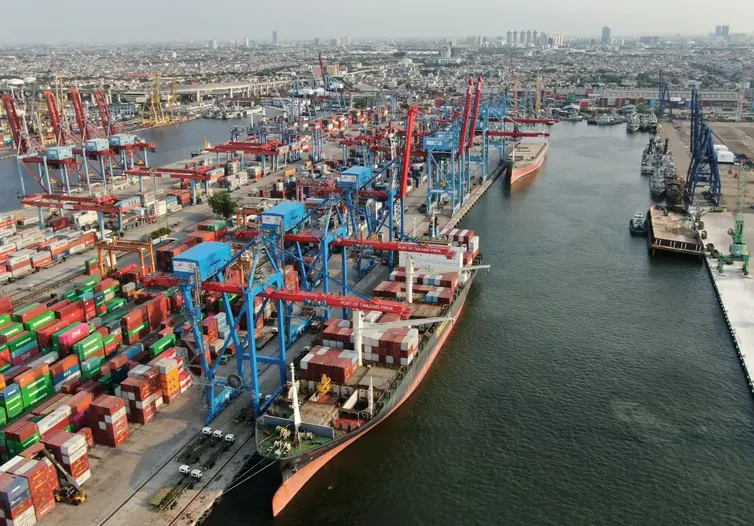
I work remotely with businesses in Jeddah, a Red Sea port city with a long trading history. Many of its companies import through the port and distribute across the western region and beyond: food and consumer goods, building materials, spare parts, household products. A large share are family-owned groups that have grown over generations, often running several related businesses under one family name.
Jeddah is also the main gateway for visitors heading to Makkah and Madinah, which gives hotels, caterers and transport operators a rhythm of demand that few other cities share. Each of these business types needs different things from an ERP, so I begin by understanding how your company buys, stores, sells and gets paid before any software is discussed.

 What I Do
Most Jeddah engagements involve stock that moves quickly and owners who want a clear view of every business they run.

I design purchase planning around supplier lead times, supplier advances, goods in transit, partial shipments and container-level receiving, so buyers know what is on the water and finance knows what has been paid for.

I set up related companies, shared services and owner-level dashboards so family shareholders see each business clearly, related-party transactions are recorded properly and access is limited to what each manager should see.

I scope route planning, van stock loading, mobile ordering and invoicing, cash and credit collection and end-of-day settlement, so every van's stock and cash reconciles before the next route starts.

For food and FMCG stock, I design batch tracking, first-expiry-first-out picking, near-expiry alerts and temperature-controlled storage locations, so write-offs are visible early and recalls can be traced quickly.

I structure customer-specific price lists, promotions, listing fees, rebates and returns for supermarket and hypermarket chains, so the margin on each key account is measured after every deduction it carries.

For hotels, caterers and transport operators, I design purchasing forecasts, group booking deposits, agent commissions and temporary staffing costs around periods of peak visitor demand, so busy seasons are planned rather than improvised.
My Consulting Journey
Business first, technology second. You can hire me for one step - a BRD, a gap analysis, a vendor shortlist - or for the whole journey.
How I Work
Learn how the business really runs
 Interview owners and long-serving staff
Walk through warehouse and van routes
Map each related company's role
Collect current reports and workbooks
Interview owners and long-serving staff
Walk through warehouse and van routes
Map each related company's role
Collect current reports and workbooks
Agree processes before choosing software
Write the target process maps
Define approval and access rules
Shortlist platforms on distribution scenarios
Plan mobile and handheld needs
Implement in stages and stabilize
Go live one business first
Test van settlement and expiry flows
Train supervisors to train others
Review stock accuracy after go-live
For a Jeddah importer, the purchase order is only the start. Goods may be paid for partly in advance, shipped in several containers, held up at clearance and received in batches over weeks. Meanwhile sales teams are taking orders against stock that has not landed yet.
When this runs on spreadsheets, three things tend to go wrong. Buyers lose sight of what is already on the water and reorder too early. Finance cannot see supplier advances against open orders, so balances are unclear. And sales promise delivery dates that the warehouse cannot keep.
I design the purchasing side of the ERP to show goods in transit as a distinct status, link supplier advances to their purchase orders, allow partial receipts per container, and add clearing, freight and duty costs to the items they belong to. Available-to-promise figures then include confirmed incoming stock, with sensible rules about when it can be sold. These requirements matter most for the general trading houses and distributors that make up much of the city's private sector. My trading industry page covers the full purchase-to-sale process, and the national e-invoicing and VAT context is on my Saudi Arabia ERP consultant page.
Many of Jeddah's established companies belong to families who built them over decades. A typical group might hold a food import business, a building materials trader, a property company and a car parts shop, sharing a warehouse, drivers and an accounts team. Decisions are fast because the owners know the business intimately, but much of that knowledge lives in people's heads and in a trusted accountant's workbooks.
An ERP project in this setting is as much about governance as software. I help define which companies are separate legal entities and which are divisions, how shared costs such as rent, staff and transport are recharged, and how sales and purchases between related companies are recorded. Owners usually want a single dashboard across the group, while managers of each business should see only their own figures.
As a new generation joins the business, approval rules often need to be written down for the first time: who can approve a discount, a supplier payment or a new credit limit. I document these with the family before configuration, because a system cannot enforce rules nobody has agreed. My business process consulting work is often the first step here.
Food and consumer goods distributors in Jeddah serve two very different customer types: modern trade chains with formal contracts, and a long tail of small groceries and restaurants served by van routes. Each places its own demands on the ERP.
Key accounts come with negotiated price lists, promotions, listing fees, volume rebates and returns policies. Unless these are recorded against each customer, a high-volume account can quietly become unprofitable. I structure trade terms so that net margin per account is reported after every deduction.
Van sales need mobile ordering and invoicing, stock loaded per van, collections in cash or on credit, and an end-of-day settlement that reconciles stock, cash and invoices before the next route. Because those handheld invoices are tax invoices, the mobile solution must work with your e-invoicing setup, which I check with the vendor rather than assume.
Across both channels, food stock needs batch numbers, expiry dates, first-expiry-first-out picking and chilled or frozen locations. Near-expiry stock should trigger action before it becomes a write-off. My food and beverage industry page sets out the full process map for these businesses.
As the main arrival point for pilgrims traveling to Makkah and Madinah, Jeddah supports a hospitality and services sector whose demand follows the Hajj and Umrah seasons. Hotels, catering companies, transport operators and suppliers to them see sharp peaks and quieter periods, and their systems need to cope with both.
The ERP questions here are practical. Purchasing has to be planned well ahead of peak periods, with supplier agreements and storage capacity in place. Group bookings often come through agents, with deposits, balances and commissions to track per group. Temporary staff join for the busy season and must be onboarded, paid and costed correctly. Management wants to see cost and margin per guest or per group, not just per month.
Point of sale and property management systems remain the front-line tools. The ERP's role is central purchasing, inventory, costing, payroll costs and financial reporting, fed by those operational systems at an agreed level of detail. I help you decide what goes where and how the two connect. My hospitality industry page goes into those integrations in more depth.
I work remotely with businesses in Jeddah from India. My day starts a few hours before yours, which means Jeddah mornings meet my late morning and your afternoons meet my early evening. The two countries take their weekend on different days, so we settle a fixed weekly calendar of sessions on day one.
Family businesses and distributors often have people who rarely sit at a desk: warehouse supervisors, van salesmen, kitchen managers. For them I use short recorded walkthroughs and phone-friendly questionnaires, and I schedule brief calls at the start or end of their routes rather than long workshops.
For groups with several businesses, I usually recommend going live with one company first, stabilizing it, and then rolling the same design out to the others. That limits risk and lets staff learn from a working example. I support that rollout through my ERP implementation guidance. All of it runs remotely, and a visit is only ever arranged in advance for a session that truly needs it. See my Saudi Arabia page for the wider market, or contact me to talk about your business.

Tell me about your business and current systems. I’ll suggest the most sensible first step.
Book a Consultation
Not sure which ERP you need?
Share your business requirements with me and I will help you understand the right process, architecture and platform before implementation.
FAQ
Yes, many ERP platforms support mobile ordering and invoicing through an app or add-on. In Saudi Arabia those invoices must still meet e-invoicing requirements, so I check with the vendor how the mobile solution generates and reports them, and test it alongside end-of-day route settlement before go-live.
Every receipt should record batch and expiry, picking should follow first-expiry-first-out, and reports should flag stock approaching expiry while there is still time to promote or return it. I also set up cold storage locations and batch tracing so a recall can be handled quickly and accurately.
Yes. Related companies can run as separate entities in one system with shared item, customer and supplier records. I design how shared costs are recharged, how related-party sales are recorded, and which managers see which companies, while giving family owners a consolidated view of the whole group.
By planning purchases, storage and staffing well ahead of the busy periods and tracking costs per group or guest. I design purchasing forecasts, group booking deposits, agent commissions and temporary staff costing in the ERP, linked to your point of sale and property systems, so peak seasons are measured and not guessed.
Not as a rule. I work remotely with businesses in Jeddah, and owners, warehouse supervisors and van teams take part through calls, phone videos and shared checklists. A meeting in person can only happen by arrangement for a specific purpose, and the project is planned to succeed without it.
Every business is different. Share where you are today and what you want to fix, and I’ll tell you honestly whether and how I can help.
Book a Consultation
Insights
 Book a Consultation
Book a consultation to talk through your processes, systems and goals. I’ll reply with practical next steps - no obligation.