Contact Info

 Hospitality
What does an ERP consultant for hospitality groups do?
An ERP consultant for hospitality groups designs the shared back office for a portfolio of hotels, restaurants, venues, catering or leisure businesses: multi-entity finance, central procurement, commissary supply, intercompany charges and consolidated reporting. I map how each business unit runs, keep operational systems such as PMS and POS in place, and design one ERP layer that gives owners and investors a consistent view across the group.
Last reviewed by Vikas Saroj
Hospitality groups rarely run one kind of business. A typical portfolio might combine hotels, standalone restaurants, a catering arm, event venues, a beach club or serviced apartments, each with its own operating system, legal entity and reporting habits. Consolidating them every month becomes a project in itself.
As an independent ERP consultant for hospitality groups, I work at the group level: how entities, brands and properties roll up, how central procurement and a commissary supply the units, how shared services are charged, and how owners, lenders and management see one version of performance.
I treat property management systems, POS and booking platforms as operational sources. The ERP is the financial and supply chain backbone that brings them together. For single-property detail, see my pages on hotels and restaurants.
 What I Do
I help hospitality owners, management companies and multi-brand operators build a back office that scales with the portfolio rather than against it.

A chart of accounts, entity, brand and property structure that supports statutory accounts, management reporting and owner reporting at the same time, without parallel spreadsheets.

An inventory of the PMS, POS, booking, event and HR systems across the portfolio, with a recommendation on which to standardize, which to keep, and how each feeds the ERP.

Group supplier agreements, approved item lists, purchasing rules by unit type and approval levels, so the group negotiates once and every unit buys at agreed terms.

Where a central kitchen, bakery or warehouse supplies units, I design internal orders, transfers and transfer pricing so cost lands in the right business and stock is visible.

Rules for management fees, shared staff, central marketing and group services, charged consistently between entities and eliminated cleanly at consolidation.

An independent comparison of ERP platforms for the group, followed by a phased roadmap that brings business units onto the new ERP in a sensible order.
What to Measure
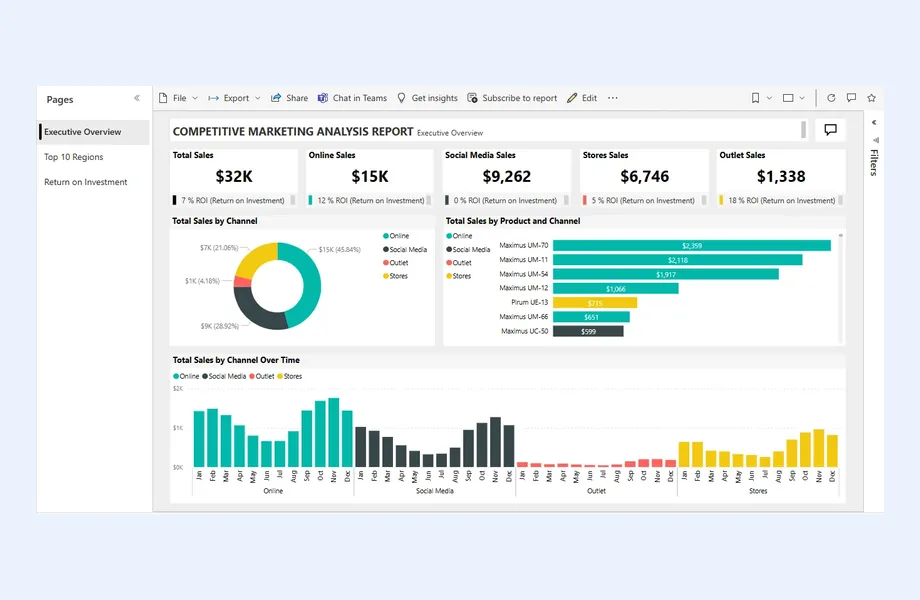
An ERP for hospitality should make these numbers available without a spreadsheet. I design the data model and reports around them from the start.
Platform Fit
How I Work
See the whole portfolio
 Entity and brand structure
Systems landscape inventory
Reporting needs of stakeholders
Procurement and supply flows
Entity and brand structure
Systems landscape inventory
Reporting needs of stakeholders
Procurement and supply flows
Build the group template
Group chart of accounts
Integration architecture
Intercompany rules
Platform selection
Phase units onto the ERP
Pilot business unit
Unit-by-unit rollout plan
Consolidation dashboards
Continuous optimization
At group level, the process map is less about a single guest or a single table and more about how money, supplies and information move between business units. The flows I usually map are:
Once this map exists, many of the group's frustrations become easy to locate: a unit that posts revenue differently, a recharge that nobody agreed, a supplier who invoices units directly at different prices. The map is the starting point of my business process consulting work with hospitality groups.
Hospitality groups that grew through openings or acquisitions often share these problems:
These issues are about structure and standards more than features. A new ERP without a group template simply reproduces the inconsistency in a new system. That is why I usually begin with the structure and integration design, then select a platform through an independent ERP evaluation.
At group level the ERP is mostly a finance, procurement and supply chain platform. The modules that matter most are:
| Module | Role in a hospitality group |
|---|---|
| Multi-entity finance | Ledgers per entity, consolidation, intercompany, multi-currency where the portfolio crosses borders |
| Procurement | Group supplier agreements, approval workflows, purchase orders by unit, invoice matching |
| Inventory and warehouse | Central warehouse, commissary stock, transfers to units, unit stores where needed |
| Production | Commissary recipes and batches, where a central kitchen or bakery supplies units |
| Fixed assets | Property assets, furniture, fixtures and equipment, depreciation and replacement planning |
| HR and payroll | Employees across entities, shared staff, labor cost allocation |
| Reporting and BI | Unit, brand, segment and group reporting, owner packs, budget vs actual |
Unit-level detail lives elsewhere: room revenue, rates and guest data in the PMS, covers and checks in the POS. I cover how a hotel connects its PMS in ERP for hotels, and outlet-level food cost and central kitchen detail in ERP for restaurants.
The hardest decision in a hospitality group ERP project is not the ERP itself but the systems around it. For each operational system I recommend one of three paths:
For every connected system I define the summary level posted to the ERP (daily revenue by unit, outlet and segment is often enough), the master data owner, the mapping to the group chart of accounts and the exception process. An integration middleware or scheduled import may be the right choice where many systems are involved. This design forms the core of the ERP integration scope and prevents the common outcome where finance still rekeys data from five systems after go-live.
Before rolling the ERP across a portfolio, I confirm that the group has:
A phased rollout lets the group learn from the first units and refine the template. It also keeps new openings simple: the next hotel or restaurant gets the same accounts, integrations and processes on day one. Where the group lacks internal ERP leadership during this phase, a fractional ERP lead can provide continuity across the rollout.

Tell me about your business and current systems. I’ll suggest the most sensible first step.
Book a Consultation
Not sure which ERP you need?
Share your business requirements with me and I will help you understand the right process, architecture and platform before implementation.
FAQ
Hotel PMS and restaurant POS systems run daily operations for guests and tables. A group ERP sits above them and handles multi-entity finance, procurement, internal supply, shared services and consolidated reporting. The operational systems feed the ERP; they are not replaced by it.
Not necessarily. Standardizing across similar units usually simplifies integration and reporting. Units with a different business model, such as event venues or catering, may justify their own systems. I assess each case and design the integration either way.
Yes, if it is designed for it from the start. Owner reporting needs the right entity and property structure, agreed reporting formats and clear treatment of management fees and recharges. I define those requirements with the owners' expectations in mind before configuration begins.
The commissary is usually modeled as its own business unit in the ERP, with recipes, production and stock, supplying outlets through internal orders and transfers at an agreed price. My restaurants page covers the outlet side of that flow in more detail.
I lead the business analysis, design, platform selection and implementation oversight, and I can manage the project on your side. Technical configuration and development are usually delivered by an implementation partner or your IT team, which I help you select and keep on scope.
Every business is different. Share where you are today and what you want to fix, and I’ll tell you honestly whether and how I can help.
Book a Consultation
Insights
 Book a Consultation
Book a consultation to talk through your processes, systems and goals. I’ll reply with practical next steps - no obligation.