Contact Info

 Doha
Doha
What does an Odoo consultant do for Doha businesses?
An Odoo consultant designs how Odoo's apps should run a specific business before anything is configured. In Doha that often means made-to-measure work: majlis furniture and curtains measured in a customer's home, abayas and thobes cut to a client's measurements, signage produced against approved artwork, plus companies stuck on an old Odoo version. I work remotely and independently, and I sell no licenses.
Last reviewed by Vikas Saroj
A distinctive part of Doha's economy makes things one customer at a time. Majlis seating, curtains and upholstery are measured in the client's home. Abayas and thobes are cut to a person's measurements in boutiques and tailoring workshops. Signage, printing and exhibition branding are produced to approved artwork against tight event deadlines. Each order is a small project with its own materials, steps and delivery.
Odoo can model this well when sales, manufacturing, stock and delivery are designed together, and badly when they are configured app by app. I work as a remote, freelance Odoo consultant: I map the order journey, decide which apps and edition features you need, and write a design that your implementer builds and I help you test.
 What I Do
The aim is a design where one customer order carries through measurement, production, stock and delivery without being retyped.

I design how a home visit becomes a quotation, how a confirmed order creates production and purchasing, and how installation is scheduled and closed for furniture and curtain businesses.

I specify how each customer's measurements are stored, reused and versioned, so repeat orders at a tailoring boutique do not depend on a paper card in a drawer.

I set units of measure for fabric, foam, vinyl and boards, define how consumption is recorded per order, and decide whether offcuts are tracked or written off.

For signage and print workshops, I design an approval step so that production cannot start until the customer has signed off the artwork, size and finish.

For companies on an old Odoo version, I assess custom modules, data and edition, then plan an upgrade or a fresh start with a clear test approach.

I review the implementer's scope against the design, check configuration in a test database, and lead acceptance testing with real past orders.
How I Work
Follow real orders end to end
 Pick recent typical orders
Trace each step and document
List materials and units
Note approvals and handoffs
Pick recent typical orders
Trace each step and document
List materials and units
Note approvals and handoffs
Apps, edition and data model
Choose apps and edition
Define products and variants
Design approval steps
Plan measurement storage
Test with real past orders
Replay past orders in testing
Check costs against actuals
Train order takers first
Agree go-live criteria
Furnishing a majlis or a villa in Doha is often a made-to-measure job. A salesperson or estimator visits the home, measures walls, windows and seating areas, and the customer chooses fabrics, foam, trims and finishes. The order then moves through a workshop, often in the Industrial Area, before an installation team returns to fit it.
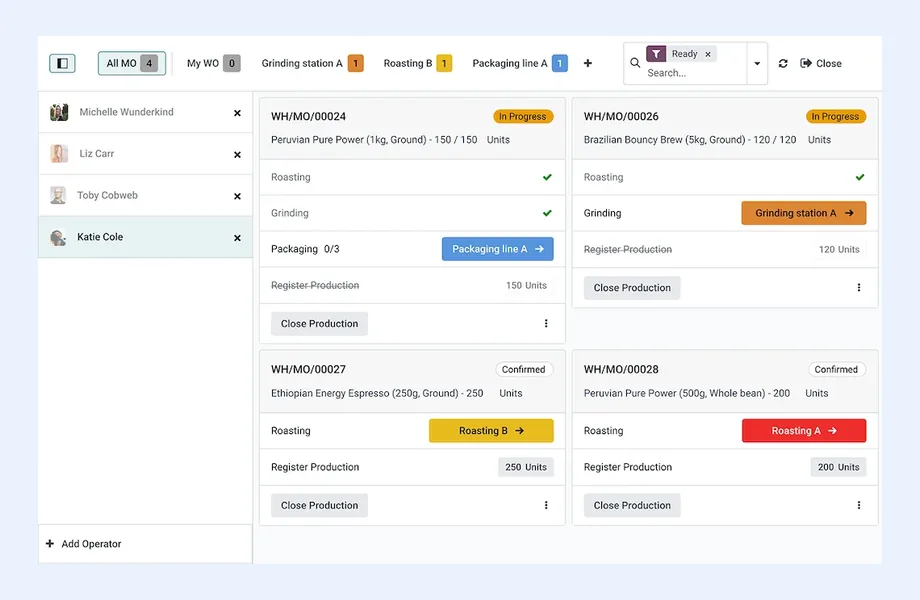
In Odoo, this touches several apps that must be designed together. Sales holds the quotation, possibly with optional items and variants for fabric and finish. Manufacturing creates the work order and consumes materials. Purchase buys fabric that is not in stock. Inventory tracks rolls and offcuts. Installation can be scheduled through Project, or through Field Service where the edition includes it.
The decisions that matter most are:
Calculating materials from dimensions usually needs some custom work, and capturing measurements in extra fields may need Studio, which may depend on the edition. I flag these choices early so they are priced into the project. The Odoo Manufacturing page covers the production side in more detail.
Doha's tailoring sector ranges from small workshops in older districts to boutique labels with showrooms in malls and an online presence. Many combine ready-made pieces with made-to-measure orders, and the made-to-measure side is where spreadsheets and paper cards struggle.
A boutique needs to know each customer's measurements, preferred styles and past orders, and to reuse them for the next order. It also needs to track fabric bought by the meter, embellishments and trims, the tailor assigned to each piece, fitting appointments and the promised delivery date, which matters more than usual before Eid and wedding seasons.
An Odoo design for a boutique typically covers:
Measurement storage almost always needs fields beyond Odoo's standard customer form, which means Studio or a small custom module, and Studio may depend on the edition. Customer measurements are personal data, so access should be limited to the staff who need them. My retail industry page describes the wider retail picture.
Doha's busy calendar of exhibitions, conferences, sporting events and store openings keeps signage, large-format printing and branding workshops in steady demand, with sharp peaks around major events. Their jobs combine design, approval, production and installation, frequently under deadlines that cannot move.
The typical Odoo flow starts with a quotation built from configurable products: size, material, finish, illumination, quantity and installation. Once the customer approves the artwork and the quote, a manufacturing order or project is created, materials such as vinyl, acrylic and aluminum are reserved, and installation is scheduled for the venue.
Design points I focus on for these businesses:
Where the business is closer to a project contractor than a workshop, Odoo Project with timesheets may carry more of the work than Manufacturing. The ERP for job costing page explains how to choose.
A number of Doha businesses adopted Odoo some time ago through a local implementer, often with custom modules for local documents, approvals or reports. Some years later the implementer has moved on, the version is no longer supported, and nobody is confident that an upgrade will not break something.
The first step is an honest assessment rather than an immediate upgrade. I look at:
From there, there are usually three options. Upgrade the existing database, with custom modules rewritten or dropped. Start fresh on a current version and migrate only master data and open balances. Or, where Odoo no longer fits, move to another platform. Each has different risks and effort, and the right one depends on how much history must stay accessible in the live system.
Whatever the route, I insist on a test upgrade and a scripted check of key reports before anything goes live. My ERP data migration service covers the data side.
I work remotely with Doha businesses as an independent Odoo consultant. The engagement runs in English. Arabic invoices, delivery notes and customer messages are prepared and checked by Arabic-speaking staff on your side or by your implementer.
For made-to-order businesses, the most useful thing a client can share is a handful of real, completed orders: the measurement sheet or brief, the quotation, materials used, photos of the finished work and the final invoice. I trace each order through the current process, then use the same orders as test cases once Odoo is configured. If the system cannot reproduce last month's orders with sensible costs, it is not ready.
I also keep the first phase deliberately narrow. Getting quotation, production and delivery right for the main product line matters more than adding every app at once. Website, marketing and loyalty can follow once the core flow is trusted.
On-site visits to a workshop or showroom are possible by arrangement but are not needed for the design. National topics such as the Qatar localization, riyal reporting and hosting are on the Odoo consultant in Qatar page, and the ERP business analyst in Doha page covers requirement work before platform choice.

Tell me about your business and current systems. I’ll suggest the most sensible first step.
Book a Consultation
Not sure which ERP you need?
Share your business requirements with me and I will help you understand the right process, architecture and platform before implementation.
FAQ
Not fully out of the box. Odoo handles variants, units of measure and bills of materials, but calculating quantities from dimensions usually needs a configurable product setup with some custom logic. I define the rules with your workshop team first, so the implementer can estimate the custom work accurately.
Usually on the customer record or a linked measurement record, with dates so each set is kept. This needs fields beyond the standard form, added through Studio, which may depend on the edition, or a small module. Access should be limited to staff who need it.
Start with an assessment of the edition, custom modules and data quality. Then compare upgrading the existing database with starting fresh on a current version and migrating master data and open balances. The better route depends on how much history you need live and how much custom work is still useful.
It can make capacity visible. If jobs are planned with realistic operation times and materials are reserved when orders are confirmed, sales can check workload before promising a date. The system will not create capacity, but it helps avoid accepting work that cannot be delivered.
Every business is different. Share where you are today and what you want to fix, and I’ll tell you honestly whether and how I can help.
Book a Consultation
Insights
 Book a Consultation
Book a consultation to talk through your processes, systems and goals. I’ll reply with practical next steps - no obligation.