Contact Info
 AI Search, Qatar
How does AI search optimization help companies in Qatar?
For Qatar, AI search optimization means improving the evidence that Google AI Overviews, ChatGPT search, Perplexity and Copilot draw on when buyers ask about local suppliers in Arabic or English. Working remotely, I test real prompts, separate the Qatar entity from its regional group, write answer-first pages for procurement questions, review local sources and measure referrals honestly, without promising inclusion.
Last reviewed by Vikas Saroj
A facilities director at a Lusail development might ask an assistant which companies in Qatar maintain building management systems. A family office might ask the same question in Arabic. Each receives a short answer naming a few suppliers, and the two lists may not match. What those answers say about your company depends on the evidence the assistant can find, and in a small market that evidence is often thin or out of date.
I work remotely with businesses in Qatar to strengthen that evidence: Qatar-specific pages in Arabic and English, a clear statement of which entity operates in the country, structured data, corrections in local sources and an honest log of what assistants say. A place in any AI answer is outside anyone's control, so it is never part of the promise.

 What I Do
The work concentrates on the facts assistants most often get wrong about Qatar businesses: where they operate, which entity is local and what they actually supply.

A stable list of buyer questions, worded as Qatar customers really put them in both Arabic and English and confirmed by native speakers on your team, used to see which companies assistants name and which sources they cite.

A short approved record of your Qatar legal name and suffix, Arabic name, trading name, licensing body, parent group and services, against which every later correction is checked.

Organization structured data that separates the Qatar company from its regional parent, using parent and sub-organization links, matching addresses and consistent identifiers on both language versions of the site.

Pages that answer what project owners and procurement teams ask before inviting a supplier, such as Qatar registration, local stock, service coverage, mobilization and documents, each with the direct answer first.

A list of Qatar sources that assistants cite for your prompts, such as press, chamber and association listings, event exhibitor pages and review profiles, sorted into correct, wrong and missing.

A dated prompt log, an AI referral channel in analytics and a discovery question in your CRM, read together because counts in a market of this size stay modest and need context.
How I Work
Test what assistants say now
 Agree Arabic and English prompts
Record names and citations
Note regional mix-ups
Compare with the entity statement
Agree Arabic and English prompts
Record names and citations
Note regional mix-ups
Compare with the entity statement
Fix facts, pages and markup
Correct about and contact pages
Add group and branch markup
Write procurement answer pages
Request directory corrections
Repeat the checks and report
Rerun the prompt log
Review AI referral sessions
Read CRM discovery answers
Plan the next corrections
Ask an assistant for a fit-out contractor in Doha or a supplier of medical consumables in Qatar, and the answer may include companies based in Dubai or Riyadh, a regional distributor that mentions Qatar only in a footer, or a firm that left the market some time ago. That happens because the pool of pages about Qatar suppliers is small. When Google AI Overviews, ChatGPT search, Perplexity, Copilot or a Gemini-style assistant cannot find enough Qatar-specific evidence, it widens the search to the region and presents what it finds with the same confidence.
Language shifts the result again. A question in Arabic usually receives an answer in Arabic, built partly from English pages that the assistant translates on the fly, so your services may be described in wording no customer in Qatar would use. A question in English may overlook an Arabic-first family business whose English presence is a single page. Two answers to essentially the same question can name different companies.
The response is to give assistants clear, Qatar-specific evidence in both languages: pages that say plainly that you operate in Qatar, from where and for which customers, with the Arabic text produced or proofread by Arabic-speaking colleagues you trust, while our own working sessions stay in English. My broader framework appears on the AI search optimization page, and techniques for generative answers specifically are on the generative engine optimization page.
Many companies serving Qatar belong to a group with a head office elsewhere in the Gulf or further afield. The Qatar business may be a W.L.L. registered with the Ministry of Commerce and Industry, an entity licensed in the Qatar Financial Centre, a branch of a foreign company, or a local agent acting for an international brand. Each has its own legal name in Arabic and English, its own address and often its own phone number. Assistants frequently blur them, giving the head office address as the Qatar location or attributing a sister company's services to the Qatar entity.
I start with a Qatar entity statement that your management approves: legal and trading names in both languages, registration body, an address built from the building data, services offered in Qatar and the group relationship. The website then states it in plain sentences on the about, contact and Qatar pages, and the structured data mirrors it:
Registry records, chamber listings and supplier registrations are compared against the statement. If a government or registry entry itself is stale, I point it out, and your company or its corporate services provider makes the change. The method is described in more depth on my entity SEO and schema markup pages.
Buyers in contracting, facilities, healthcare and hospitality in Qatar often ask practical questions before they add a supplier to a shortlist. Is the company registered in Qatar, or would it work through an agent? Does it hold stock in the country, or ship from abroad once an order arrives? Who handles warranty and service visits in Doha and beyond? Can it provide Arabic documentation? How quickly can it mobilize a team for a project? An assistant can answer these accurately only if your pages say so.
Your sales and bid teams supply most of these questions, alongside tender clarifications, inquiry emails, WhatsApp chats and Search Console. I assign every question to one page. On the pages that matter most, a one or two sentence reply opens the section, then come scope, coverage, the documents you can supply and the limits of what you offer. A page that states what you do not do is often more quotable than a page that claims everything.
Topics that touch regulation, such as local content preferences, product approvals or tax treatment, need restraint. State how you support customers, point to official sources and suggest readers confirm details with their own advisor, because assistants may repeat a sentence from your site as if it were guidance. Content for business buyers more generally is covered on my B2B SEO page, and the systems behind tender pipelines on the Qatar CRM consulting page.
Assistants do not rely on your website alone. For Qatar businesses, outside sources that describe companies include Arabic and English business press, chamber and association member listings, exhibitor pages from trade events held in Doha, project announcements by developers and contractors, manufacturer pages listing their distributors in Qatar, and review profiles. For restaurants, hotels and attractions, visitor guides, booking platforms and map reviews add another layer, and an assistant answering a visitor's question about where to eat or stay draws heavily on them.
I review which sources assistants cite for your agreed prompts and sort them into three groups: correct, wrong and absent. Inaccurate entries go through whatever correction route each publisher offers. Gaps turn into a modest shortlist of attainable openings, such as an association profile, a distributor entry on a manufacturer's site or a factual contribution to a trade article. For hospitality businesses the practical work is often simpler: menus, hours and booking details published as readable text rather than images or PDFs, and kept identical across the website, listings and booking pages.
I do not recommend paid placements dressed as editorial or planted recommendations on forums. They carry reputational risk and may conflict with advertising rules, so any sponsored content should be labeled and checked with your legal advisor. Citations appear next to answers in tools such as Perplexity, which my Perplexity search optimization page explains, and branch details are handled on the Qatar local SEO page.
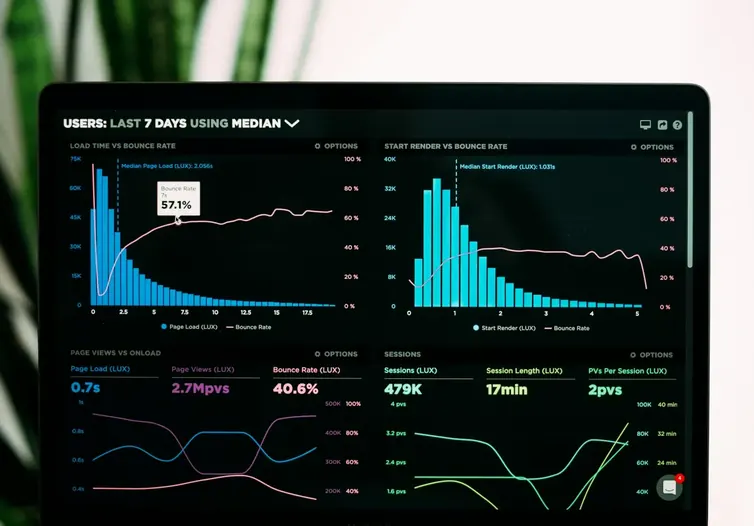
In a market the size of Qatar, the numbers behind AI visibility stay modest, which is a reason to read them carefully rather than ignore them. A few referral sessions from an assistant can come from exactly the procurement manager you wanted to reach. I report a small set of signals side by side:
Qatar's data protection legislation can reach analytics cookies and form submissions, so ask your legal advisor to approve the consent setup. Tags then fire only as visitors' recorded choices allow, and no names, numbers or emails are passed into events.
Reports describe what changed and what to correct next. Whether any assistant names or links to you stays its provider's decision, and I make no guarantee about it. The Qatar overview lists my other services.

Tell me about your business and current systems. I’ll suggest the most sensible first step.
Book a Consultation
Not sure which ERP you need?
Share your business requirements with me and I will help you understand the right process, architecture and platform before implementation.
FAQ
Usually because it found too little Qatar-specific evidence and widened its search to the region. Clear pages stating that you operate in Qatar, with your local entity, address and coverage, plus correct entries in Qatar sources, give assistants better material. Answers still vary between sessions, so changes are measured over time rather than judged on one check.
State the relationship in plain words on the about and contact pages, give the Qatar company its own name, address and phone details, and mirror that in structured data with a parent organization link. That reduces the chance of assistants presenting the head office details as your Qatar location or mixing up sister companies.
Not for everything. Arabic pages matter for topics where owners, government-linked buyers or Arabic-speaking consumers ask questions, because Arabic prompts tend to get Arabic answers. I suggest which pages need an Arabic version based on your customers and the prompt checks. Those pages are drafted or proofread by fluent Arabic writers you select.
No. Answer engines choose their own sources and wording, and the same prompt can return something different tomorrow. My part is to make your facts accurate, consistent and easy to find, correct wrong sources and report changes honestly. Anyone offering guaranteed placement in AI answers is promising something they do not control.
Every business is different. Share where you are today and what you want to fix, and I’ll tell you honestly whether and how I can help.
Book a Consultation
Insights
 Book a Consultation
Book a consultation to talk through your processes, systems and goals. I’ll reply with practical next steps - no obligation.