Contact Info
 Odoo MRP in New Zealand
Can Odoo Manufacturing run a New Zealand food or small manufacturing business?
Odoo Manufacturing can run batch production for many New Zealand food producers, dairy-adjacent makers of cheese, ice cream or nutritional blends, and small manufacturers of equipment or consumer goods. It handles bills of materials, work centers, co-packer subcontracting, batch traceability and costing. Yields, by-products, allergen control and catch weight need careful design or add-ons, and some tools need Enterprise. I assess the fit and design it remotely.
Last reviewed by Vikas Saroj
New Zealand has many producers that sit between a craft kitchen and a large processing plant: a cheese maker supplying supermarkets, an ice cream brand with its own factory, a blender of nutritional powders using local milk ingredients, a sauce maker that also packs for other brands. Alongside them are small manufacturers of trailers, furniture, marine fittings or skincare products. Most have outgrown spreadsheets for production but are nowhere near needing a large enterprise system.
I work remotely with New Zealand owners, production managers and accountants to decide whether Odoo Manufacturing fits that middle ground, and if so, to design recipes, work centers, co-packing and costing that the factory will actually use.
I sell no Odoo licenses and take no commissions from implementers, so if a process-focused system suits your plant better, I will say so.
 What I Do
Each item addresses a decision that New Zealand producers face when production moves into Odoo.

Recipes modeled as bills of materials with batch sizes, ingredient quantities, packaging and sub-assemblies such as bases or mixes, structured so scaling a batch up or down does not distort its cost.

Production at a contract packer modeled with subcontracting, so ingredients you send, finished goods you receive and the packer's fee all appear correctly in stock and cost.

Expected yields, losses and secondary outputs such as whey or trimmings recorded on production orders, so actual consumption and output can be compared with the recipe.

Batch tracking from ingredient to finished goods, allergen attributes on ingredients and products, and production sequencing rules agreed with your quality lead to reduce cross-contact risk.

Ingredient, packaging, labor and overhead costs per batch, with costing method and variance treatment agreed with your accountant and documented before the first real production order runs.

A written view on whether Odoo suits your production type, which Enterprise tools you would need, and where a process-focused system would serve the plant better.
How I Work
Recipes, lines and costing today
 Recipes and specs gathered
Lines and equipment listed
Co-packers identified
Current costing reviewed
Recipes and specs gathered
Lines and equipment listed
Co-packers identified
Current costing reviewed
BoMs, work centers and yields
Pilot family recipes built
Work centers with rates
Yield rules agreed
Edition gaps listed
Pilot batches with the floor
Pilot batches recorded
Trace checked end to end
Cost compared to estimate
Next family scheduled
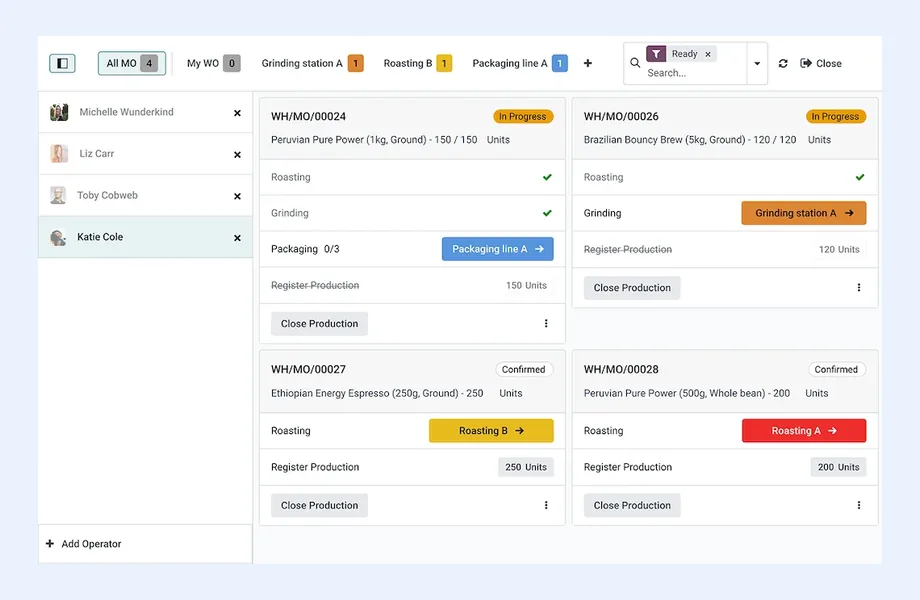
Odoo Manufacturing was designed around discrete production: a bill of materials lists components, and producing one unit consumes them. Food and dairy-adjacent production is closer to process manufacturing. A cheese batch starts with a volume of milk and ends with a variable weight of cheese and whey. An ice cream run produces a base that is then flavored and packed into several pack sizes.
Odoo can handle much of this with careful modeling:
What is harder: true catch weight, where items are sold by variable weight but counted in units; potency or solids-based formulation adjustments; and complex co-product cost allocation. These may need add-ons, custom work or a process-focused system. I test your hardest recipes first, because a design that only works for the simple products will fail when production gets busy. For how Odoo treats work orders and routings outside the food context, read the Odoo Manufacturing overview.
Many New Zealand food and beverage brands do not own all of their production. A beverage brand may have product canned by a contract packer, a snack brand may use a co-manufacturer, and a nutritional powder brand may have blending and canning done by a licensed facility. Some producers are on the other side, packing for other brands as well as their own.
For production you outsource, Odoo's subcontracting feature fits well:
I agree with you how often stock held at the co-packer is counted and reconciled, and how rejected or short batches are recorded. For production you do for others, the questions are whether the brand supplies materials, how its stock is kept separate from yours, and how each batch is reported back. That stock ownership design connects to the provider and cold store setup on my Odoo Inventory in New Zealand page.
A New Zealand food manufacturer's food safety program will expect controls on allergens, critical control points and batch records. The program itself is designed by your food safety consultant and verified externally; Odoo's job is to support the records and controls, not to replace the plan.
Within Odoo, I set up:
Small engineering manufacturers have different quality needs: inspection of welds, dimensions or finishes, and serial numbers for warranty. The same tools apply with different control points. I confirm the edition and version for the specific checks you need before relying on them, and keep the number of mandatory checks realistic for the people on the line.
Owners of growing New Zealand producers usually want one answer from manufacturing data: what does a batch, a case or a unit really cost? Odoo builds that from ingredient and packaging costs on the BoM, labor and machine time through work center rates, and any overhead included in those rates. With your accountant, I agree the costing method per product category, how yield and price variances are treated, and how work center rates are reviewed as wages and energy costs change.
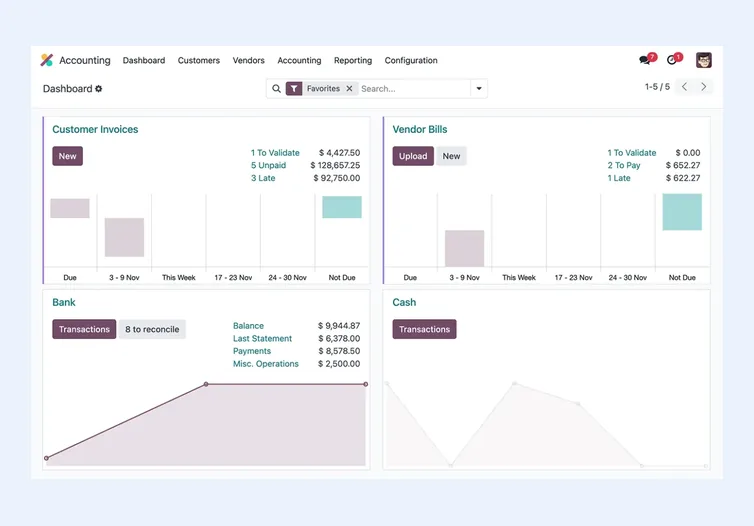
Manufacturing is also where keeping Xero as the ledger becomes awkward. Production creates many stock and valuation movements: ingredients consumed, intermediate products produced, finished goods valued, variances posted. Odoo Accounting records these automatically when perpetual valuation is used. If Xero is the ledger, those movements must be summarized and transferred, usually by a connector or a periodic journal, and reconciling stock value across two systems becomes a monthly task.
That does not mean Xero must go. Some producers keep Xero with periodic stock journals and accept the extra reconciliation. Others move to Odoo Accounting when production starts in Odoo. I lay out both options with your accountant, including bank feeds, payroll and reporting habits. The accounting side is detailed on Odoo Accounting in New Zealand, and job costing in general on ERP for job costing.
Several points change scope and cost, so put them to Odoo or the implementer in writing for the exact version and hosting you plan:
Odoo is probably the wrong tool for large dairy or meat processors with complex co-products, regulatory export systems and high-volume continuous lines, which tend to run specialist process systems. It may also be too much for a small kitchen producing a few products in simple batches, where a production add-on to Xero could do. For machine-intensive plants needing finite scheduling, a specialist planning tool beside Odoo is worth considering. For the overall decision, read Odoo in New Zealand; for broader context, my New Zealand overview and food and beverage ERP pages, and ERP advice for New Zealand businesses.

Tell me about your business and current systems. I’ll suggest the most sensible first step.
Book a Consultation
Not sure which ERP you need?
Share your business requirements with me and I will help you understand the right process, architecture and platform before implementation.
FAQ
Partly. Odoo can model batch recipes, intermediate products, by-products such as whey and actual consumption per order. True catch weight, solids-based formulation and complex co-product costing are harder and may need add-ons or a process-focused system. I test your hardest recipes before recommending Odoo.
Through subcontracting. A purchase order for finished goods can trigger the transfer of your ingredients and packaging to the packer, and the receipt consumes them from the packer's location. The fee adds to product cost, and batch numbers on receipt keep traceability intact.
It is possible, but production generates many valuation movements that must be summarized and transferred to Xero, and stock value then needs reconciling across two systems. Some producers accept that; others move the ledger to Odoo Accounting. I compare both with your accountant.
Odoo does not have a dedicated allergen module in its standard apps, but allergen attributes on ingredients and products, work order instructions and quality checks can support your food safety program. The program itself is set by your food safety consultant, and I configure Odoo to support its records.
Every business is different. Share where you are today and what you want to fix, and I’ll tell you honestly whether and how I can help.
Book a Consultation
Insights
 Book a Consultation
Book a consultation to talk through your processes, systems and goals. I’ll reply with practical next steps - no obligation.