Contact Info

 Zoho in Malaysia
What should a Malaysian business check before running on Zoho?
A Malaysian business moving onto Zoho should check how its Zoho Books edition submits invoices to MyInvois, directly or through a middleware provider, whether SST codes can be applied correctly by item and customer, how MYR and foreign currency sales are handled, and where payroll will sit. I test these points independently with your tax advisor's guidance, then design Zoho CRM, Inventory and Books around your processes, remotely.
Last reviewed by Vikas Saroj
Zoho tends to appeal to Malaysian distributors, importers, professional service firms and growing online sellers that want sales, stock and accounting under one vendor without a heavy implementation. Many are moving off a desktop accounting package and a stack of spreadsheets, often at the same moment that structured e-invoicing becomes a pressing question.
That timing matters. Choosing Zoho in Malaysia means checking the MyInvois route for your edition, getting SST treatment right on every item and customer, and deciding where payroll and statutory contributions are handled. I settle those points first, then shape the Zoho apps around how your team actually sells, buys and delivers.
The work is remote and in English, free of any commercial link with Zoho or the firms that sell it locally, with Malay or Chinese materials prepared by your team.
 What I Do
Each item answers a question Malaysian owners and finance managers raise before trusting Zoho with invoicing.

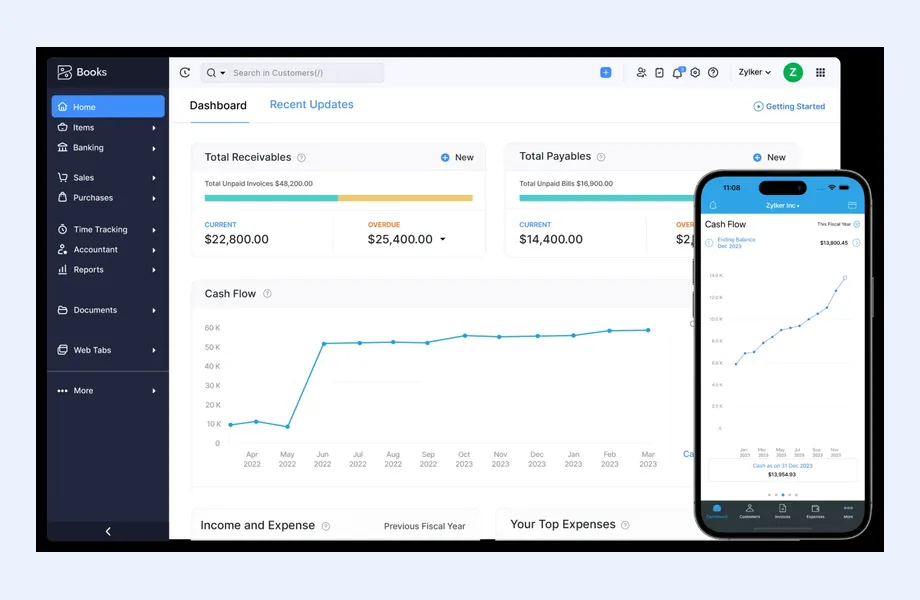
I confirm how your Zoho Books edition submits invoices to MyInvois, whether directly or through a middleware provider, and test standard invoices, credit notes and validation responses before go-live.

Following your tax advisor's guidance, I set SST treatment on items, services and customers so sales tax and service tax apply by default and overrides stay with people who understand them.

Zoho CRM and Inventory designed for dealer networks, key accounts and walk-in trade, with price lists by customer group and currency and stock visible across warehouses.

Quotes, invoices and payments in MYR, USD, SGD or other currencies, with exchange differences posted consistently and customer statements that match what the customer actually owes.

Customer tax identification numbers, business registration details, addresses and item classification codes cleaned before migration, so e-invoices are not rejected for missing or wrong data.

If a Malaysian Zoho implementer handles configuration or on-site training, I write the requirements, check their setup against them and run acceptance testing on your behalf.
How I Work
Prove invoicing and tax fit
 MyInvois route tested
SST cases agreed
Currencies and entities listed
Payroll boundary set
MyInvois route tested
SST cases agreed
Currencies and entities listed
Payroll boundary set
Shape Zoho around your trade
CRM and price lists
Warehouses and items
Tax master data cleaned
Acceptance scripts written
Switch over with control
Balances reconciled
First e-invoices monitored
Staff trained by role
Early issues resolved
Malaysia's national e-invoicing system, MyInvois, is run by the Inland Revenue Board and checks each invoice and issues a validation result. Phasing has been revised along the way, so ask your tax advisor which obligations reach your business and from what point.
For a Zoho user, the practical questions are about the route and the data:
Master data is the quiet risk. Customer tax identification numbers, registration details and classification codes need to be complete before the first submission. I include that clean-up in migration and test every document type in a trial organization. More on the finance side is on my Zoho Books page.
SST in Malaysia splits into a sales tax that touches certain goods and a service tax that touches certain services. Which of your items and services are in scope, and which exemptions apply, is your tax advisor's decision. My job is to make Zoho apply that decision on every document without relying on staff memory.
I set tax treatment on items, services and customer records, test mixed invoices that combine taxable and non-taxable lines, and check how imported services and exports are recorded. Each scenario becomes a test case your advisor can review alongside the tax report.
Currency design matters for importers and exporters. A distributor may buy in USD, sell to Singapore customers in SGD and report in MYR. I set price lists per currency, agree an exchange rate source with your accountant, and test partial payments and bank charges so receivables stay accurate.
Payroll in Malaysia involves statutory contributions and tax deductions that change from time to time. Check with Zoho whether a Malaysian payroll option is available for your account; keeping a local payroll provider and posting summarized journals into Zoho Books by department is a sound alternative. I design that link either way. General platform advice is collected on the Zoho consulting page.
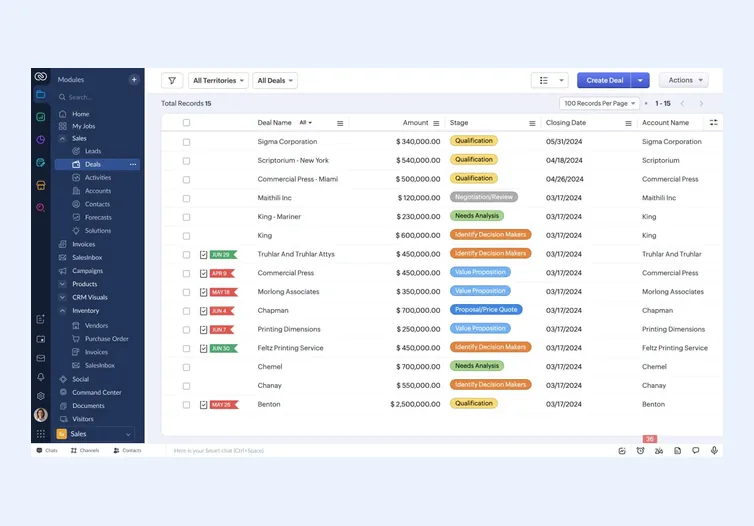
For Malaysian trading companies, the gains from Zoho usually come from the front office. Zoho CRM can hold dealer and key account pipelines, visit plans for sales reps, quotations with SST applied correctly and follow-ups that used to live in WhatsApp threads and personal notebooks. Zoho Inventory then carries orders into stock, picking and delivery, with batch or serial tracking where customers expect it.
Companies running sales into Singapore, Indonesia or Thailand from a Malaysian base need a decision on structure. Separate Zoho Books organizations per legal entity keep tax setups clean; a shared CRM gives management one view of customers across the region. I design intercompany flows and group reporting so the regional picture is visible without merging what should stay separate.
Language is handled by your team. Customer-facing documents in Malay or Chinese, product descriptions and staff training in those languages come from your bilingual staff or a local partner, working from the English designs I prepare. Zoho's templates allow customized layouts, and I make sure any template change does not break the structured e-invoice data.
Platform-neutral advice for Malaysian companies is on my Malaysia ERP consultant page.
Customer and employee data in Zoho falls under Malaysia's personal data protection law. Confirm the Zoho region that will host your account before data is loaded, review Zoho's processing terms with your advisor, and limit personal fields in migration files to what the new system needs. I set up role-based access and retention rules to match your policy and leave legal interpretation to your advisors.
Malaysian Zoho implementers can offer on-site training and local-language support. I work alongside them remotely as your independent advisor, holding the requirements and checking delivery against them. Live sessions sit comfortably in your working day, since Malaysia and India are only slightly apart.
Zoho is not the right answer for every Malaysian company. I would look elsewhere when:
The Malaysia hub explains how I work with Malaysian businesses across platforms.

Tell me about your business and current systems. I’ll suggest the most sensible first step.
Book a Consultation
Not sure which ERP you need?
Share your business requirements with me and I will help you understand the right process, architecture and platform before implementation.
FAQ
Check it for your Zoho Books edition and organization. Submission may be built in or require a middleware provider. Either way, I test standard invoices, credit notes and validation responses in a trial organization, and make sure customer tax details are complete before you start submitting.
Zoho can apply tax treatment by item, service and customer, which covers the way SST is usually configured. Which goods and services are in scope is your tax advisor's decision. I set up the codes from their guidance and test mixed invoices, exports and imported services before go-live.
Yes, typically by giving the Malaysian and Singapore companies their own books in Zoho, each taxed under its own rules, sharing CRM and possibly inventory. I design intercompany trading, shared customer records and group reporting in MYR or another reporting currency, and test each country's tax setup on its own.
Not in those languages: my sessions run in English. Your bilingual staff or a local implementer deliver Malay or Chinese training and documents, using the English designs, process notes and test scripts I prepare. Management, finance and IT sessions with me run in English.
Every business is different. Share where you are today and what you want to fix, and I’ll tell you honestly whether and how I can help.
Book a Consultation
Insights
 Book a Consultation
Book a consultation to talk through your processes, systems and goals. I’ll reply with practical next steps - no obligation.