Contact Info

 Zoho Inventory in Lebanon
Is Zoho Inventory a good fit for a Lebanese importer or distributor?
Zoho Inventory can suit a Lebanese importer or distributor that buys finished goods abroad and sells from a few warehouses or showrooms. It handles items, purchase orders in foreign currencies, batches, serial numbers and landed costs. A consultant tests its costing and warehouse depth against your volumes, plans counts around outages, keeps VAT on invoices in Zoho Books as your accountant defines it, and flags when an ERP fits better. I advise remotely.
Last reviewed by Vikas Saroj
A Lebanese trading company usually buys in dollars or euros from suppliers in Europe, Turkey, Asia or the Gulf, pays freight and clearing in yet another arrangement, and sells to shops, contractors or consumers on price lists set in dollars. If the system cannot carry those costs into each item, margins on the sales report are guesses, and the shelf count drifts away from the screen.
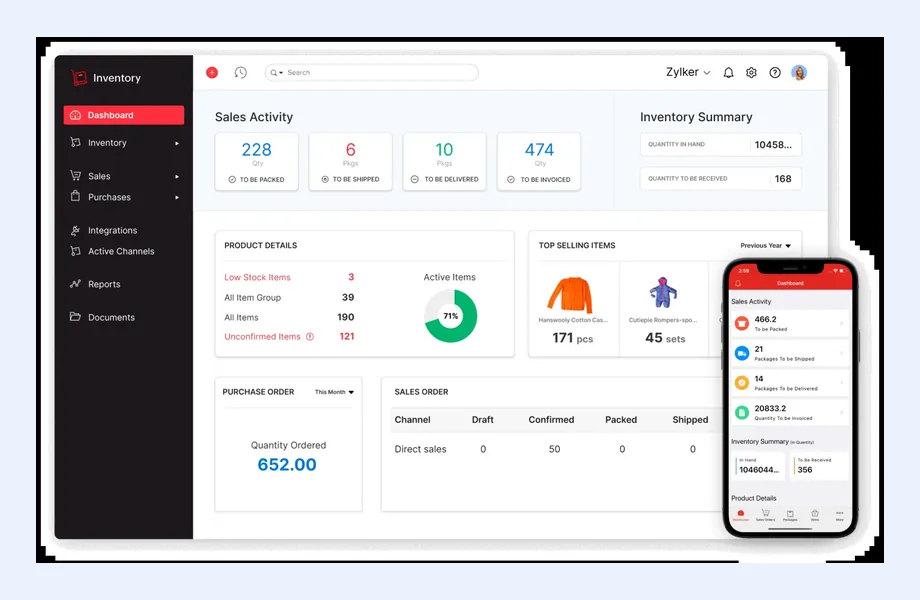
I work remotely with businesses in Lebanon as an independent Zoho Inventory consultant. I am not a Zoho partner and I take no commission on licenses. The engagement runs in English. I map how goods are bought, received, stored and sold, test Zoho Inventory against that flow, and design or review the setup; Arabic or French document text is checked by native speakers on your team.
 What I Do
The work follows the goods, from the supplier's proforma to the customer's delivery note, and settles each rule before stock is loaded.

I trace a real shipment from proforma and deposit through shipping, clearing and receipt, and note which documents, currencies and people are involved at each step, so the setup reflects how goods actually arrive.

I agree with your accountant which freight, clearing, insurance and agent costs are added to stock, how they are spread across items, and which currency and rate each bill is booked at.

I set SKU rules, units for cartons and pieces, item groups for variants, and decide which items need batch and expiry tracking or serial numbers before any opening stock is loaded.

I model each store, showroom and consignment location as a warehouse where it helps, with transfer orders and approvals so stock moving between them is always visible and never simply retyped.

I review which online stores or marketplaces you sell through, whether Zoho offers an integration for each, and how cash-on-delivery orders from local couriers are reconciled back to invoices and payments.

I test Zoho Inventory against your volumes, costing needs and any assembly work, and write a plain recommendation, including when Odoo, ERPNext or another ERP would serve the business better.
How I Work
Follow real shipments and orders
 Walk through a recent import
List cost types per shipment
Note tracked items and channels
Agree currency rules with finance
Walk through a recent import
List cost types per shipment
Note tracked items and channels
Agree currency rules with finance
Set up and test with real data
Items, units and warehouses
Landed cost tested on a shipment
Batch and serial rules applied
Books handoff checked for VAT
Start with the shelf matching the screen
Physical count per warehouse
Opening values agreed with accountant
Scanning tested on site
Weekly cycle counts scheduled
For a Lebanese importer the purchase side carries most of the risk. A supplier proforma arrives in euros, a deposit is paid, the goods ship, and by the time they clear customs several more bills have appeared: freight, insurance, clearing agent, port handling and local transport, each possibly in a different currency. If those costs never reach the items, the margin report flatters every product.
Zoho Inventory, working with Zoho Books, lets purchase orders and bills carry the supplier's currency, and supports adding landed costs to stock received. How those costs are allocated across items, whether by value, quantity or another basis, and which options your edition offers, should be checked and tested on a real shipment before you rely on it. I prepare that test with your accountant:
Customs and tax treatment of imports is a question for your accountant or customs broker, not for the system design. The configuration simply has to record what they decide, the same way every time.
The item master decides whether anything else works. Lebanese traders often carry a mix of goods that need different tracking:
I agree units for buying and selling, so a carton received is never booked as one piece, and item groups for sizes or models where they help reporting. Check whether picking can follow expiry order automatically on your edition, or whether staff choose the batch, and train for whichever applies.
Pricing is the second decision. Many Lebanese traders quote in dollars, with separate price lists for wholesale, retail and contractor customers. Zoho Inventory supports price lists; I agree with sales and finance which currency each list uses, who may change it and how a customer quoted in one currency is invoiced and paid. That rule has to match how customers are set up in Books, because a contact's currency is hard to change once transactions exist. The multi-currency ERP page sets out the wider design questions.
A Lebanese trader may hold stock in a store near the port, a showroom in town, a rented unit elsewhere and sometimes at a customer's site on consignment. I model each location that needs its own stock figure as a warehouse, and leave out those that only add clicks. Movements between them go through transfer orders with a sender and a receiver, so a shortfall shows up at the step where it happened.
Counting is where local conditions bite. A full count during a power cut, with scanners and phones losing charge or signal, can produce numbers nobody trusts. I plan counts accordingly:
Adjustments above an agreed value need approval, and the reason is recorded. The inventory and warehousing page describes the general approach.
Lebanese retailers and distributors increasingly take orders through an online store, social media messages and phone calls, then deliver through their own drivers or a local courier who collects cash. Each route needs a defined path into the system.
Tax belongs on the invoice, and invoices belong in Zoho Books. VAT rates and exemptions are set there as your accountant specifies, and I test that an order raised in Inventory produces an invoice with the right tax, currency and wording. Arabic or French invoice text is checked by native speakers on your team. Support for these customers can run through Zoho Desk in Lebanon.
Zoho Inventory is a capable stock and order tool for trading. It is not an ERP, and I say so when the requirements point elsewhere:
If several of these apply, an ERP evaluation with your own shipments and orders is worth the time before committing. The Zoho One in Lebanon page covers how Inventory sits inside the wider suite, and the Lebanon hub lists my other remote services.

Tell me about your business and current systems. I’ll suggest the most sensible first step.
Book a Consultation
Not sure which ERP you need?
Share your business requirements with me and I will help you understand the right process, architecture and platform before implementation.
FAQ
It supports adding landed costs to stock received, working with Zoho Books bills. How costs are allocated and which options your edition offers should be confirmed with Zoho or the partner and tested on a real shipment. I run that test with your accountant and compare the result with their own calculation.
Price lists can be set in the currency you quote, and invoices are raised in Zoho Books with the currency, rate and VAT treatment your accountant defines. What the rules require on Lebanese invoices is their decision; I make sure the setup applies it consistently and test sample invoices before go-live.
Yes, items can be tracked by batch with expiry dates or by serial number. I decide with you which items need which tracking, because over-tracking slows staff down. Check whether picking follows expiry order automatically on your edition, and plan training around how it works in practice.
It needs a connection, so I plan around outages: counts scheduled when backup power is reliable, printed count sheets as a fallback, and mobile scanning tested on site. Any offline support in the mobile app should be confirmed for your edition before you depend on it.
Every business is different. Share where you are today and what you want to fix, and I’ll tell you honestly whether and how I can help.
Book a Consultation
Insights
 Book a Consultation
Book a consultation to talk through your processes, systems and goals. I’ll reply with practical next steps - no obligation.