Contact Info
 Odoo in Italy
Why use an independent Odoo consultant in Italy?
An independent Odoo consultant in Italy checks how the chosen edition handles Italian accounting and the electronic invoice flow through the Sistema di Interscambio, decides between Community and Enterprise, and designs production, subcontracting and export sales before a partner starts building. I do this remotely in English as your advisor rather than the builder, with your commercialista confirming tax settings and Italian speakers on your team owning local-language material.
Last reviewed by Vikas Saroj
Odoo attracts Italian manufacturers and distributors because it puts sales, purchasing, stock, production and accounting in a single database. For a company that has grown on separate tools, that promise is real, but it depends on decisions taken in the first weeks of the project.
In Italy those decisions start with the electronic invoice flow, the edition you license and the way subcontracted production is handled. I settle them with you in writing, so the implementer builds against a clear design rather than a demo.
 What I Do
Most of my Odoo work in Italy sits before and around the build, where wrong assumptions are cheapest to correct.

I check what the Italian fiscal localization in your target edition covers, which reports your commercialista expects from it and where a community module or partner extension would fill a gap.

I script sending, receiving, rejection and credit note scenarios against the exchange system and run them in a test database, so issues surface before customers see them.

I compare Community with Enterprise, and weigh managed hosting by Odoo against running your own servers, using your requirements, upgrade appetite and GDPR position, then document the reasoning.

I design bills of materials, routings and outside processing steps, including material sent to external workshops, so stock and cost stay correct while goods are away.

Fiscal positions for domestic, EU and non-EU customers, price lists by market, agent commissions and the documents your shipping and customs contacts need. Each element is tested with a real export order.

I read proposals from Italian Odoo implementers line by line, flag custom development hiding behind standard features and help you negotiate a scope your team can sustain.
How I Work
Settle edition, hosting and invoice flow
 Process maps by department
Fit-gap against localization
Edition and hosting decision
Partner shortlist and briefing
Process maps by department
Fit-gap against localization
Edition and hosting decision
Partner shortlist and briefing
Rehearse critical flows in staging
Electronic invoice test cycle
Subcontracting order walkthrough
Opening balances trial load
Commercialista review session
Go live at a period boundary
Cutover checklist signed
First invoices monitored daily
Key users trained by role
Post-launch issue log
Odoo ships fiscal localizations by country, and the Italian one brings a chart of accounts, tax definitions and an electronic invoicing module intended to produce the structured file the exchange system expects. That is a solid starting point, but it is not a guarantee that every case in your business is covered in the version you will run.
When I review it for an Italian client, I look at specific questions:
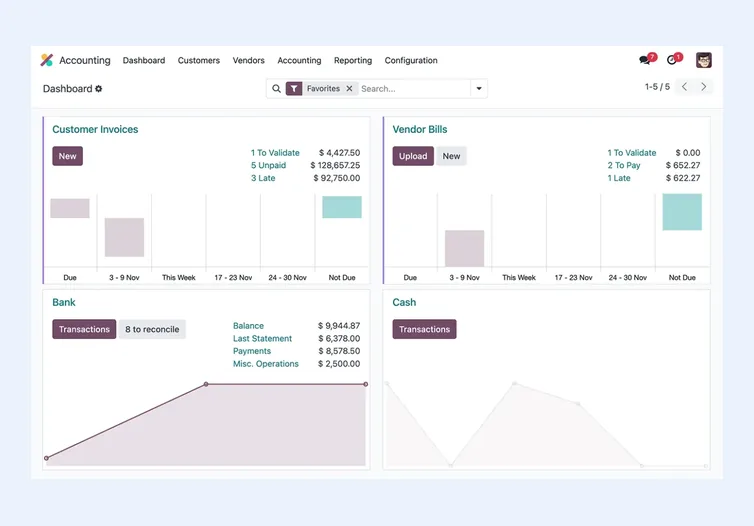
I run each case in a test database using your own sample invoices. Your commercialista confirms which obligations apply and reviews the configuration, because tax treatment is not my call. The Odoo Accounting page describes the finance side in more general terms.
Odoo Community is open source and free to download; Enterprise adds licensed features, hosting options and vendor support. For Italian projects the gap between them is felt most in accounting and e-invoicing. A Community deployment usually depends on community-maintained Italian modules for the electronic invoice flow and local reporting, which can be capable but need someone to keep them current with every Odoo release and every change in technical rules.
I help you compare the two on terms that matter in practice:
Hosting is part of the same decision. Odoo Online and Odoo.sh are managed by Odoo, while self-hosting gives full control and full responsibility. Under GDPR you should know where the database lives and who processes it; I raise that with your data protection lead early. The edition feature list published on odoo.com changes over time, so compare it with your requirement list rather than a sales summary.
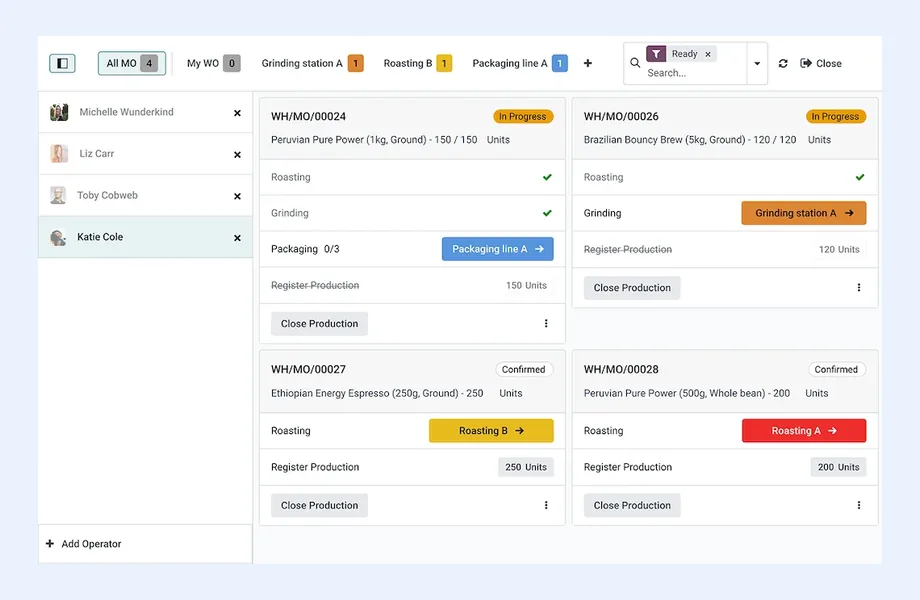
Italian manufacturing often relies on a network of outside workshops for plating, finishing, sewing or machining. Material leaves the plant, comes back transformed and must be costed correctly while it is away. Odoo supports subcontracting, but the right configuration depends on whether the subcontractor supplies components, only adds labor, or returns a semi-finished item for further work.
I map these flows step by step with production and purchasing before anything is configured, then rehearse them in staging with real item codes. The same care goes into:
The Odoo Manufacturing and Odoo Inventory pages go deeper into each area, and my solution design work turns these maps into a build specification.
Italian Odoo projects are usually built by a local partner who configures, develops and supports the system in Italian. I do not compete with that role. I sit on your side: writing the requirements, helping you choose between proposals, checking delivered configuration against the signed design and keeping a visible log of change requests. Where your internal team is capable, I can guide them directly instead.
Migration needs a plan of its own. Italian companies typically arrive from a domestic accounting package, a separate production or warehouse tool and many spreadsheets. I agree with finance which open items and how much history move across, cleanse master data, remap tax codes to the new design and reconcile opening balances with your commercialista. Switching at a period end keeps tax reporting in one system per period. My data migration service sets out the checklist.
Work is remote and in English. Workshops happen in your morning, which falls in my afternoon in India. Italian print layouts and user training are produced by your partner or bilingual staff. More context is on my Italian ERP consultant page and the Italy hub.
Odoo covers a wide range, but I would not recommend it everywhere. These are the Italian situations where I slow the decision down:
In each case I put the trade-offs in a written comparison, often using Odoo vs Dynamics 365 or Odoo vs ERPNext as reference points, so the choice is yours and documented.

Tell me about your business and current systems. I’ll suggest the most sensible first step.
Book a Consultation
Not sure which ERP you need?
Share your business requirements with me and I will help you understand the right process, architecture and platform before implementation.
FAQ
Odoo's Italian localization includes an electronic invoicing module, but how files are transmitted and which cases are covered can differ by edition and version. I confirm the current route with Odoo or your partner, run your own sample documents through send, receive and reject scenarios, and ask your commercialista to review the result.
Sometimes, if community-maintained Italian modules cover your needs and someone reliable keeps them current through upgrades. For many Italian finance teams Enterprise reduces that maintenance risk. I compare both against your requirement list and cost drivers rather than giving a blanket answer.
Yes, Odoo has subcontracting features, but the right setup depends on what the workshop supplies and returns. I map each type of outside processing with your production and purchasing teams and test it in staging so stock and costs remain accurate while goods are away.
No. Your partner builds and supports the system, usually in Italian. I represent your interests: requirements, proposal review, design checks, acceptance testing and change control. Both roles work well together when responsibilities are written down from the start. I also keep a shared decision log so nothing agreed in a meeting gets lost.
The engagement runs in English. Italian-language print layouts, user guides and training sessions are produced by your bilingual staff or the implementation firm, working from my English flow diagrams and acceptance scripts, and I include them in acceptance testing.
Every business is different. Share where you are today and what you want to fix, and I’ll tell you honestly whether and how I can help.
Book a Consultation
Insights
 Book a Consultation
Book a consultation to talk through your processes, systems and goals. I’ll reply with practical next steps - no obligation.