Contact Info

 Ireland
What can business automation do for an Irish company?
Business automation removes repetitive work from an Irish company's finance and operations: capturing supplier invoices, routing approvals under the group's delegation of authority, matching SEPA receipts, assembling the parent's monthly reporting pack and sending routine customer messages. I prioritize what to automate, build workflows in native tools or low-code platforms, keep people reviewing AI-assisted steps and document every workflow. Developers handle custom code, and the work is remote.
Last reviewed by Vikas Saroj
In an Irish subsidiary or growing local business, the back office is often small and stretched. The same few people process supplier invoices, chase approvals across time zones, reconcile euro and sterling bank accounts and build the monthly pack the parent expects by a fixed day. Much of that work is copying and checking, and it competes for time with the judgment calls only they can make.
My remote automation work for Irish businesses targets that routine part. I identify which tasks are frequent and rule-based enough to automate, then build workflows with the tools you have, such as native rules in Zoho, Odoo or ERPNext, or services like Zapier, Make, n8n or Zoho Flow. AI-assisted steps are added only where a person checks the output.
Where a workflow needs custom code or changes in a system your partner or group IT maintains, they build it to my specification and I test it. The aim is less manual effort with controls intact, not automation for its own sake.
 What I Do
Each workflow removes a recurring manual step while keeping the evidence your auditors and group finance rely on.

A short diagnostic of recurring tasks in finance, purchasing and customer service, ranked by frequency, rule clarity and the trouble errors cause, so the first automations are the ones the Irish team will actually feel.

Supplier invoices collected from a shared mailbox, read and checked against purchase orders, with suggested coding shown to a reviewer next to the original, so nothing is posted on the strength of extraction alone.

Approval routes that follow the group's delegation of authority, reach approvers on their phone wherever they are, escalate when a request waits too long and keep a record auditors can follow.

Matching rules for SEPA receipts, card settlements and sterling payments against open items, leaving only unclear cases for a person, with returned direct debits routed to whoever owns the customer.

Monthly reporting packs for the parent assembled from the ledger and operational systems on a schedule, with checks that flag missing data before the pack leaves the Irish team rather than after group finance asks.

Order confirmations, delivery updates, statements and payment reminders sent from templates by rule, with disputed accounts and key customers excluded until someone has looked at them.
How I Work
Find the work worth removing
 List recurring tasks
Rank by frequency and risk
Agree rules with owners
Mark human review points
List recurring tasks
Rank by frequency and risk
Agree rules with owners
Mark human review points
Build and test each workflow
Use native tools first
Add low-code flows
Test exceptions and failures
Document data handling
Keep automations owned and visible
Assign a workflow owner
Alert on failures
Review exception queues
Adjust as rules change
The diagnostic that opens an Irish engagement is short and practical. I sit with finance, operations and customer service staff over a few online sessions and list every task they repeat weekly or monthly. Then we ask, for each one, whether a rule could do it, what an error costs and whether the underlying process is clear enough to automate.
The candidates that tend to surface in Irish companies include:
Some tasks fail the test. A task that happens a few times a year rarely justifies a workflow, and a task whose rules nobody can agree on is a process problem. Those go to process consulting in Ireland first, because automating an unclear process only makes the confusion faster. What remains becomes a ranked backlog that management approves before anything is built.
Supplier invoices are usually the first workflow. The design starts with intake: one mailbox or upload point, so invoices stop arriving in personal inboxes. Each invoice is read, with AI-assisted extraction where layouts vary, and the extracted supplier, amount, currency and tax details are displayed for a reviewer alongside the source document. Where a purchase order exists, the workflow checks price and quantity against it and against the goods receipt, and only differences need attention.
Approval routing follows the delegation of authority the parent has set, expressed as rules by amount, cost center and category. Because approvers are often spread across Ireland, the UK and the parent's home country, the workflow reaches them on their phone, reminds them after a set interval and escalates to a deputy rather than letting the invoice sit. Every decision is logged with the approver and time, which is the evidence auditors and group finance usually ask for.
Structured electronic invoices, which public bodies can receive and which are becoming more common between businesses, can skip the extraction step altogether. Your advisor can say which obligations cover your company. More on the method sits under procurement automation.
Bank reconciliation in an Irish company often means two currencies, several accounts and a mix of SEPA transfers, direct debits, card settlements and occasional sterling receipts. Matching rules can clear the straightforward lines by reference, amount and customer, leaving a short exception list. Card and payment provider settlements are split into sales, fees and refunds so the bank line agrees with the ledger. Returned direct debits are routed to whoever owns the customer relationship.
Month-end reporting is the other large manual block. The parent's pack typically needs the trial balance mapped to group accounts, intercompany balances, headcount and a few operational figures. An automated assembly pulls each element from its source on a schedule, runs checks such as whether intercompany balances agree and whether any account is unmapped, and only then produces the pack for review. A person still signs it off; the automation removes the copying, not the responsibility.
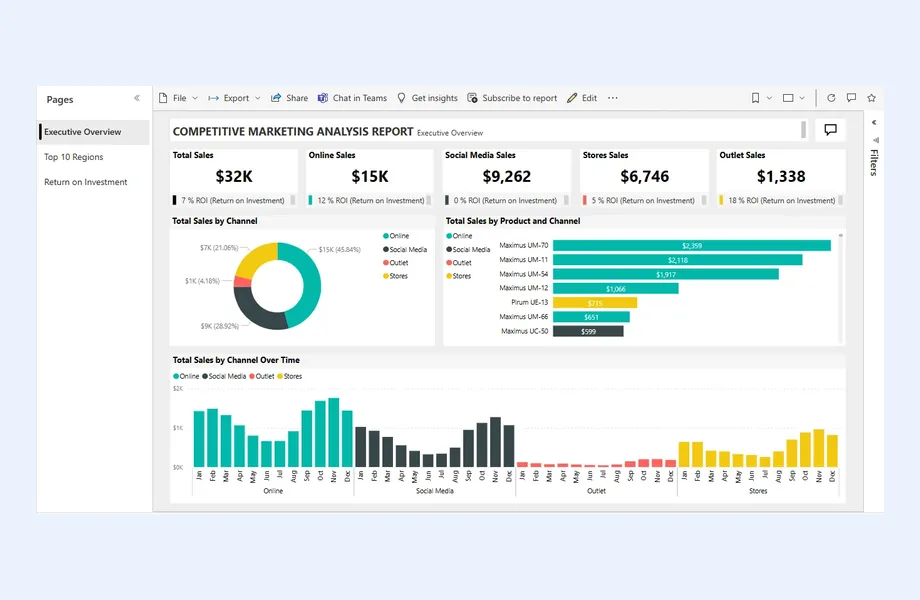
Where reporting becomes a dashboard rather than a file, tools such as Power BI or Zoho Analytics can refresh from the same sources, depending on what the group already uses. This is automation of recurring work, which differs from building the interfaces themselves, covered on my integration page for Ireland.
Irish management teams are usually alert to data protection, and automation adds new places where personal data travels. Each workflow description I write lists the personal data involved, such as supplier contact names, employee details on expense claims or customer emails on reminders, the services that process it and where they are hosted. Where an AI service reads invoices or drafts replies, the description states what is sent, whether the provider keeps it and who reviews the output. Your data protection lead decides whether that is acceptable under GDPR and your own policies.
AI is applied to narrow steps with a human check: extracting fields from an invoice, suggesting a cost code, classifying an incoming customer email or drafting a reply that a person edits and sends. It is not used to approve payments, decide credit or answer customers without review.
Record-keeping needs the same care. Automated steps must not lose the original invoice, overwrite an approval history or delete records your accountant expects you to retain; retention periods are confirmed with your advisor. Each workflow keeps a run log, so you can show what happened to a document months later. The global principles are on my AI and business automation page.
Some steps should stay manual. Releasing a payment run, approving a new supplier's bank details, granting credit to a large customer and judging an unusual VAT treatment all involve judgment and carry real consequences. Automation can prepare the information for those decisions, but a person makes them. The same goes for processes still changing every month; automating them too early locks in a design that is not settled.
The build follows the line on my global service page. My workflows use native ERP and CRM rules and low-code services, plus Zoho Creator where a small custom app is the better fit. Where a workflow needs custom code or changes inside a system your partner or group IT controls, they build to my written specification and I test the result against agreed scenarios.
After go-live each workflow has a named owner in Ireland, alerts when it fails, a visible queue of items waiting for review and a runbook for pausing it. We judge success in plain terms agreed at the start, such as approvals no longer stuck for days or a month-end pack that arrives without late-night spreadsheet work. The work is remote; the Ireland overview lists related services.

Tell me about your business and current systems. I’ll suggest the most sensible first step.
Book a Consultation
Not sure which ERP you need?
Share your business requirements with me and I will help you understand the right process, architecture and platform before implementation.
FAQ
Usually supplier invoice intake and approval, bank matching across euro and sterling accounts, and assembly of the parent's monthly pack. They are frequent, rule-based and visible to management. I confirm the order in a short diagnostic, and any task whose rules are unclear goes to process work before automation.
Yes. Approval rules are built from the delegation of authority by amount, category and cost center, with deputies and escalation when a request waits too long. Every decision is logged with the approver and time. If a group rule does not fit the Irish setup, the mismatch is flagged for group finance rather than quietly worked around.
It can be, with the right setup. I document what each AI step sends, to which service and where it is hosted, and a person reviews every output before it is posted. Whether that use is acceptable under GDPR and your policies is decided by your data protection lead, not by me.
A named owner on your side, supported by a runbook that explains each workflow, its rules, where it is configured and how to pause it. Failures raise alerts to that owner. Where your partner or group IT built part of it, their support responsibilities are agreed in writing before go-live.
Every business is different. Share where you are today and what you want to fix, and I’ll tell you honestly whether and how I can help.
Book a Consultation
Insights
 Book a Consultation
Book a consultation to talk through your processes, systems and goals. I’ll reply with practical next steps - no obligation.