Contact Info

 Saudi Arabia
Which manual work can a Saudi company safely automate?
Repetitive, rule-based work is the safe place to start, as long as people still supervise the workflows that replace it. In a Saudi company that often means checking customer and invoice data before an e-invoice is issued, automating daily branch closing, capturing Arabic and English supplier documents with human review, and reminding teams before guarantees or retention fall due. I pick the candidates, build the workflows and support your team remotely.
Last reviewed by Vikas Saroj
Saudi finance and operations teams carry a heavy load of routine work: validating customer details, chasing branch managers for their daily figures, keying in supplier documents that arrive in two languages, and remembering dates buried in contracts. Each task is small, but together they fill the week.
I work remotely with businesses in the Kingdom to decide which of these tasks can be automated safely, write the rules in plain language, and build the workflows with native ERP and CRM features or low-code platforms. If a step calls for actual programming, that part goes to an in-house developer or your ERP partner, with my rule sheet as their brief.
Automation here means fewer manual steps inside a process. The connection between your ERP and the ZATCA platform is an integration question, covered on my Saudi system integration page.
 What I Do
I start with the tasks people repeat every day and finish with workflows your team can see, pause and maintain.

Automatic checks that block an invoice or credit note when the buyer's VAT number, address or reference to the original invoice is missing, and route the gap to whoever owns that data.

A daily closing form for each branch, automatic comparison of counted cash against system sales, alerts on variances and a photo of the deposit slip attached to the record.

Supplier invoices and delivery notes in Arabic, English or both read into draft records, matched to orders, with unclear fields flagged for your staff to confirm.

Alerts before bank guarantees expire, before retention can be claimed, and when a progress claim is due, sent to the commercial owner with the contract record attached.

Incoming emails sorted by type, routine replies drafted, and long documents summarized, with a person approving every output that leaves the company or changes a record.

The weekly sales, collections and branch performance pack assembled automatically from system data and sent to managers, instead of being rebuilt by hand each time.
How I Work
Pick tasks worth automating
 Shadow routine tasks
Score frequency and risk
Check process is settled
Agree the shortlist
Shadow routine tasks
Score frequency and risk
Check process is settled
Agree the shortlist
Rules first, tools second
Rule sheet per workflow
Native features first
Arabic and edge-case tests
Sign-off by process owner
Make automation accountable
Exception review queue
Failure alerts to owners
Runbooks in shared folder
Review after month-end
The first step is not a tool demo. It is a list of tasks people repeat, gathered by sitting with finance, sales administration, procurement and branch staff and watching a normal day. Every task on the list is then rated on four points: how often it happens, whether it follows clear rules, what a mistake would cost and how hard it would be to build and maintain an automation for it.
A few principles keep the list honest:
The output is a short, ranked backlog that leadership can approve. It typically mixes quick wins, such as automated statements, with larger items that need a developer. The ranking is a judgment agreed with your managers, and it is revisited after the first few automations go live, because real use always changes priorities.
Under Saudi e-invoicing, an invoice that leaves your system with wrong or missing data is harder to correct than it used to be. The connection to ZATCA itself is integration work, handled by your software vendor or partner. What automation can add is a set of checks earlier in the process, so bad data is stopped before an invoice exists.
Examples of rules I write and build into the ERP or CRM workflow:
Which fields are mandatory, and in which cases, comes from your tax advisor and your software vendor's guidance, not from me. My part is turning their answer into rules that the system enforces consistently, and testing those rules with real examples from your business, including simplified and standard invoices where both apply. When the requirements change, the rule sheet shows exactly which checks need updating. The Saudi system integration page covers the platform connection itself.
Retailers, restaurants, clinics and service businesses with branches across the Kingdom share a familiar evening routine: the branch counts cash, someone sends a photo or a message to head office, and the finance team rebuilds the picture the next morning. When a branch forgets, nobody notices for days.
A closing workflow replaces that with a short form per branch. The supervisor enters counted cash and attaches the deposit slip when it is banked. The system compares the count with recorded cash sales and flags any variance above an agreed tolerance to the area manager. Branches that have not closed by a set time receive a reminder, then an escalation. Card settlements are reconciled separately through the integration with your payment provider; the closing workflow only covers what staff physically handle.
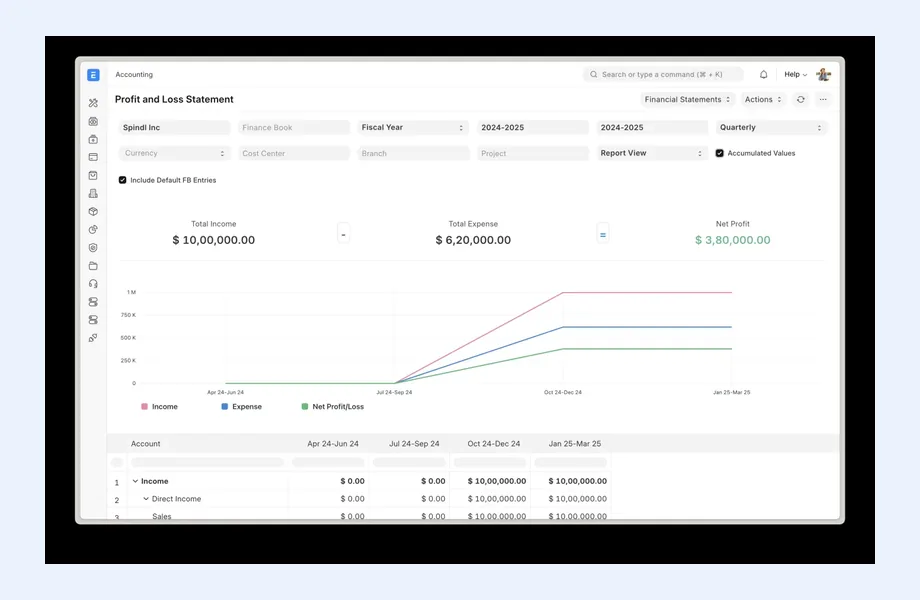
Recurring reports follow the same logic. Instead of an analyst exporting data from several systems every week, a scheduled job assembles the sales, collections and branch performance figures and sends them to the people who act on them. The report definitions are agreed once with management, so every recipient sees the same numbers.
None of this needs a large project. Most of it can be built with the workflow and scheduling features of your ERP, plus a low-code tool where data sits in more than one place. The hard part is agreeing the tolerances, escalation paths and report definitions, which is why I spend more time on the rules than on the build.
Saudi supplier invoices, delivery notes and government letters often arrive in Arabic or in both languages, and layouts differ a great deal. Document capture can still save a lot of typing, but it needs a design that respects that variety. Extraction runs first, fields read with low confidence are highlighted, and a member of your team who reads Arabic confirms them before the record is saved. The engagement runs in English, and the Arabic review step is always done by your staff or a local partner.
AI helps in narrow, supervised roles:
Personal data needs a deliberate decision. Saudi Arabia's Personal Data Protection Law and any sector rules may affect which documents can be sent to which AI or extraction service and where that service processes data. I list the data each workflow touches and the services involved, and your legal advisor confirms what is permitted. Employee identity documents, salary details and patient records are usually kept out of AI steps altogether. Each AI step also logs its input, output and the person who approved it, so decisions can be traced later.
Contracting and service firms hold important dates inside contracts: bank guarantee expiries, retention release points, progress claim cycles and maintenance renewals. A simple automation reads those dates from the contract record and alerts the commercial owner in good time, with the contract attached. It does not decide anything, but it stops dates from being missed because one person was on leave.
Some work should not be automated:
On roles: selecting the automations and writing their rule sheets is my job, and so is building the lighter workflows, whether in the ERP's own rules, Deluge and Zoho Flow on Zoho, or a low-code tool like n8n. Where a workflow needs real programming, a developer on your side or at your partner writes it against my rule sheet, and nothing launches until I have tested it with your process owner.
Each automation has an owner in your business, a runbook and a failure alert. Success is judged in words agreed at the start, such as fewer corrected invoices or branches closing on time, and reviewed after the first month-end. The work is remote, with visits by arrangement, and I take no commission from any vendor. See the Saudi Arabia overview or the global automation service for more.

Tell me about your business and current systems. I’ll suggest the most sensible first step.
Book a Consultation
Not sure which ERP you need?
Share your business requirements with me and I will help you understand the right process, architecture and platform before implementation.
FAQ
The connection to the ZATCA platform is an integration delivered by your software vendor or partner. What I automate are the checks before an invoice is issued, such as complete buyer details and credit notes linked to their original invoice. Your tax advisor and vendor confirm which fields and steps your business must follow.
Yes, with a review step. Extraction tools read many Arabic and bilingual documents, but layouts and scan quality vary, so fields read with low confidence are highlighted and a member of your team confirms them before saving. That keeps the time saving without posting unchecked data.
It can be, if each use is narrow and governed. I list which data each AI step sees and which service processes it, keep sensitive personal data out, log every output and require a person to approve anything that leaves the company. Your legal advisor confirms what data protection rules permit.
Each workflow sends an alert to a named owner when it fails, keeps a run log and has a runbook explaining how to pause it and what to check. Items that could not be processed wait in a review queue rather than disappearing, so nothing is silently lost.
Every business is different. Share where you are today and what you want to fix, and I’ll tell you honestly whether and how I can help.
Book a Consultation
Insights
 Book a Consultation
Book a consultation to talk through your processes, systems and goals. I’ll reply with practical next steps - no obligation.