Contact Info

 ERPNext Accounting India
What does an ERPNext accounting consultant do for an Indian company?
In India, an ERPNext accounting consultant turns Tally-era books into an ERPNext ledger that your CA can audit and file from. The work covers the chart and cost centers, CGST, SGST and IGST accounts for each GSTIN, input tax credit matching, TDS through withholding categories, UPI and gateway receipts, branch and group entities, and the year-end close. I work remotely; tax positions stay with your CA.
Last reviewed by Vikas Saroj
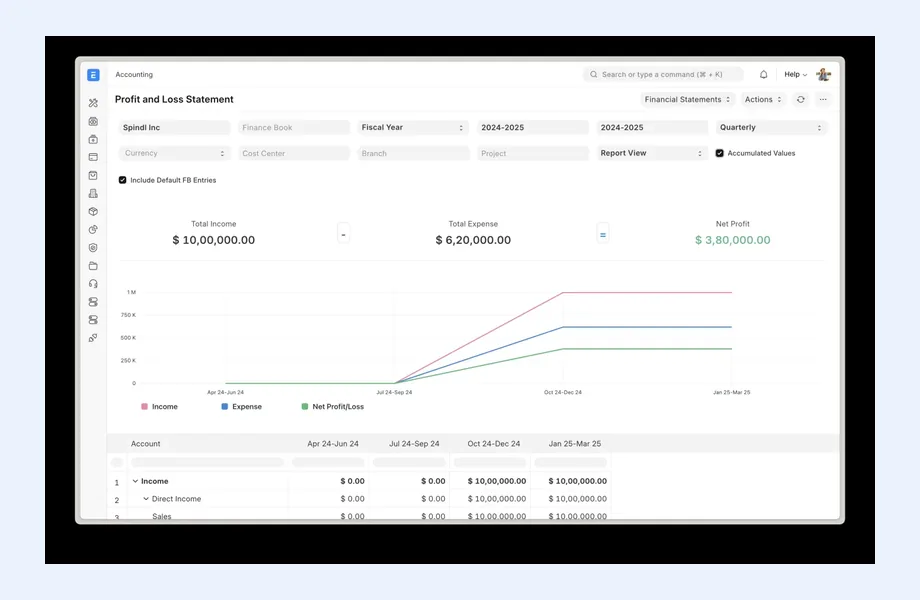
Most Indian companies moving their books into ERPNext have kept accounts in Tally for years, and their CA knows those ledgers well. The move succeeds when the new ledger is just as easy to audit and file from, while giving management the cost center, plant and branch reporting Tally could not.
My ERPNext page for India covers the platform choice, the compliance app stack and the implementer market. This page goes into the accounting itself: how Tally groups become an ERPNext account tree, how GST accounts are arranged for each registration, how input credit and TDS are handled, how UPI and bank receipts are reconciled, and what the year-end close looks like.
I work remotely with CFOs, finance controllers and promoter-led businesses across India, in Indian working hours. Your CA and tax auditor keep responsibility for tax positions and audit opinions. My role is to make ERPNext record transactions the way they need, either leading the finance design or reviewing an implementer's work on your behalf.
 What I Do
The accounting areas Indian finance teams and their CAs ask me to design, test or repair in ERPNext.

Tally groups and ledgers reorganized into an ERPNext chart that matches the statutory statement format your CA prepares, with cost categories rebuilt as cost centers and dimensions.

Separate output and input accounts for central, state and integrated tax for each registration, so every return and set-off can be traced to a ledger balance.

A monthly routine comparing purchase invoices in ERPNext with supplier-reported data, so mismatches are chased before credit is claimed, using the compliance app's reconciliation where available.

Tax withholding categories for the payments you deduct on, thresholds and lower deduction cases recorded with your CA, and liability accounts reconciled before each deposit.

Multi-state branches, plants and group companies designed as companies, cost centers or GSTIN addresses, with inter-company and inter-branch transfers posted correctly.

A monthly close checklist, locked periods after GST filing, a year-end period closing voucher and a file of schedules for the statutory and tax audit.
How I Work
Ledgers, registrations and audits
 Tally groups and ledgers
GSTINs and branches mapped
TDS and TCS scope
CA review points agreed
Tally groups and ledgers
GSTINs and branches mapped
TDS and TCS scope
CA review points agreed
Ledger, taxes and banks
Account tree and cost centers
GST and withholding setup
Bank and UPI accounts
Trial migration reconciled
Run real periods together
First GST period reviewed
Credit matching running
Periods locked after filing
Audit file agreed
Tally organizes accounts into groups and ledgers, with cost categories and cost centers for analysis, and Indian finance teams usually have years of habits built around them. ERPNext's structure is similar enough to make mapping natural, but different enough that copying Tally line by line wastes the opportunity.
My design keeps three layers distinct:
Ledgers created in Tally only to separate party types or locations usually collapse into fewer accounts with a cost center or dimension, which makes reports easier to read. I document each old group and ledger against its new account, cost center or dimension in a mapping sheet your CA reviews before setup. The general mechanics are on the ERPNext accounting page, and the requirement work behind it follows my business analysis approach.
In current ERPNext releases, India-specific GST features come from a separate compliance app, as my ERPNext page for India explains. Whichever version you run, the ledger design is the part that decides whether returns and set-offs can be traced.
I set up, for each GSTIN, separate accounts for central, state and integrated tax on outputs and inputs, plus accounts for reverse charge liabilities and any cess that applies. Tax templates and tax categories then choose intra-state or inter-state treatment from the place of supply. Item tax templates hold rates by HSN or SAC group, so users rarely pick tax manually.
Each month, with your CA or accounts team, I recommend a fixed review:
Credit that has to be reversed or blocked is posted to its own account, so the trail is clear. The rules on eligibility and timing belong to your CA; the ledger simply makes every figure verifiable.
Indian payables carry withholding on almost every contractor, professional and rent payment. ERPNext handles TDS through tax withholding categories linked to suppliers. Each category holds the applicable rate and threshold, and deductions post to a liability account on the purchase invoice or payment. With your CA, I confirm which categories you need, how lower deduction certificates and supplier PAN status are recorded, and how the liability is reconciled before each deposit. TCS on sales, where it applies, is set up the same way on the customer side.
Receipts in India arrive through many channels: UPI, NEFT and RTGS transfers, checks, and payment gateways that settle in batches net of charges. For gateway and UPI aggregator settlements, I route receipts through a clearing account per provider, so each settlement and its charges clear that account and anything left over shows a missing refund or fee.
Statement files from Indian banks are imported and cleared line by line against receipts, payments and journals. Live bank feeds depend on an integration for your bank, which I test rather than assume. Payment reconciliation clears customer advances against invoices, and process statement of accounts can send customers their ledger statements on a schedule. My finance automation page explains how these routines fit together.
Indian businesses often combine a head office, plants and depots in several states and a few related companies. ERPNext can hold all of this, but the structure has to follow legal and GST reality.
Related-party transactions deserve their own tagging, because your auditor will ask for them. ERPNext can produce a consolidated statement across companies for management; statutory consolidation, where required, is normally prepared by your CA from entity trial balances. The multi-company ERP page explains the structural choices, and ERPNext manufacturing in India covers how plant costing feeds these books.
The cleanest move from Tally starts at the beginning of a month, ideally after a GST return has been filed, and often at the start of the financial year so the full year sits in one system. The loading sequence I use:
After each GST period is filed, I lock it through an accounting period or the frozen accounts date. Indian companies also face audit trail expectations for their accounting software, so I check with your CA how ERPNext's document version history and your role settings meet them.
At year end, a period closing voucher closes profit and loss to reserves. The audit file typically includes the trial balance, ledger detail, aged balances, the fixed asset register, GST and TDS reconciliations, related-party listings and inter-company confirmations. The legacy software migration page describes the wider method.
ERPNext accounting suits many Indian businesses, but these situations usually lead me elsewhere:
For businesses in these situations, I would rather recommend staying put or choosing another product than force a fit. The GST, TDS and Tally migration scenarios can be tested on Odoo Accounting in India or Zoho Books for Indian companies just as easily. The ERP consultant page for India explains how that evaluation stays neutral, and the India hub describes remote engagement.

Tell me about your business and current systems. I’ll suggest the most sensible first step.
Book a Consultation
Not sure which ERP you need?
Share your business requirements with me and I will help you understand the right process, architecture and platform before implementation.
FAQ
Tally groups become groups in the ERPNext account tree, ledgers become accounts, and sundry debtors and creditors become customers and suppliers. Tally cost categories and cost centers usually become cost centers or accounting dimensions. I document every mapping in a sheet your CA reviews before setup, and reconcile a trial migration line by line.
Yes. Each registration is held as a company address with its own naming series and GST accounts, and tax is chosen by place of supply. Transfers between registrations in different states run as invoices. Your CA confirms the registration structure; I design the ledger to match it.
Through tax withholding categories linked to suppliers. Each category holds the rate and threshold, and the deduction posts to a liability account on the invoice or payment. Lower deduction cases and PAN status are recorded with your CA, and the liability is reconciled before each deposit.
The India compliance app used with current ERPNext versions includes purchase reconciliation features, which should be confirmed for your version. I set up a monthly routine around them so mismatches are followed up before credit is claimed, and your CA reviews the outcome.
ERPNext keeps version history on documents and controls who can amend or cancel them, which supports an audit trail. Whether your configuration meets current requirements is something to confirm with your CA and auditor, and I configure roles and settings to match what they expect.
Every business is different. Share where you are today and what you want to fix, and I’ll tell you honestly whether and how I can help.
Book a Consultation
Insights
 Book a Consultation
Book a consultation to talk through your processes, systems and goals. I’ll reply with practical next steps - no obligation.