Contact Info

 Noida
Noida
Which Noida businesses suit ERPNext?
ERPNext suits Noida businesses with real stock and production complexity, modest software budgets and a willingness to own their system: corrugated box makers converting paper reels into customer-specific cartons, ready-mix concrete plants billing builders trip by trip, distributors tracking every handset by serial number, and recyclers accounting for electronic waste by weight. As an ERPNext consultant, I design and configure it remotely and flag where it may not fit.
Last reviewed by Vikas Saroj
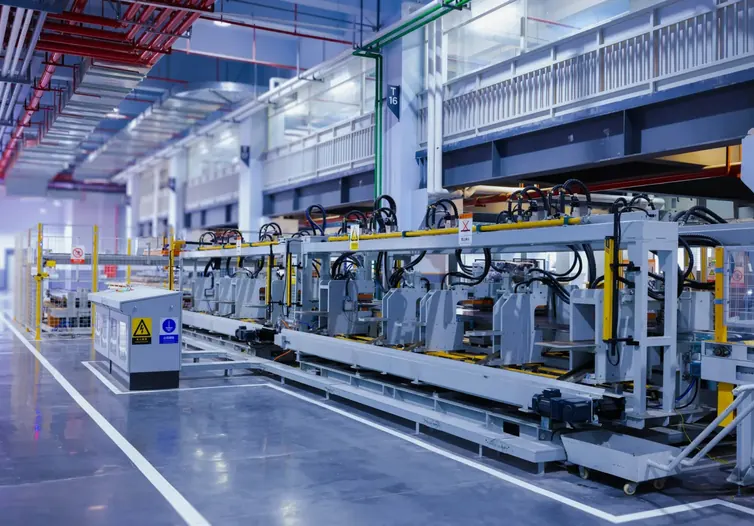
Much of Noida's activity depends on businesses few people notice: the box makers who pack exporters' shipments and plants' output, the concrete plants feeding the towers rising across Greater Noida West and the expressway sectors, the distributors moving handsets from the region's plants to retailers, and the recyclers taking electronic waste back. Their margins are thin and their stock is awkward to count.
ERPNext, the open-source ERP built on the Frappe framework, can suit such businesses when it is designed with care. I map how material actually moves, configure ERPNext around it and keep custom code small enough for you to own. The work is remote, with visits by arrangement.
 What I Do
Each offering starts from a Noida supplier whose stock is hard to count and whose margins leave little room for waste.

I model paper reels by weight and quality, board conversion and box specifications per customer, so every quotation and job reflects actual paper cost, wastage and printing rather than an old rate card.

Each customer's boxes are held with dimensions, ply, print and die details, so repeat orders are produced the same way every time and changes are recorded rather than remembered.

Batch tickets from the plant controller become delivery notes per truck trip, priced by grade and contract, with pump charges and returned loads handled, then consolidated into site-wise invoices.

Every handset is scanned in and out by serial number, so a distributor can show which retailer received which unit, handle replacements and support any claim with evidence.

Brand schemes, price drops on stock held and sell-out incentives are recorded against the serial numbers and invoices they relate to, so claims are complete and settlements can be checked.

For e-waste recyclers, inbound loads are weighed, dismantled into fractions and sold or sent onward by weight, giving a mass balance that supports whatever reporting your registration requires.
How I Work
Learn how stock is really counted
 Watch receiving and dispatch on video
Collect tickets, challans and claims
Note units, weights and conversions
List current software and sheets
Watch receiving and dispatch on video
Collect tickets, challans and claims
Note units, weights and conversions
List current software and sheets
Build ERPNext around your flow
Set up items, BOMs and units
Script only where justified
Bring in plant or scanner data
Test with last month's transactions
Leave the system in your hands
Train stores, dispatch and accounts
Document custom fields and scripts
Agree support and hosting
Review margins after go-live
Every garment carton, phone shipper and export pallet leaving Noida needs packaging, and many corrugated box makers in Noida, Greater Noida and the nearby industrial areas supply it. Their raw material is kraft paper in reels, specified by weight per square meter and bursting strength, which is corrugated into multi-ply boards and then printed, die-cut, stitched or glued into boxes made to each customer's dimensions.
The costing problem is converting reels bought by weight into boxes sold by the piece while accounting for trim waste, misprints and set-up losses. Prices move with paper rates, and many customers order small quantities of many sizes, so a rate card drawn up months ago quickly drifts from reality.
In ERPNext, I set up paper reels as batches tracked by weight, board and box specifications as items with their bills of materials, and job cards for corrugation, printing and conversion. A costing view calculates each box from current paper prices and recorded wastage, so quotations follow cost rather than habit. Waste paper sold to recyclers is recorded as a by-product instead of disappearing from the books. Customers' specifications, print plates and dies are linked to their items, so a repeat order runs exactly as before. The ERPNext Manufacturing page covers the production features in general.
The residential towers of Greater Noida West and the sectors along the Noida-Greater Noida Expressway, together with offices, warehouses and infrastructure work, keep ready-mix concrete plants busy across the area. A plant's day is a sequence of truck trips: each load batched to a mix design, dispatched in a transit mixer, sometimes pumped at site, and accepted or rejected on arrival.
Billing follows those trips. Rates generally depend on the grade, the customer's contract and extras such as pump hire or waiting time, and loads returned or rejected at site must be handled without double billing. Builders and contractors often want invoices consolidated by site and period, with each trip's delivery record as support. Meanwhile cement, aggregates and admixtures are consumed by the mix design, aggregates arrive by the truckload and are measured differently from how they are used, and stock losses are hard to see.
ERPNext can carry this flow if the batching controller's data is brought in rather than retyped. I set up mix designs as bills of materials, map each batch ticket to a delivery note, apply contract rates by customer and site, and consolidate invoices on the schedule each customer expects. Material reconciliation then compares theoretical consumption with purchases and stock counts. Credit control matters as much as dispatch here, so I also set up customer credit limits and aging reports for the owner to review. My construction ERP page covers the contractor side of the same projects.
With several phone and accessory brands building or operating in and around Noida, distributors and large retailers in the region handle a heavy flow of devices to shops across Uttar Pradesh and neighboring states. Every handset carries a unique identifier, and brands, retailers and customers increasingly expect the distributor to know exactly which unit went where.
The commercial side is just as detailed. Brands may run schemes tied to sell-through or activation, compensate distributors when they cut prices on stock already held, and replace units that fail on arrival. Each of these turns into a claim the distributor must prove, often unit by unit, and claims that are not tracked properly tend to be lost.
In ERPNext, I set up serial-numbered items scanned at purchase receipt and at delivery, so every unit's journey is recorded. Price protection and scheme claims are held in a simple custom record that links to the serial numbers and invoices involved, and brand credit notes are matched against them when they arrive. Dealer credit limits, demo stock and replacement units each get their own handling. For heavy scanning volumes, I check whether ERPNext's standard screens keep up or whether a lightweight scanning app is needed. The distribution ERP page describes the wider distribution model.
The electronics industry around Noida produces scrap, rejects and returned devices, and India's e-waste rules push producers to arrange collection and recycling. Dismantlers and recyclers operating in the wider region receive this material by weight, break it down into plastics, metals, circuit boards and other fractions, and send each fraction onward for further processing or sale.
Their records have to balance. What came in by weight should match what went out, what remains in stock and what was lost in processing, and registered recyclers may need those figures for the reports and certificates their registration involves. The exact obligations are for your compliance advisor, and they can change, so the system needs to be easy to adjust.
ERPNext handles this as a disassembly flow: an inbound lot is received by weight against its source, a processing entry consumes it and produces several output items in the proportions actually recovered, and sales or onward dispatches reduce those outputs. A mass balance report by period and by source then shows inputs, outputs, stock and losses in one place. I design the item structure for fractions, the weighing and receiving steps and the reports your advisor asks for, and keep every customization documented. Stock control for this kind of material is discussed on my inventory and warehousing page.
ERPNext's open-source license removes license charges but not the need for care. Someone has to host it, apply updates, back it up and fix problems, and for a box maker or a concrete plant without an IT team that someone is usually an implementer on a support arrangement or a managed host such as Frappe Cloud. I help you decide who carries that role before go-live, write down what they are responsible for and keep customizations in a form another developer could pick up.
There are also Noida cases where ERPNext is the wrong core. A concrete plant whose batching controller cannot export data may face more integration work than the project can justify. A distributor scanning very large volumes every day may need a dedicated warehouse tool beside ERPNext. Plants building electronics for brands often run line systems and brand-mandated processes that sit better with other platforms, and businesses that want several local implementers to choose from should check how many firms near them actually work with ERPNext.
I give that assessment before you commit. The national picture for ERPNext, including GST and e-invoicing, is on my ERPNext consultant India page, the comparison with the other main option for Noida's manufacturers is on my Odoo consultant in Noida page, and the city's wider industrial picture is on my ERP consultant in Noida page.

Tell me about your business and current systems. I’ll suggest the most sensible first step.
Book a Consultation
Not sure which ERP you need?
Share your business requirements with me and I will help you understand the right process, architecture and platform before implementation.
FAQ
Yes, with the right structure. Paper reels are tracked by weight and quality, each box has a specification and bill of materials, and a costing view applies current paper prices and recorded wastage. Quotations then follow actual cost, and repeat orders reuse the stored specification, print plates and dies rather than someone's memory.
Often, if the controller can export batch tickets in a usable form. Each ticket then becomes a delivery note with the right grade, quantity, truck and site, priced by contract. If the controller cannot export, the options are manual entry with checks or a different setup, and I assess that before recommending ERPNext.
Yes. Handsets are serial-numbered in ERPNext, so the stock held on the date of a price change can be listed unit by unit. A simple custom record holds each claim with its serial numbers and invoices, and the brand's credit note is matched against it when it arrives, so open claims stay visible.
It can, if each inbound lot is received by weight against its source and each processing entry records the fractions actually recovered. A periodic report then sets inputs against outputs, stock and losses. Which figures your registration requires is for your compliance advisor; I make sure the system captures them.
Every business is different. Share where you are today and what you want to fix, and I’ll tell you honestly whether and how I can help.
Book a Consultation
Insights
 Book a Consultation
Book a consultation to talk through your processes, systems and goals. I’ll reply with practical next steps - no obligation.