Contact Info
 ERPNext Manufacturing
What does an ERPNext manufacturing consultant do?
An ERPNext manufacturing consultant maps how your factory plans, buys, produces and costs its products, then configures ERPNext to match. I design bills of materials, routings, workstations, production planning, work orders, job cards, subcontracting, quality inspections and batch or serial tracking, and connect them to stock and accounting so production cost and inventory value stay accurate.
Last reviewed by Vikas Saroj
ERPNext includes a manufacturing module that covers bills of materials, routings, workstations, production plans, work orders, job cards and subcontracting, all sharing one database with stock, buying and accounting. For many small and mid-sized manufacturers that is enough to replace a mix of spreadsheets, whiteboards and a separate accounting package.
The software is only half the job. Manufacturing setups fail when BOMs are inaccurate, when the system expects more shop-floor data than people will record, or when costing rules are never agreed with finance. As an independent ERPNext manufacturing consultant, I start with how material and work actually move through your plant.
I work remotely with production managers, operations heads and owners in discrete and light process manufacturing, assembly, fabrication and make-to-order businesses. I help with new ERPNext rollouts, with manufacturers moving from another system, and with existing ERPNext sites where production and stock figures no longer match reality.
 What I Do
These are the production areas I design and configure, always tested against real orders and real BOMs from your business.

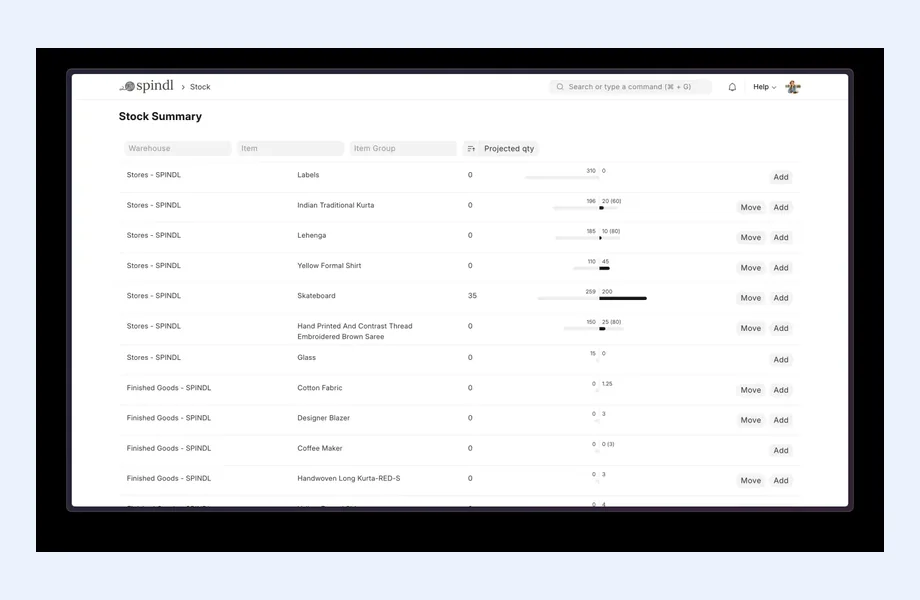
Item codes, variants, units of measure and multi-level bills of materials cleaned up and structured so that planning, purchasing and costing all work from the same reliable product data.

Operations, workstations and routings defined at the level of detail your team can actually maintain, so job cards and operating costs reflect the work without burying supervisors in data entry.

Production plans driven from sales orders or material requests, with raw material requirements, reorder levels and purchase suggestions, so planners see what to make and what to buy.

Work orders, material transfers, job cards and finished goods entries arranged around a clear routine, including how scrap, rework and partial completions are recorded on the floor.

Subcontracting flows for work sent to outside processors and quality inspection templates at receipt, in process or before dispatch, with batch and serial tracking where traceability matters.

Valuation method, BOM cost updates, operating cost rates and how manufacturing entries post to the ledger, agreed with finance so product cost and stock value can be trusted.
How I Work
Understand how production really runs
 Order to dispatch walkthrough
BOM and routing review
Planning and purchasing rules
Costing approach with finance
Order to dispatch walkthrough
BOM and routing review
Planning and purchasing rules
Costing approach with finance
Configure and test with real orders
Items, BOMs and workstations
Planning and work order setup
Subcontracting and quality flows
Opening stock migration
Pilot product line tested
Go live and tighten control
Floor and stores training
First production cycles supported
Stock and cost reconciliation
Improvement backlog agreed
ERPNext manufacturing suits small and mid-sized manufacturers whose products can be described with clear bills of materials and a manageable number of operations. Typical good fits include assembly, fabrication, furniture, packaging, electrical and light engineering, and make-to-order or make-to-stock businesses that need material planning, work orders and reliable stock in one system.
It fits particularly well when:
It needs more care, or a different platform, when you rely on finite-capacity scheduling across many constrained machines, when complex process manufacturing involves formulas, potency or significant co-products, or when you need deep shop-floor data capture from machines. These needs can sometimes be met with customization or add-ons, but that changes the cost and risk profile. If you are weighing options, the ERPNext vs Odoo manufacturing comparison sets out where each is stronger.
Accurate BOMs are the foundation of every manufacturing ERP. In ERPNext, a BOM lists raw materials, sub-assemblies, operations and scrap items for a product, and it can be multi-level. Routings define the sequence of operations, and workstations carry the operating cost rates used in costing.
The typical planning and execution flow I configure looks like this:
A key design decision is how much detail to track. Recording every operation on job cards gives better costing and visibility but needs discipline on the floor. I help you choose the level of detail you can sustain, often starting simpler and adding job cards line by line once the basics are stable.
Manufacturing data only becomes useful when finance trusts it. ERPNext values stock using a perpetual inventory approach, so each material transfer and finished goods entry posts to the ledger. That is powerful, but only if costing rules are agreed before go-live.
The costing decisions I work through with your finance team include:
I then reconcile stock value in the ledger with the stock valuation report during testing and after the first production cycles. If finance is part of the project, the ERPNext accounting setup is designed in the same workshops so costing and the chart of accounts support each other.
Manufacturing migrations carry more risk than most because master data is complex and interdependent. Item codes, units of measure, BOMs, routings, warehouses and opening stock all have to be right together. I run this as a structured part of the data migration plan.
On the integration side, manufacturers often need ERPNext to exchange data with e-commerce stores, CAD or PLM tools that hold engineering BOMs, barcode scanners in stores, shipping tools and BI dashboards. ERPNext exposes REST APIs and webhooks, and I design integrations through ERP integration work so each one has a clear owner, direction and error handling.
For sector context, see my notes on ERP for manufacturing.
ERPNext covers the core of manufacturing well for its cost profile, but it is not a specialist manufacturing suite. I discuss these limits openly before any commitment:
For many small and mid-sized manufacturers these limits are acceptable, and the gain from one integrated system outweighs them. Where they are not, I will say so and help you evaluate other ERP platforms on the same requirements.
I am an independent consultant, not a Frappe partner or reseller. You work directly with me, and my role is to make sure your ERPNext manufacturing setup reflects how your plant really works, whether I configure it myself or guide a development team you already use.
Common ways manufacturers engage me:
Manufacturing rarely lives alone. Sales and quotations often run through ERPNext CRM, and costing depends on the finance design, so I plan these areas together within the wider ERPNext consulting engagement. My aim is a system your planners, stores team and finance department all trust, built on processes they understand.

Tell me about your business and current systems. I’ll suggest the most sensible first step.
Book a Consultation
Not sure which ERP you need?
Share your business requirements with me and I will help you understand the right process, architecture and platform before implementation.
Platforms
 By Country
Pages written for each market: local tax, e-invoicing, data hosting, migration sources and how the work runs remotely there.
FAQ
Yes. ERPNext supports multi-level BOMs where sub-assemblies have their own BOMs, along with operations, scrap items and variants. Production plans can explode the full structure to calculate raw material requirements. The practical challenge is keeping BOMs accurate and maintained, which is why I review them with the people who actually build the products before migration.
Yes. ERPNext has subcontracting flows for sending materials to an outside processor and receiving finished or semi-finished goods back, with processing charges included in cost. I configure these around how your subcontractors really work, including how supplied materials are tracked, which warehouse holds them and how differences are reconciled.
It depends on the process. Light process manufacturing with simple recipes, batches and scrap can work well. Formula-heavy industries with potency, variable yields or many co-products need careful design and sometimes customization. I assess your recipes and costing needs during fit-gap and tell you plainly whether ERPNext is a sensible choice.
Both are open-source ERPs with capable manufacturing modules, but they differ in user experience, ecosystem, licensing model and depth in areas such as shop-floor interfaces and planning. The right choice depends on your products, processes and support model. My ERPNext vs Odoo manufacturing comparison covers the deciding factors in detail.
No. I am an independent ERPNext manufacturing consultant, not a Frappe partner, so my recommendations are based on your requirements rather than on selling hosting or development. I can work with your chosen hosting provider or developers, or guide the implementation myself.
Every business is different. Share where you are today and what you want to fix, and I’ll tell you honestly whether and how I can help.
Book a Consultation
Insights
 Book a Consultation
Book a consultation to talk through your processes, systems and goals. I’ll reply with practical next steps - no obligation.