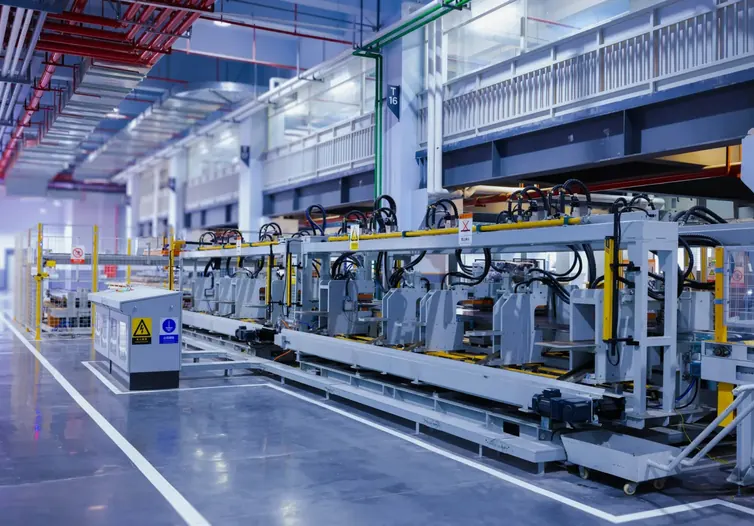
Contact Info
 ERPNext Manufacturing MY
Can ERPNext Manufacturing serve Malaysian electronics and halal food producers?
For Malaysian plants, ERPNext Manufacturing provides product structures, production orders, shop-floor time capture, outside processing, inspections and lot or serial control. Electronics assemblers need serial traceability, alternate parts and customer-consigned components; halal food producers need approved ingredients, segregation and batch release. Stock under licensed warehouse or free zone arrangements needs records your customs advisor accepts. I design and test this remotely and say where specialist systems fit better.
Last reviewed by Vikas Saroj
Malaysian manufacturing spans contract electronics assembly for foreign brands, electrical components, plastics and metal parts, and food production where halal certification shapes purchasing and production from the start. These plants share a need for traceability, but what they trace differs: serial numbers and component lots in electronics, approved halal ingredients and clean lines in food plants.
The backbone is standard ERPNext: multi-level product structures, operations on a routing, production orders, shop-floor time capture, outside processing, inspections and lot or serial control. What sits on top is Malaysian: customs-controlled stock, halal records and sales tax on goods you manufacture. Your production, quality and finance leads shape that layer with me.
Advice comes remotely, with no tie to Frappe or to whoever implements. The engagement runs in English. Malay or Chinese work instructions for the line are written by your bilingual supervisors, since they know the words operators use every shift.
 What I Do
What I put in place for a Malaysian electronics line or halal food plant moving production into ERPNext.

Serial numbers on finished assemblies and lot numbers on critical components, captured at the right operation so a field failure traces back to component lots and the work order that built it.

Approved substitute components defined as item alternatives, customer-consigned parts received into dedicated warehouses without adding to your stock value, and reports reconciling consigned stock with each customer.

Warehouses, item flags and reports that separate stock held under licensed manufacturing or free zone arrangements, designed with your customs advisor so ERPNext records support their reporting.

Halal status and certificate details on items and suppliers, expiry alerts ahead of renewal, segregated warehouses and checks that stop non-approved ingredients ever reaching halal production orders.

Inspection checklists for incoming goods, mid-process checks and final release, covering board test outcomes or food batch checks, and a block on delivery until the result is accepted.

Workstations with hour rates for SMT lines, manual assembly, mixing or packing, job cards for actual time, and product cost in MYR agreed with your accountant before go-live.
How I Work
Plant flows and compliance points
 Production walkthrough by video
Traceability needs listed
Halal or customs records reviewed
Costing method agreed
Production walkthrough by video
Traceability needs listed
Halal or customs records reviewed
Costing method agreed
Masters, rules and test scenarios
Items, BOMs and alternates
Batch and serial rules
Warehouse segregation
Inspection templates
Run real orders before go-live
Trace tests both directions
Consigned stock reconciled
First order costs reviewed
Support owner confirmed
Electronics manufacturing services in Malaysia can build to customer designs, using components the customer specifies and sometimes supplies. Three ERPNext features carry most of the weight.
The limits are real. ERPNext does not import pick-and-place programs, manage floor life for moisture-sensitive devices or record results from automated test equipment. Those belong in line or test systems, with ERPNext receiving completed quantities and serial numbers. Where component-level traceability per board is a customer requirement, I plan that integration early. The standard module is described on the ERPNext Manufacturing overview.
Some Malaysian manufacturers operate under arrangements that let them import raw materials without paying duty or sales tax up front, such as licensed manufacturing warehouses or operations in free industrial zones. These arrangements come with record-keeping and reporting obligations to customs, and the details should be confirmed with your customs advisor. ERPNext is not a customs system, but its stock records can support the reporting if they are designed for it.
Design points:
Before committing, I check with your customs advisor exactly which reports and reconciliations they expect, and whether customs software already in use should stay, fed by ERPNext data. The requirements gathering page explains how such needs become specifications.
Halal certification in Malaysia is overseen by JAKIM together with the state religious authorities, and its requirements cover ingredients, suppliers, premises, processes and records. What exactly applies to your products is a question for your halal executive and the certifying body. ERPNext's role is to make sure the records exist and that production follows them.
Design points:
Cleaning and sanitation records, internal halal committee minutes and staff training sit better in a quality system or your current records, linked to ERPNext batches by reference. Validations like the BOM check are small pieces of custom code, which raises the support question: who maintains them through upgrades? Wider sector context sits on my food and beverage ERP page.
Whether the line is an SMT line, a manual assembly cell or a mixing and packing room, ERPNext models it as workstations with hour rates and operations with planned times on a routing. Job cards record actual time and quantities per operation, and those actuals flow into the cost of finished goods when production is completed.
Choices I make with production and finance:
Components bought in USD or other currencies are valued in MYR at the rate your accountant chooses, so product cost moves with exchange rates. A report comparing standard, quoted and actual cost per order is worth building early. See ERP for job costing.
ERPNext Manufacturing suits Malaysian manufacturers who want the factory, the warehouse, buying and the books on a single open-source platform, and who have someone able to own it technically. It is a weaker fit in some situations:
Over the years, support matters more than features. If a Python programmer already works at the plant, that person can look after validations and integrations. If not, a Malaysian ERPNext implementer or contract developer under a written agreement is needed, and what they will support should be confirmed with Frappe or the partner directly. No implementer or hosting firm pays me, so this recommendation carries no commission.
Sessions are remote and the engagement runs in English; a factory visit can be planned by arrangement. Hosting and MyInvois questions are covered on ERPNext in Malaysia; the Malaysia hub lists my other services.

Tell me about your business and current systems. I’ll suggest the most sensible first step.
Book a Consultation
Not sure which ERP you need?
Share your business requirements with me and I will help you understand the right process, architecture and platform before implementation.
FAQ
Yes. Finished assemblies can carry serial numbers and critical components batch numbers, recorded on receipts, production entries and deliveries. Recent versions record these through a serial and batch bundle on each transaction, which affects imports and custom reports. Per-board component traceability and test results come from line or test systems integrated with ERPNext.
ERPNext is not a customs system, but separate warehouses, declaration references on receipts and batch links to imports can support the reporting. Your customs advisor should confirm what records and reports are expected. I design the stock structure and custom reports around those requirements, or feed existing customs software from ERPNext data.
It holds the records and enforces rules: halal status and certificate expiry on ingredients and suppliers, approved suppliers per item, segregated warehouses, validations blocking non-approved ingredients and batch release after inspection. Requirements come from your halal executive and the certifying body. Cleaning and committee records stay in a quality system linked to batches.
Not always, but custom validations, integrations and upgrades need a named owner. A staff programmer makes sense where changes will keep coming; elsewhere the work can sit with a Malaysian ERPNext implementer or a freelance developer, with response times agreed in writing. I help you decide which tasks key users can handle and which need a developer.
Every business is different. Share where you are today and what you want to fix, and I’ll tell you honestly whether and how I can help.
Book a Consultation
Insights
 Book a Consultation
Book a consultation to talk through your processes, systems and goals. I’ll reply with practical next steps - no obligation.