Contact Info

 Ahmedabad
How can an ERP consultant help an Ahmedabad business?
For Ahmedabad and wider Gujarat, an ERP consultant shapes systems around the region's trades: textile and denim processing losses, chemicals and dyes valued by strength, diamond lots moving from rough to polished, precious metal held with artisans and bulk cargo at the ports. Many clients are family groups trading between their own firms and wanting one consolidated view. I clarify those needs before software is chosen, working remotely.
Last reviewed by Vikas Saroj
I work remotely with businesses in Ahmedabad and across Gujarat. The city has deep roots in textiles, now strong in denim and fabric processing, and its industrial estates hold chemical, dye and pharmaceutical plants. Elsewhere in the state, Surat cuts and polishes diamonds and weaves synthetic fabric, Rajkot builds engineering components, and ports along the coast handle bulk and container cargo.
Many of these businesses are run by families, often through several firms that buy from and sell to each other. The questions I hear are practical: how do we see the whole group in one place, how do we value material whose strength or weight changes, and how do we control stock that sits with artisans or at a port. I help answer those before any software is chosen.

 What I Do
Gujarat businesses often trade on strength, carat, purity or meters after shrinkage, and they run several related firms. I design the ERP around both.

I design how several family-owned firms share masters, record sales and purchases between each other and still produce a consolidated view, with access set so each family member sees the firms they manage.

For dye, intermediate and specialty chemical makers, I design batch records with strength or active content, standardization by blending, by-products and safety documents, so stock and cost reflect what was really produced.

I design how rough parcels are split, assorted, sent for cutting and polishing and returned with weight loss recorded, then how polished stones carry grading and certificate details through memo and final sale.

For jewelry makers, I design metal accounts by weight and purity, issues and returns with artisans and their allowed loss, making charges and old gold exchange, so the books reconcile in grams as well as rupees.

For importers using the Gujarat ports, I design vessel and lot-wise stock, quantity differences found at discharge, port storage and sales made before clearance, so the system shows what you truly hold.

For denim and fabric businesses, I design costing that follows greige fabric through dyeing, finishing and inspection, with shrinkage and lower-grade output captured at each step rather than estimated at the end.
My Consulting Journey
Business first, technology second. You can hire me for one step - a BRD, a gap analysis, a vendor shortlist - or for the whole journey.
How I Work
Hear how the business really runs
 Meet owners and senior managers
List firms and how they trade
Review stock and costing books
Note who approves what
Meet owners and senior managers
List firms and how they trade
Review stock and costing books
Note who approves what
Turn practice into clear requirements
Write numbered business requirements
Define group and firm structure
Set batch, lot or metal rules
Shortlist and score platforms
Guide the rollout and early months
Review partner configuration
Test with real lots and batches
Reconcile opening stock by firm
Tune reports for the promoters
Gujarat's economy combines heavy process industry with dense networks of small and mid-sized family enterprises. Around Ahmedabad, estates such as Vatva and Naroda hold chemical and dye units, and the city's pharmaceutical companies range from formulation makers to large groups. Textile mills and processing houses remain an important part of the city. Further afield, the chemical belt runs south through Ankleshwar and Vapi, Rajkot and its neighbors make castings, pumps and machine parts, and Surat is a center for both diamond processing and synthetic textiles.
Two features cut across these industries. First, the measure of value is often not a simple count. Chemicals are traded on strength, diamonds on carat weight and quality, gold on weight and purity, fabric on meters after shrinkage. An ERP has to carry these measures in its stock and costing, not in a side register. Second, many businesses operate as a group of related firms under one family, with goods and money moving between them.
When both features are understood early, platform choice becomes much clearer, because platforms differ a great deal in how they handle variable measures and multi-company setups. I document them through ERP requirements gathering, while the nationwide compliance setup is covered on my India ERP consultant page.
A dye or intermediate maker rarely produces exactly what it sells. A batch comes out of the reactor with a measured strength, is blended or diluted to a standard, and may be sold at a price linked to its active content. By-products and recovered material carry value too. If the ERP holds only kilograms, stock value and yield reports drift away from reality, and the sales team cannot see which batches meet a customer's specification.
The requirements I typically write cover batch records with test results attached, conversion between gross and active quantity, standardization recipes, packing into drums, bags or bulk containers, and safety data sheets and labels that travel with each dispatch. Hazardous waste and effluent quantities often need to be recorded for environmental reporting, and keeping them in the same system as production avoids a second set of numbers.
Formulation companies in and around Ahmedabad add regulated batch documentation, quality approval before goods can be sold and product registrations that differ by export market. For these I define what the ERP must hold, what belongs in a dedicated quality or document system, and how the two exchange status. My pharmaceutical page covers the general model. Interpretation of regulatory requirements stays with your quality and regulatory teams; my role is to make sure the system design and vendor choice support them.
The diamond business centered on Surat follows a flow that general ERPs do not model by default. Rough is bought in parcels, sorted into assortments, planned and sent for cutting and polishing, often through contract units. Weight falls at every stage, and the value of what comes back depends on its shape, color and clarity. Polished stones may go to a laboratory for grading, then be sold individually or in lots, frequently on memo, where goods go out on approval and are later returned or invoiced.
Jewelry manufacturing has a related challenge. Gold and silver are issued to artisans by weight and purity, and finished pieces return with stones set, a recorded loss and labor charges. The business has to keep a metal account for every artisan and reconcile fine weight, not just piece counts. Sales may involve old gold exchange, making charges and hallmarking requirements, which you should confirm with your advisor.
For both trades I design item and lot structures that hold weight, quality attributes and certificate references, memo and approval flows, and reconciliation reports that owners trust. Many businesses here already use specialist diamond or jewelry software, so part of my ERP gap analysis work is deciding whether to keep it and connect it to a general ERP, extend it, or replace it.
A Gujarat family enterprise may include a manufacturing company, a trading firm, a partnership that owns the property and a proprietorship run by the next generation. They trade with each other, share employees and sometimes share a warehouse. The design questions are whether each firm becomes a separate company in one database, how an inter-firm sale is recorded on both sides at once, and who sees what. Promoters usually want a single view of receivables, stock and cash across the group, while each firm keeps its own books. I map these structures through business process consulting before any configuration starts.
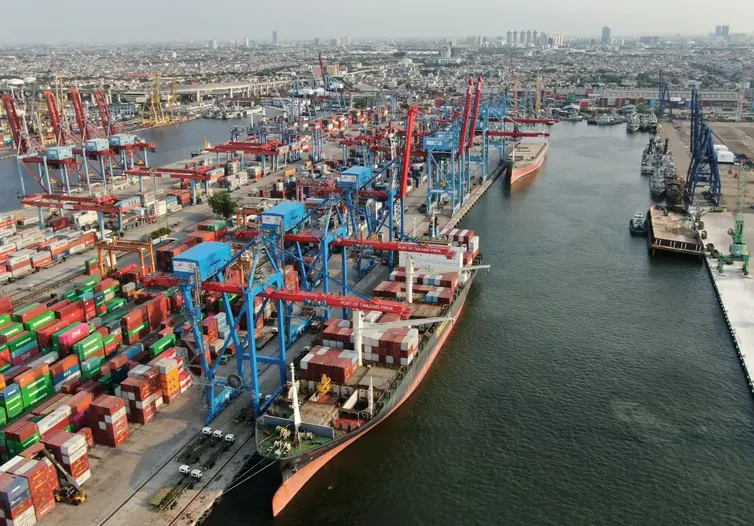
Importers using Mundra, Kandla, Hazira and Pipavav face a different issue. Bulk cargoes such as edible oil, coal, fertilizer or timber are measured at discharge, and the quantity received rarely matches the documents exactly. Goods may sit in port storage or tanks, be sold by vessel and lot, or be sold on the high seas before clearance. The ERP needs to record each of these states rather than show one stock figure. Commodity traders can find the broader model on my trading page.
In denim and fabric processing, cost builds up as greige fabric moves through dyeing, finishing and inspection, with shrinkage and seconds at each step. I make sure the system captures meters and grades at every stage, following my manufacturing framework.
I work remotely with businesses in Ahmedabad and the rest of Gujarat, as an India-based consultant on the same clock. Owners often take key decisions personally, so I schedule decision meetings when they can attend and keep detailed working sessions with accounts, stores and production staff separate. That keeps senior time short and focused.
I ask early for real records: a batch card, a lot sheet from the assortment room, an artisan metal register, an inter-firm ledger, a vessel stock statement. These show how the business operates far better than a description can. From them I produce process maps, numbered requirements, a comparison of shortlisted platforms on your own scenarios and a decision log. Written deliverables use plain English, so they can be shared with family members and staff who were not in every meeting.
A visit to your factory, assortment office or warehouse can be planned by arrangement when it would genuinely help, for example a kickoff with the family or a final check before go-live. Nothing in the engagement depends on it. Read about my wider work on the India overview, or contact me to start the conversation.

Tell me about your business and current systems. I’ll suggest the most sensible first step.
Book a Consultation
Not sure which ERP you need?
Share your business requirements with me and I will help you understand the right process, architecture and platform before implementation.
FAQ
Yes. Most mid-market ERPs support multiple companies in one database, and some can create the matching purchase in one firm when another records the sale. I design the structure, access rights and group reports, and test inter-firm entries with your accountant before go-live.
Some platforms support this through secondary units or quality attributes; others need configuration or an extension. I write the exact requirement, including how strength affects price and yield, and test it with your real batches during demos so you see any gap before choosing.
Sometimes, with careful design of lots, weights and memo flows. Many firms are better served by specialist software for stones or metal, linked to a general ERP for accounts and payroll. I compare both routes against your actual process before you decide.
I work remotely as an independent consultant based in India, so time zones are never an issue. Workshops and reviews happen over video with shared documents. A visit to Ahmedabad or another Gujarat location can be planned by arrangement for a milestone where it adds real value, but the project does not depend on it.
Every business is different. Share where you are today and what you want to fix, and I’ll tell you honestly whether and how I can help.
Book a Consultation
Insights
 Book a Consultation
Book a consultation to talk through your processes, systems and goals. I’ll reply with practical next steps - no obligation.