Contact Info

 Sydney
How does an ERP consultant help a Sydney business?
Sydney companies often run professional services practices, property portfolios or import and distribution operations, and many manage New Zealand or wider Asia-Pacific entities from a Sydney head office. An ERP consultant defines what the system must do for those models, compares platforms and oversees implementation. I work remotely, in hours that overlap with the Sydney afternoon, and visit only by arrangement.
Last reviewed by Vikas Saroj
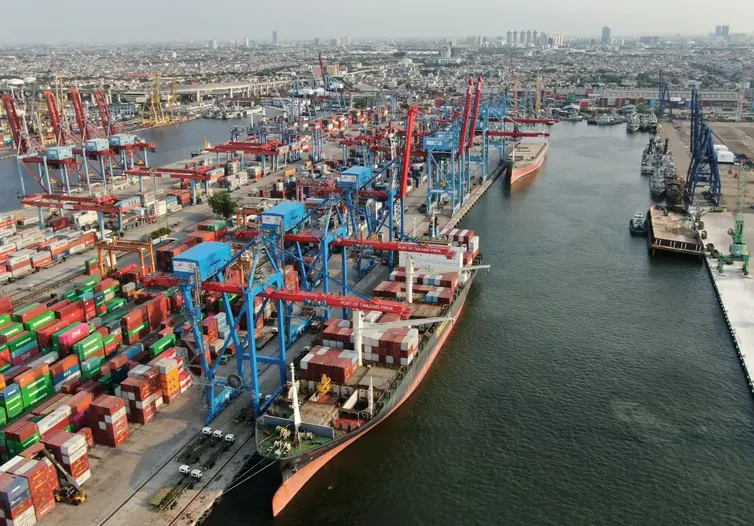
I work remotely with businesses in Sydney, most often professional services practices in and around the CBD, property owners, developers and managers, and importers and distributors whose containers arrive through Port Botany and whose stock sits in warehouses out west. If a face-to-face workshop would help, it is arranged in advance rather than assumed.
Sydney is also a regional headquarters city. Plenty of businesses run a New Zealand subsidiary, or Asia-Pacific sales entities, from here. That adds currencies, separate tax regimes and group reporting to the ERP brief, and it changes which platforms make the shortlist. I sort out those structural questions first, then look at software.

 What I Do
The work below reflects the industries that dominate Sydney's economy and the group structures common among companies headquartered here.

For consulting, engineering, legal, accounting and design practices, I specify project setup, timesheets, budgets, progress billing and work in progress, so directors see project margin before the job closes rather than after.

For owners and managers of commercial or residential portfolios, I map leases, rent reviews, outgoings recoveries and tenant billing, and decide how property software and the ERP should share data.

Developers need costs tracked by project, stage and cost code against feasibility budgets, with progress claims from builders and consultants approved properly. I design that structure and the reporting lenders and investors ask for.

For importers moving containers through the port into western Sydney warehouses, I design purchase-to-receipt flows, landed cost allocation, 3PL connections and multi-warehouse stock so margins are measured on true cost.

Where a Sydney head office runs a New Zealand entity, I design separate books with their own tax setup, intercompany trading in both currencies and consolidated reporting, checking each platform's support with the vendor.

I build a weighted scorecard from your requirements, run scripted demos with each shortlisted vendor and review proposals, so the decision rests on evidence rather than whoever presented best on the day.
My Consulting Journey
Business first, technology second. You can hire me for one step - a BRD, a gap analysis, a vendor shortlist - or for the whole journey.
How I Work
Learn the business and its structure
 Review entities and portfolio structure
Map project, lease or import flow
Catalog current tools and reports
Pinpoint the costliest manual steps
Review entities and portfolio structure
Map project, lease or import flow
Catalog current tools and reports
Pinpoint the costliest manual steps
Requirements, platform and design
Document requirements by process
Score platforms with weighted criteria
Design entities, projects and properties
Plan property and logistics connections
Deliver, test and settle in
Track implementer progress weekly
Lead user acceptance testing
Check migrated leases and stock
Refine reports after go-live
Sydney's economy is weighted toward services. The CBD and North Sydney hold banks, insurers, fund managers and the consultancies, law firms and accounting practices that serve them. Property is a major industry in its own right, spanning development, investment, commercial leasing and residential management. Port Botany and the airport feed a large import, wholesale and logistics sector, with warehouses and distribution centers spread across western Sydney. Technology, media, tourism and healthcare add further variety.
The result is a city where many ERP projects revolve around one of three engines: billable projects, property income and costs, or imported stock moving through warehouses. Each engine creates its own critical requirements, and a platform that excels at one may be weak at another. Choosing well depends on being honest about which engine drives your margin.
Country-wide topics such as GST, BAS, Single Touch Payroll and migration from MYOB or Xero are covered on my Australia ERP consultant page. Here I concentrate on what Sydney's industries and head office patterns add to the picture. For a summary of all my work with Australian businesses, see the Australia overview.
Property businesses in Sydney usually need two kinds of system working together. Leasing and property management covers tenants, leases, rent reviews, outgoings budgets and recoveries, arrears and maintenance. Finance covers entity accounts, often one trust or company per property or fund, loan facilities, distributions and investor reporting. Developers add project costing by stage and cost code, approval of progress claims, and comparison against feasibility budgets.
The central design question is where each function should live. Specialist property software often handles leases and tenant billing best, while the ERP runs finance, procurement and group reporting. Agencies that hold client or tenant money face state-based trust accounting rules, so that work usually stays in dedicated software, and the requirements should be confirmed with your accountant or compliance advisor. The ERP then needs reliable, regular data from those systems rather than manual journals.
I map these boundaries, write the requirements for each side and plan the integration, using my property management ERP and real estate ERP frameworks. The aim is that a fund manager or development director can see income, costs and commitments by property without anyone stitching reports together each month.
Importers based in Sydney deal with long lead times, shipping schedules that can shift, and costs that arrive in pieces: supplier invoices in foreign currency, ocean freight, customs brokerage, duty, port and transport charges. If those costs are not allocated to the right products, gross margin is misstated and pricing decisions are made on bad numbers.
I design the purchase-to-stock process around that reality. Purchase orders track expected arrival dates by container or shipment. Receipts at the warehouse are checked against orders. Landed cost is allocated using rules agreed with finance, such as by value, weight or volume. Stock is visible across your own warehouses and any third-party logistics providers, and sales teams can promise delivery dates based on what is on the water as well as what is on the shelf.
The requirements and platform comparison draw on my distribution ERP framework, and the connections to freight forwarders, 3PLs, e-commerce channels and EDI customers are planned through ERP integration. Platforms differ widely in how well they handle landed cost and in-transit stock, so I always test these with your own shipment data during demos.
Many groups use Sydney as their base for the wider region, most commonly with a New Zealand subsidiary and sometimes with sales entities elsewhere in Asia-Pacific. Each entity keeps its own currency and books and follows its own tax rules. New Zealand has its own GST regime and reporting, separate from Australia's, and other countries add their own requirements. Leadership in Sydney still wants consolidated numbers and comparable reporting across all of them.
Getting this right starts with structure: a group chart of accounts, clear entity setup, intercompany pricing and settlement rules agreed with your advisors, and currency translation for consolidation. Then come the practical questions. Does the platform support each country's tax setup natively, through a localization package or not at all? Can stock and staff be shared across entities? How will intercompany invoices be raised so both sides match?
I compare platforms on these points, checking each claim with the vendor rather than relying on brochures, and I involve tax advisors in each country where local rules matter. My ERP vendor selection process turns all of this into scripted scenarios so every vendor is tested on the same group transactions.
Sydney is a few hours ahead of India, so my morning lines up with your afternoon. Live sessions such as workshops, demos and testing walkthroughs are best placed after lunch on your side, which also tends to suit managers who prefer to clear operational work in the morning. During daylight saving the gap widens a little, and I start earlier to keep the overlap comfortable.
Your morning becomes review time: documents, process maps and questions I prepared the previous day are waiting when you start. Decisions are recorded in writing, so people who could not attend a session can follow and comment without another meeting being scheduled.
For cutover weekends and the first weeks after go-live, I plan additional availability across more of your day. A face-to-face visit can be arranged ahead of time for a milestone that benefits from it, such as a board presentation, but the engagement is designed to run fully online. To talk through a system decision for your Sydney business, get in touch.

Tell me about your business and current systems. I’ll suggest the most sensible first step.
Book a Consultation
Not sure which ERP you need?
Share your business requirements with me and I will help you understand the right process, architecture and platform before implementation.
FAQ
No. I am India-based and independent, and Sydney engagements run online through video calls, shared files and one project tracker. Your afternoon overlaps with my morning, which keeps scheduling simple. A face-to-face meeting for a particular milestone is possible if agreed beforehand, though it is the exception.
Usually not entirely. Specialist property software often handles leases, tenant billing and trust accounting better, while the ERP runs finance, procurement and group reporting. I define the boundary between them and plan how data flows from one to the other.
Many platforms support multiple companies, currencies and tax setups, but the depth of New Zealand support varies. I check each platform's capabilities with the vendor, design intercompany and consolidation processes, and involve your advisors on local tax requirements.
I agree allocation rules with your finance team, such as by value, weight or volume, then design how freight, duty, brokerage and other charges are captured and applied to receipts. During demos I test each platform with real shipment data so you can see the results before choosing.
Every business is different. Share where you are today and what you want to fix, and I’ll tell you honestly whether and how I can help.
Book a Consultation
Insights
 Book a Consultation
Book a consultation to talk through your processes, systems and goals. I’ll reply with practical next steps - no obligation.