Contact Info
 Odoo in Melbourne
How can an Odoo consultant help a Melbourne business?
An Odoo consultant decides whether Odoo suits the business, which apps to switch on first and how to configure them for its products and channels. In Melbourne that often means fashion labels selling in-store, online and wholesale, wineries running a cellar door and wine club, or joiners and fabricators making to order. I advise remotely as an independent, freelance Odoo consultant.
Last reviewed by Vikas Saroj
Plenty of Melbourne businesses both make something and sell it through more than one channel. A label in Collingwood designs garments, has them made offshore and sells through its own shop, a website and stockists. A Yarra Valley winery pours at the cellar door, ships to club members and supplies restaurants. A cabinet maker in the south-east quotes, builds and installs every job to order.
Odoo fits this kind of business because its apps share one database: sales, point of sale, inventory, manufacturing, purchasing and accounting can work from the same records. As a freelance Odoo consultant, I work remotely to decide whether it fits you, design the setup and guide your implementer. Visits to Melbourne can be arranged when useful.
 What I Do
Each design follows a real product from first sale to last invoice, so the configuration reflects how your business earns money.

I design attributes, variants and seasonal ranges so a style with many colors and sizes stays manageable, and reports roll up to the level your buyers and designers plan at.

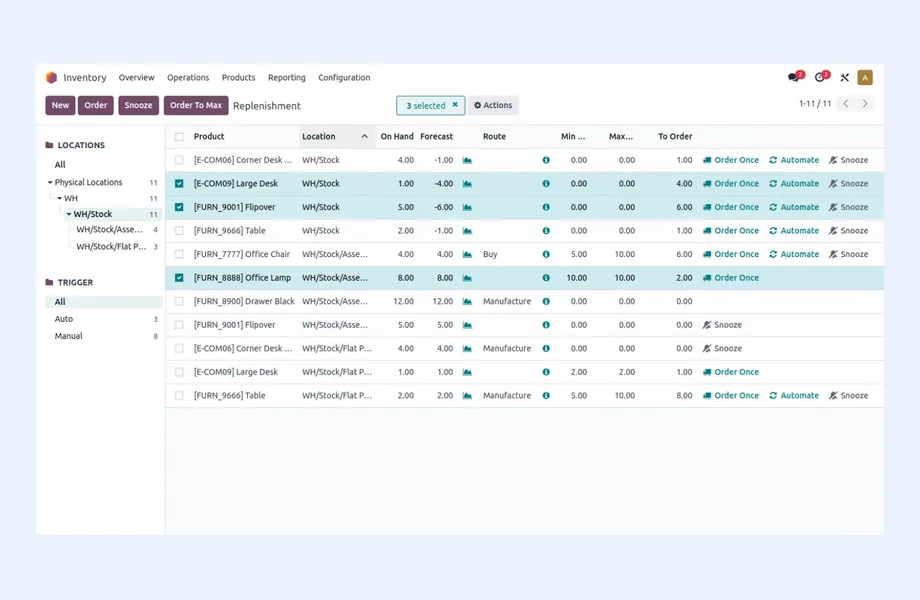
Own stores, a website and wholesale accounts all draw on the same stock. I define allocation rules, replenishment between locations and which channel gets priority when stock is short.

For wineries, I plan point of sale at the cellar door, recurring club shipments, trade orders and vintage-based lots so every bottle sold is traced to its wine and its release.

For joiners, cabinet makers and fabricators, I design how a quote becomes a bill of materials, a manufacturing order and an installation job without anyone retyping the details.

I set an order for switching on Odoo apps, starting where the pain is greatest, and define what stays in existing tools until the business is ready to move it.

I write the functional design, review your implementer's estimate against it and test each delivered app with scenarios taken from your own orders and products.
How I Work
Trace a product through the business
 Pick representative products
Follow each sales channel
Note stock and cost points
List existing tools
Pick representative products
Follow each sales channel
Note stock and cost points
List existing tools
Decide apps, settings and sequence
Choose apps for phase one
Write the functional design
Plan data and connections
Review implementer estimate
Check each app before release
Run real order scenarios
Check stock and costing
Train channel owners
Plan the next phase
Melbourne has a strong tradition of design-led and maker businesses: clothing and footwear labels, homewares and furniture brands, specialty food and drink producers, and small manufacturers serving the building trade. Many started on an accounting package plus an online store, then added a stock app, a point of sale and spreadsheets for production. Each tool works, but nothing agrees with anything else, and stock figures differ depending on who you ask.
Odoo appeals because it can replace several of those tools with apps that share one set of products, customers and stock. A sale at the shop counter, an online order and a wholesale order all draw from the same inventory, and costs from purchasing and manufacturing flow into accounting without exports.
That breadth is also a risk. Switching on too many apps at once, or customizing heavily before the team understands standard Odoo, is a common way for projects to run long. My work is to choose the right first apps for your business, keep the design close to standard where possible and make sure your implementer builds what was agreed. National points such as GST setup and moving from MYOB or Xero are on the Odoo consultant in Australia page.
A Melbourne fashion label might sell through a flagship store, a website and a list of stockists around the country. In Odoo, each style becomes a product with attributes such as color and size, which generate the variants that are actually stocked and sold. Getting that structure right early matters, because it shapes reporting, barcodes, purchasing and the website catalog.
I design the attribute structure with the people who plan the range, so reports show sell-through by style and color as well as by individual size. Seasonal collections are tagged so markdowns and clearance can be planned. Wholesale orders placed before production are tracked separately from stock on hand, and purchase orders to overseas makers are linked to them.
The online store is a key decision. Odoo has its own website and e-commerce app, while many labels already run a dedicated e-commerce platform they are happy with. Keeping that platform and connecting it to Odoo is often the safer path, but connectors vary in what they sync and how reliably. I define what must flow in each direction, such as orders, stock, prices and customers, and test it with real orders. See Odoo Inventory for the stock side.
Wineries in the Yarra Valley, on the Mornington Peninsula and in the other regions around Melbourne often run three businesses at once. The cellar door sells bottles, tastings and sometimes food. A wine club ships regular allocations to members. A trade team supplies restaurants, bottle shops and distributors, sometimes interstate or overseas.
Odoo can bring these together on one stock record. Point of sale handles the cellar door. Recurring club shipments can be managed with subscription features or scheduled sales orders, depending on how the club works. Lots can represent each wine and vintage, so a bottle sold anywhere is traced back to its release. Trade pricing and customer-specific price lists sit in sales.
Wine businesses also deal with the wine tax known as WET and other specific tax rules. I do not advise on how they apply, and Odoo's standard Australian setup may not handle every case out of the box. I list the scenarios your accountant needs the system to support, then check how the proposed configuration or extension meets them before go-live. Production at the winery itself, including blending and bottling, may stay in specialist winemaking software, and I define where that boundary sits.
Melbourne's building and renovation activity supports many businesses that make to order: kitchen and cabinetry makers, shopfitters, joiners, stair builders and steel or aluminum fabricators. Every job is slightly different, quoted from drawings, built in the workshop and often installed on site. The common pain is retyping: the quote is in one tool, the materials list in a spreadsheet and the job sheet on paper.
In Odoo, a quote can generate a manufacturing order with its own bill of materials, so the workshop builds what was sold and materials are reserved or purchased against the job. Work centers show what is planned for each machine or bench. Outsourced steps such as powder coating or stone benchtops can be handled as subcontracted operations or linked purchases, and installation can be planned as a separate job.
There are limits to plan for. Specialist cabinet design and cutting optimization software usually stays, with Odoo receiving the materials list rather than replacing the design tool. I define that hand-off clearly and test it with recent jobs. The Odoo Manufacturing page describes the manufacturing app in more detail.
For a Melbourne business moving from a patchwork of tools, a phased rollout tends to be safer than switching everything on at once. A typical first phase covers products, inventory, sales and purchasing, because that is where the stock figures stop disagreeing. Manufacturing, point of sale or e-commerce can follow once the core is stable. Accounting can move early or late, depending on how settled the current accounting setup is and what your accountant prefers.
Each phase should end with a review: is the business using what has been switched on, and is the data clean enough to build on? If not, it is better to fix that before adding more. I set those checkpoints in the plan and keep the implementer's scope aligned to them.
Sometimes the honest conclusion is that Odoo is not the right platform. A business that needs deep process manufacturing with formal quality records, or one that would rather own and host open-source code with its own developers, may be better served elsewhere; my ERPNext consultant in Melbourne page covers that option. The Melbourne ERP consultant page describes the city's wider ERP landscape.

Tell me about your business and current systems. I’ll suggest the most sensible first step.
Book a Consultation
Not sure which ERP you need?
Share your business requirements with me and I will help you understand the right process, architecture and platform before implementation.
FAQ
Yes. Styles become products with color and size attributes, and every channel draws from the same stock. The important work is designing the attribute structure, allocation rules and the connection to your e-commerce platform if you keep it. I test those with your real range before anything goes live.
In many cases, yes. Point of sale can run the cellar door, recurring club orders can be scheduled, and lots can track each wine and vintage. Specific tax rules for wine should be confirmed with your accountant, and I check that the proposed setup supports every scenario they identify.
Usually not, and it should not try. Design and cutting optimization tools are specialized. Odoo is better placed to take the materials list from them, plan the workshop, buy materials, track the job and invoice it. I define that hand-off and test it with recent jobs.
It depends on where the pain is. For many product businesses, inventory, sales and purchasing come first, because they fix disagreements about stock. Manufacturing, point of sale, e-commerce and accounting can follow in later phases. I set the order after tracing a few real products through the business.
Every business is different. Share where you are today and what you want to fix, and I’ll tell you honestly whether and how I can help.
Book a Consultation
Insights
 Book a Consultation
Book a consultation to talk through your processes, systems and goals. I’ll reply with practical next steps - no obligation.