Contact Info

 Australia
How does a LinkedIn Ads consultant help Australian B2B firms?
A LinkedIn Ads consultant helps Australian B2B firms reach the buying groups at the organizations that matter most and judges campaigns on pipeline, not clicks. I work remotely to test fit against your contract values, build account and role audiences that follow your state territories, choose formats and lead capture, plan Spam Act aware follow-up, sync leads into the CRM and report sourced and influenced pipeline.
Last reviewed by Vikas Saroj
Australian B2B markets are concentrated. In many sectors, a limited set of mining houses, health networks, builders, banks or state agencies make up most of the spend, and the people who choose suppliers inside them are on LinkedIn. That makes the platform useful for account-based work, and expensive when it is used like a broadcast channel.
Working remotely and independently for Australian businesses, I first test the platform against your contract values. Where it fits, I shape audiences around the organizations and roles that matter, settle formats and lead capture, route leads into the CRM with a clear owner and report on the pipeline that follows.
Your business keeps ownership of Campaign Manager, the company page and the billing profile. I bill for consulting time and accept no commissions on media or vendor referral fees.
 What I Do
Campaign planning and management for Australian B2B companies, built around concentrated markets, state-based sales teams and CRM outcomes.

A frank look at contract values, sales cycle, the number of accounts worth winning and sales capacity, to decide whether LinkedIn merits a contained test or should wait.

Campaigns built on a named list of organizations agreed with sales, tiered by priority and sector, so ads support the accounts your team is already pursuing.

Job function and seniority combinations that reach sponsors, budget holders, technical evaluators and procurement, sized so each campaign can deliver without drifting.

Thought leader ads from your principals, document ads for guides and checklists, and event promotion, each tied to a stage in the buyer's decision.

Lead gen form submissions synced into your CRM with campaign, audience and state fields, assigned to the right owner and flagged for prompt follow-up.

Monthly reporting that connects account activity with deals and revenue logged in the CRM, with sourced and influenced pipeline shown separately and honestly.
How I Work
Decide if LinkedIn fits
 Deal value review
Account list sizing
CRM stage check
Offer and content audit
Deal value review
Account list sizing
CRM stage check
Offer and content audit
Run a focused program
Tiered account campaigns
Lead form or page test
Insight Tag and conversions
Lead routing by state
Scale what reaches pipeline
Account engagement review
Opportunity matching
Budget reallocation
Quarterly leadership summary
LinkedIn suits Australian firms that sell considered, higher-value services or products to organizations. Mining services and resources suppliers, engineering consultancies, construction and infrastructure contractors, health technology vendors, IT and cyber security providers, professional services, agribusiness suppliers and education providers selling to institutions often fit. Recruitment of specialists, from geologists to clinical leads, can also work because those people keep detailed profiles.
It suits poorly when deal values are low, when buyers are households or sole traders, or when people already search for what you sell. A tradie supplier or a small local service will usually get more from Google and Meta.
Concentration is the Australian twist. In several industries, a short list of organizations represents most of the opportunity. That favors account-based campaigns, where ads keep your name in front of the buying group at those accounts while sales works the relationship, over broad lead generation across an industry. It also means audiences can be small, so frequency builds quickly and creative needs regular refreshing.
Many Australian firms also sell into New Zealand. Combining the two in one campaign usually confuses reporting; separate campaigns with their own budgets work better.
Before spend, I set out in writing who the campaign reaches, the question it must answer and the result that would justify a second phase. If LinkedIn should wait until search or outreach is working, I say so.
Australian sales teams are often organized by state, with separate people covering New South Wales, Victoria, Queensland and Western Australia, or by key accounts. LinkedIn audiences should follow the same lines, or leads arrive with no obvious owner. I start from your territory structure and target account list, then build audiences that match.
Within each account, I target the buying group rather than a single title. A contract for engineering services, software or equipment usually involves an executive sponsor, an operational lead, technical evaluators and procurement, and in government or large corporates a formal tender panel as well. Job function and seniority combinations reach these roles more reliably than exact titles.
Company lists uploaded from your CRM keep ads aligned with sales. Uploading individual contacts helps with retargeting and with leaving out current customers, though using personal information this way should match your privacy policy and, where the Privacy Act applies to you, the Australian Privacy Principles. Your advisor can confirm the approach.
I check audience sizes as I build, widen with related functions rather than switching on automatic expansion, and exclude students, recruiters and competitors. For tightly defined niches, I combine states into one national campaign rather than splitting a small audience into pieces too small to deliver.
Australian B2B buyers tend to be wary of polished sales language. Plain, useful expertise from a named person usually travels further. Thought leader ads promote posts from your directors, principals or engineers, which suits consultancies and specialist firms where people buy the expertise of individuals. The posts should stand on their own, and the author should be ready to answer comments.
Document ads let buyers read a guide, a compliance checklist or a project planning framework inside the feed. I usually pair an open version, which builds a retargeting pool of engaged readers, with a gated one that collects contact details first, and judge both on qualified opportunities.
Conversation ads and message ads arrive in the member's inbox. They suit event invitations and specific offers to well-defined audiences. Whether a sponsored LinkedIn message counts as a commercial electronic message under the Spam Act is a question for your advisor. Either way, I keep messages short, clear about who is sending and why, and easy to decline.
Follow-up after a form submission is more clearly covered. Commercial emails and texts need consent, sender identification and an unsubscribe option, so ongoing marketing to a lead who only asked for a guide needs a separate consent, recorded in the CRM.
LinkedIn lead gen forms suit webinars, events and content offers, where pre-filled profile details make sign-up easy. For a site assessment, a capability briefing or a proposal request, a dedicated page setting out what is included, with a short qualifying form, tends to filter out casual interest. Both routes run against the same audience and are compared on what the CRM records afterwards.
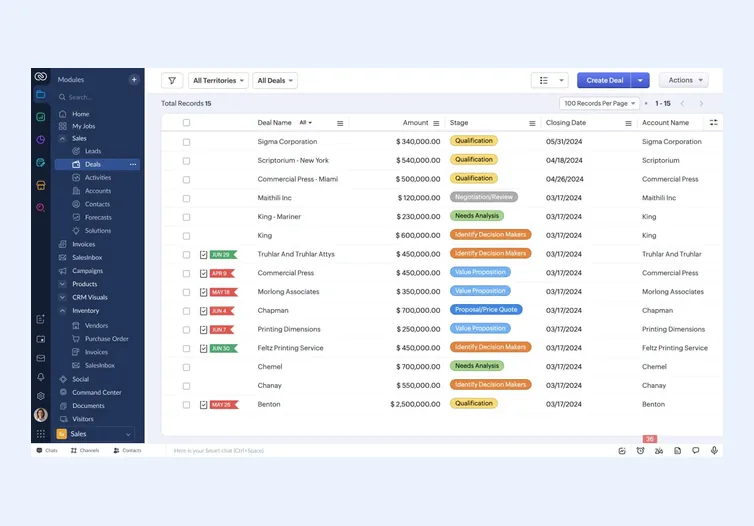
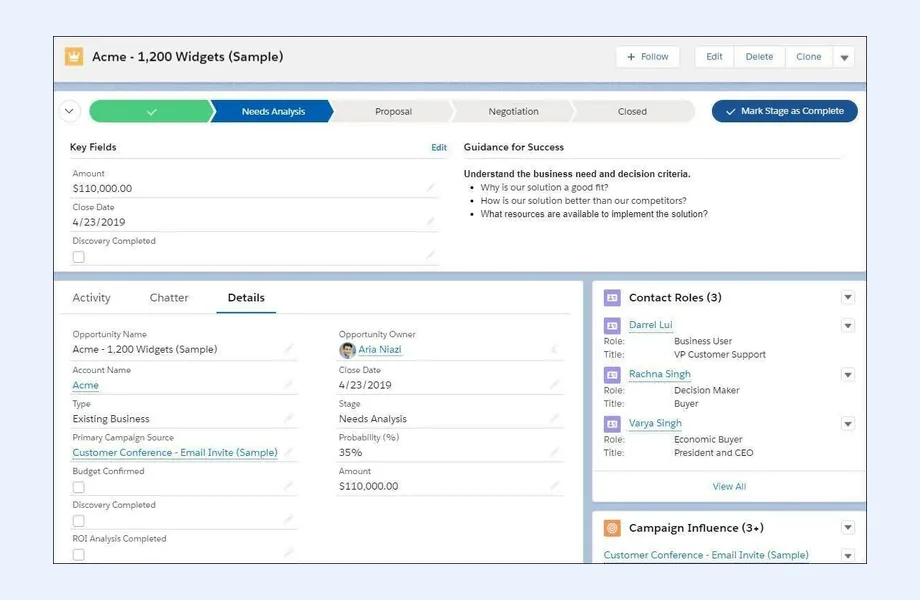
Every lead should land in the CRM within minutes, not in a weekly CSV. Australian firms run Salesforce, HubSpot, Zoho, Dynamics, Pipedrive and others, and all of them accept LinkedIn leads via a built-in connector or middleware. I map campaign, audience and state fields, assign owners by territory or named account and send alerts so follow-up happens the same day.
Time zones complicate this more than people expect. Perth runs well behind Sydney, Queensland does not observe daylight saving while the southern states do, and a lead captured late in the day on one coast can arrive after hours on the other. I set routing and alerts so leads reach someone who is working.
The Insight Tag and conversion actions cover website leads; for deeper stages, a server connection to LinkedIn's Conversions API can pass CRM milestones such as sales-accepted leads and new opportunities. Those events are only as good as the stages behind them, which I define using the method on my Australia CRM consulting page.
In concentrated markets, a LinkedIn program can matter without producing many form fills. Reaching the buying group at a short list of target accounts may show up later as a shortlisting, a tender invitation or a meeting that sales would not otherwise have had. I report on accounts and pipeline as well as leads.
Two pipeline figures appear in each report. One covers deals that originated with a LinkedIn response; the other covers deals at accounts whose staff interacted with the ads while the sale was live or shortly before. That second figure suggests contribution without proving it, and I describe it in those terms. Tracking engaged against untouched target accounts over successive quarters gives the most honest view.
Each report tracks what a qualified lead costs in each audience, how far the campaigns have penetrated the account list, the rate at which leads become opportunities, deal value at accounts that engaged and pipeline split by state. Each review ends with decisions about audiences, formats and budget, and whether to move spend toward search or Meta.
No single channel carries the plan. My Australia B2B lead generation work covers outreach, partners and tenders, the Australia Meta Ads page covers lower-cost retargeting, and Australia SEO covers organic demand. My wider approach sits on the LinkedIn Ads management page. Delivery is fully remote, with calls booked inside Australian business hours; contact me to plan a pilot.

Tell me about your business and current systems. I’ll suggest the most sensible first step.
Book a Consultation
Not sure which ERP you need?
Share your business requirements with me and I will help you understand the right process, architecture and platform before implementation.
FAQ
Often yes, because a small, known market suits account-based campaigns that keep your name in front of the buying group while sales works the relationship. Success is measured by engagement and pipeline at those accounts rather than lead volume. Expect to refresh creative more often, because the same people see your ads repeatedly.
It will not replace the tender process, but it can make sure evaluators and stakeholders at target agencies or corporates know your capability before a tender is released. Document ads with capability material and thought leader posts from your principals tend to suit that role. Results are judged on shortlists and opportunities in the CRM.
If you sell there, yes, but in separate campaigns. Costs, audience sizes and buying patterns differ, and combining the two markets hides which one produces pipeline. Separate budgets, messaging and contact details let you scale or pause each market on its own evidence.
You can usually send them the guide they asked for. Ongoing marketing emails need consent under the Spam Act, plus sender identification and an unsubscribe option. Many firms add an optional marketing tick box to the form and store the answer against the contact. Your advisor should confirm that this suits your business.
Every business is different. Share where you are today and what you want to fix, and I’ll tell you honestly whether and how I can help.
Book a Consultation
Insights
 Book a Consultation
Book a consultation to talk through your processes, systems and goals. I’ll reply with practical next steps - no obligation.