Contact Info

 Edinburgh
Can ERPNext work for an Edinburgh research organization or life science startup?
Yes, ERPNext can suit small research institutes, contract research firms and life science startups around Edinburgh when the design covers grant-funded projects and timesheets, batch-tracked lab consumables, shared equipment with maintenance and calibration schedules, and recharges for instrument time. Its open-source code also suits teams with research software skills. Working as an independent advisor, I test the fit and guide the setup remotely, alongside any LIMS or quality system you keep.
Last reviewed by Vikas Saroj
Edinburgh's research economy stretches from the BioQuarter at Little France to the Easter Bush campus, Pentlands Science Park and the Heriot-Watt Research Park at Riccarton. Around the universities and institutes sit small contract research firms, diagnostics and biotech startups and specialist research charities, each running grant-funded projects, buying consumables and sharing expensive equipment.
ERPNext can appeal to these organizations because it is open source, can be hosted where they choose and can be extended by people who already write code for research. That freedom only pays off with a clear design and a plan for support. Working remotely and independently of any vendor, I help you test the fit, design the setup and keep the project on course.
 What I Do
Each item produces a written design and a test plan, so your implementer or in-house developers build against agreed rules.

I design projects, cost centers and accounting dimensions so every cost can be traced to the grant, funder and budget heading it belongs to, ready for the claims and reports each funder expects.

I set out how researchers record time against projects and activities with as little friction as possible, so staff costs can be claimed on funded work with evidence your finance team trusts.

I design items, batches, expiry dates and storage locations for reagents and consumables, treating freezers and cold rooms as stock locations, so the team can see what is on hand and what expires soon.

I model instruments and lab equipment as assets with maintenance and calibration tasks, service contracts and responsible staff, giving facility managers a schedule rather than a spreadsheet of reminders.

For core facilities that charge other groups or outside users for instrument time, I specify how bookings and usage become internal recharges or invoices, and where a small custom app is justified.

I compare managed hosting, a server run by your institution and in-house operation, and agree who applies upgrades, who reviews custom code and who answers users once the system is live.
How I Work
Fit against research realities
 Review grants, funders and claims
List stock, equipment and facilities
Check skills available for support
Decide whether ERPNext fits
Review grants, funders and claims
List stock, equipment and facilities
Check skills available for support
Decide whether ERPNext fits
Structure before configuration
Define projects and dimensions
Model items, batches and assets
Plan recharges and timesheets
Agree rules for custom code
Prove it on a real grant
Pilot with a single funded project
Test claims and stock counts
Train researchers and finance staff
Hand over support duties
Edinburgh has a broad research base. The University of Edinburgh, Heriot-Watt, Edinburgh Napier and Queen Margaret universities, institutes such as the Roslin Institute, and a steady stream of spinouts and startups work across life sciences, animal health, informatics and engineering. The smaller organizations around them, such as contract research firms, diagnostics companies and research charities, tend to outgrow spreadsheets and a basic accounting package once they hold several grants and a growing lab.
ERPNext can appeal for reasons that fit research culture. It is fully open source, so code and data can be inspected. The software itself carries no per-seat license fee, which helps when many researchers log in only now and then. It is built on Python and the Frappe framework, familiar territory for teams that employ research software engineers. And it can be hosted in a UK data center or on infrastructure the organization already trusts.
Those strengths come with responsibilities, because someone must own upgrades, custom code and user support. National topics, such as Making Tax Digital submission routes and UK payroll, are on my ERPNext consultant UK page, and the general product overview is on the ERPNext consulting page. Here I focus on the research organizations of Edinburgh and the Lothians.
A small research organization may hold grants from public funders, charities and industry partners at the same time, each with its own budget headings, eligible costs, claim periods and reporting format. Staff time is often a major cost, so timesheets carry real weight: a claim may need evidence that each researcher worked the hours charged to that project.
In ERPNext, each grant can be a project linked to a cost center or an accounting dimension for the funder, with budgets set against the headings the funder uses. Purchases, expense claims and timesheets then carry the project and dimension from the start, so a claim becomes a report rather than a spreadsheet exercise. Activity types and costing rates turn approved timesheets into staff costs, and budget controls can warn a buyer before a heading is overspent.
The design work lies in the details: how to treat equipment shared between grants, how to handle overheads, and what to do when a grant is extended or rebudgeted. I document those rules with your finance team and principal investigators before anything is configured. Eligibility of costs and the wording of claims remain matters for your finance lead and the funder's terms. The project costing page explains the wider approach to costing by project.
Labs buy reagents, kits and consumables that carry lot numbers and expiry dates, and many must be kept in freezers, fridges or cold rooms. Losing track of what is on hand leads to duplicate orders, expired stock and experiments delayed while someone hunts for a reagent.
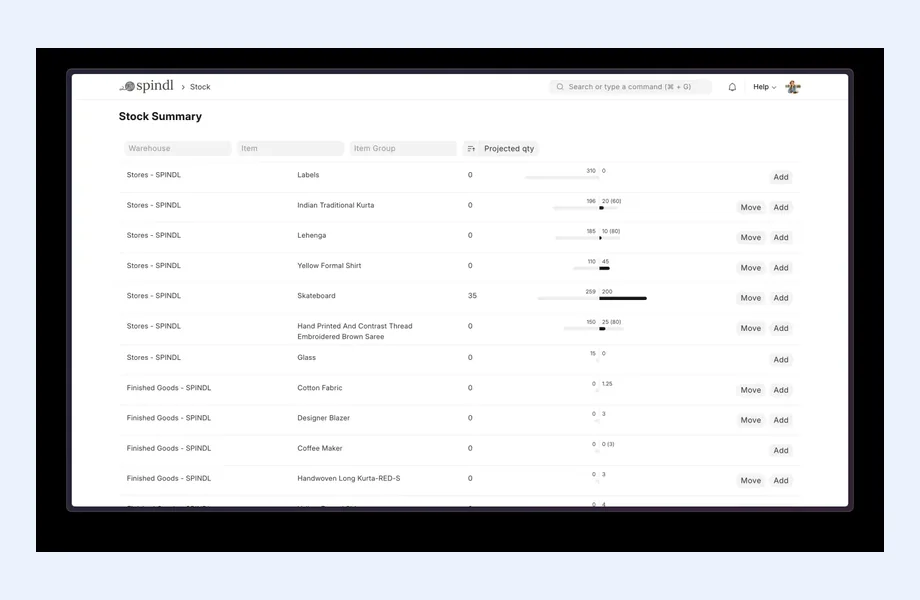
ERPNext's stock module can treat each freezer or cold room as a warehouse location, track items by batch with expiry dates, and raise material requests when levels fall below a reorder point. Purchase requests from researchers can be routed for approval by grant holder or budget, which keeps buying tied to the project that pays for it.
There is a boundary to respect. Research samples, specimens and study data usually belong in a laboratory information management system, an electronic lab notebook or a dedicated sample tracker, not in the ERP. Where regulated work under good laboratory or manufacturing practice is involved, system validation is a matter for your quality lead. I define clearly what the ERP holds, what stays in specialist systems and how the two exchange information, so neither is stretched beyond its purpose. The ERPNext Manufacturing page covers batch handling where small-scale production is part of the business.
Expensive instruments, such as sequencers, microscopes and mass spectrometers, are often shared between groups and sometimes offered to outside users through a core facility. They need service contracts, maintenance, calibration and named responsible staff, and their running costs are commonly recovered by charging users for time.
ERPNext can record each instrument as an asset with depreciation, maintenance and calibration tasks assigned to staff, keeping its repair history in one place. Recharging is where design matters. Internal users might be charged through transfers between cost centers or grants, while outside users receive invoices, possibly at different rates. The instrument itself may be booked in a separate calendar or facility booking tool, in which case the design defines how logged usage reaches ERPNext.
Where standard features fall short, a small custom Frappe app may be justified, for example to turn logged instrument hours into recharges at each month end. I write the specification and acceptance tests for such an app, and agree in advance who maintains it, so the next upgrade does not break it. Rates and the VAT position of charges to outside users should be confirmed with your finance team and accountant. The ERPNext Accounting page describes the finance side in more depth.
Open source does not mean unsupported, but support has to be arranged deliberately. Options include managed Frappe hosting, a server run by your institution's IT team or a hosting firm, or a cloud server your own engineers maintain. Each choice decides who applies upgrades, takes backups and responds when something breaks. Organizations whose funders or partners expect data to stay in particular locations should confirm the hosting choice with their data protection officer.
Custom code needs rules too. Research software engineers can extend ERPNext well, but their changes should live in a separate custom app, be reviewed and be tested against each upgrade. I set those rules at the start and review the first changes against them.
I recommend starting small: a pilot grant, the lab stock of a single group and a few shared instruments, proving the design before other groups join. Delivery is remote: short workshops, a living design document and screen recordings for researchers, with an Edinburgh visit only by arrangement. To compare platforms, see the Odoo consultant in Edinburgh page, and for the broader systems picture, the Edinburgh ERP consultant page.

Tell me about your business and current systems. I’ll suggest the most sensible first step.
Book a Consultation
Not sure which ERP you need?
Share your business requirements with me and I will help you understand the right process, architecture and platform before implementation.
FAQ
It can hold the evidence, provided the design captures it from the start: costs tagged to the right project and budget heading, approved timesheets with costing rates, and purchase approvals by grant holder. The claim then becomes a report rather than a hunt through spreadsheets. Whether a cost is eligible, and how the claim is worded, remain decisions for your finance lead under the funder's terms.
Usually not. Samples, specimens and study data belong in a laboratory information management system or a dedicated sample tracker with its own audit and access controls. ERPNext is better suited to purchased consumables, equipment, projects and money. I define what each system holds and how they exchange information, so neither is stretched beyond its purpose.
Yes, with some design. Internal users can be charged through transfers between cost centers or grants, and outside users can receive invoices at their own rates. If usage is logged in a separate booking tool, the design defines how hours reach ERPNext, sometimes through a small custom app. Rates and the VAT treatment of external charges should be confirmed with your accountant.
ERPNext can support the business side of a regulated lab, such as purchasing, stock and equipment records, but validation for good laboratory or manufacturing practice is a separate, formal exercise led by your quality team. If validation is required, plan time for it and decide early which records are regulated, since that shapes the design, hosting and change control.
No, and it is safer not to. A pilot covering a single funded project, the lab stock of one group and a few shared instruments tests the design under real conditions. Once claims, stock counts and recharges work there, other groups follow with a short onboarding checklist, and lessons from the pilot are built into the design.
Every business is different. Share where you are today and what you want to fix, and I’ll tell you honestly whether and how I can help.
Book a Consultation
Insights
 Book a Consultation
Book a consultation to talk through your processes, systems and goals. I’ll reply with practical next steps - no obligation.