Contact Info
 Ajman
Ajman
How can an ERPNext consultant help an Ajman business?
An ERPNext consultant helps an Ajman business shape the open-source ERP around its daily trade before anyone configures it. I design unit conversions and delivery trips for building material yards, returnable container tracking and van stock for water and gas distributors, and job estimates for print shops, then trim ERPNext down so a small team sees only what it uses. All advice is remote and independent.
Last reviewed by Vikas Saroj
A good part of Ajman's economy is unglamorous supply work. Building material and hardware yards in the industrial areas serve contractors and maintenance firms. Water and gas distributors run daily routes through the apartment towers. Print shops turn out business cards, menus, signage and packaging for local companies. ERPNext suits many of these firms because it covers stock, selling, buying and accounts without per-user license fees.
I am an independent ERPNext consultant working remotely. I design how ERPNext should be set up for your trade and review the configuration your implementer or in-house developer builds. I have no commercial link to Frappe or to any hosting provider, so the advice is about fit, not sales.
 What I Do
Each item below is a design decision that is cheap to get right at the start and costly to change once transactions pile up.

I set up how each item is bought, stocked and sold across pieces, boxes, bundles, lengths and weights, so the yard can sell by any unit while stock stays accurate in one base unit.

I plan price lists and pricing rules for contractors, maintenance firms and walk-in buyers, with credit limits and payment terms that block risky orders without slowing the counter.

For distributors with their own vehicles, I design each van as a stock location, plan delivery trips and decide how drivers record sales, collections and empties on a phone.

I model refillable bottles, cylinders and pallets so that full units, empties and deposits are tracked per customer, and missing containers show up before they become a loss.

For print shops, I define how a job is estimated from paper, plates, ink and finishing, then carried through to a work order and invoice, noting where custom fields or forms are needed.

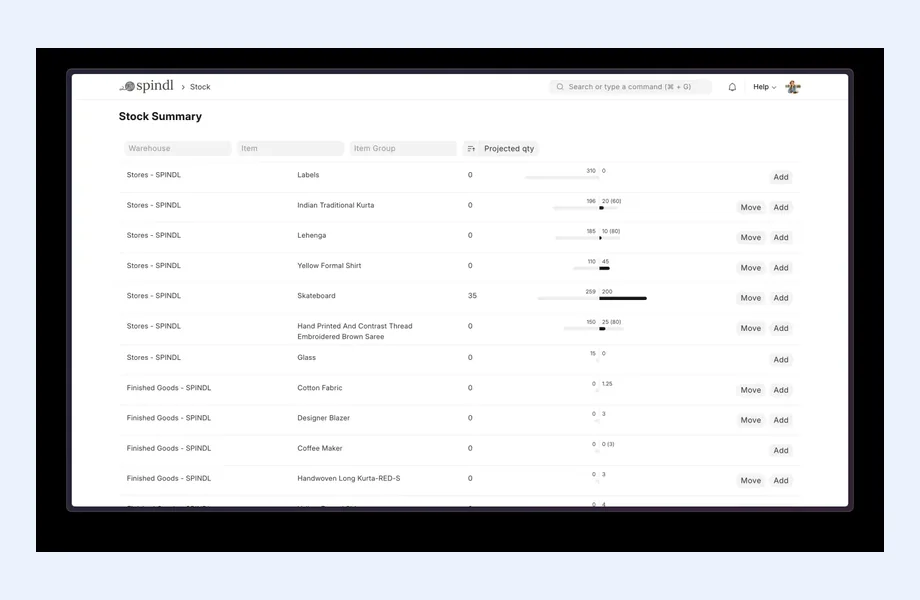
I decide which modules, workspaces and fields each role needs, and hide the rest, so a storekeeper or driver sees a short, clear screen rather than the whole of ERPNext.
How I Work
Learn the daily trade
 Follow one route or yard day
Collect delivery notes and quotes
List items, units and prices
Note credit and collection habits
Follow one route or yard day
Collect delivery notes and quotes
List items, units and prices
Note credit and collection habits
Write the ERPNext brief
Define items and conversions
Model containers and vans
Set roles and workspaces
Plan opening data
Check the build in practice
Test real counter sales
Run a sample delivery trip
Reconcile container balances
Confirm each role's screens
The yards and trading shops in Ajman's industrial areas sell cement, blocks, steel, pipes, tiles, paint, electrical fittings and tools to contractors, maintenance companies and anyone fixing up an apartment. Their stock problems are mostly about units. Tiles arrive by pallet and sell by box or square meter. Pipes arrive in bundles and sell by length. Cement is bought by the truckload and sold by the bag.
ERPNext handles this with a stock unit per item and conversion factors for every other unit you buy or sell in. The design question is which unit becomes the base, and how cut pieces and leftovers are treated. For items cut to length, I decide with you whether offcuts return to stock as a separate item or are written off.
Credit is the second issue. Contractor accounts often run on credit, and a yard can be badly hurt when one customer stops paying. I plan:
For yards with their own trucks, ERPNext's delivery trip feature groups delivery notes into a route for a driver. I check whether that fits how you load and dispatch, or whether a simpler approach is enough. The wholesale industry page covers the wider trading process.
Ajman's dense residential areas create steady demand for drinking water in large refillable bottles and, for many kitchens, cooking gas in cylinders. The distributors serving them run vans on fixed routes, swap full containers for empties and collect cash or monthly payments. Gas distribution in particular is a regulated activity, so safety and licensing questions belong to the relevant authority and your advisors, not to the ERP design.
What the ERP has to get right is the container. A distributor owns a large pool of bottles or cylinders, most of them sitting in customers' homes at any moment. If nobody tracks them, they quietly disappear. In ERPNext, the setup I suggest is:
A daily reconciliation then compares van stock, empties and cash against what the system expects. Differences get explained the same day, not discovered at year end. How deposits are treated in the accounts and for VAT is for your accountant to confirm. My distribution page has more on route-based selling.
Ajman's print shops and small presses produce business cards, flyers, menus, stickers, banners, signage and printed packaging for local companies. Almost every order is different: the size, paper, quantity, colors and finishing change from job to job, and the quote has to be ready quickly or the customer goes elsewhere.
ERPNext does not ship with a print estimating tool, so the design work is deciding how much to build. The options range from simple to more involved:
I help you choose the lightest option that still gives you trustworthy job margins, and write a brief for whoever builds any custom parts. Keeping custom work small matters, because every addition has to be tested again when ERPNext is upgraded. The ERPNext platform page explains the underlying modules.
Open ERPNext for the first time and you see modules for manufacturing, projects, assets, quality, support and more. For a water distributor or a hardware yard with a handful of users, that breadth is confusing. Staff click into the wrong place, create records nobody needs, and decide the system is too complicated.
ERPNext lets you shape what each person sees. Part of my design is a short plan for each role:
Unused modules are hidden through workspace settings and role permissions, and unnecessary fields are removed from forms where that is safe. The result is a system that feels made for your business, without any change to ERPNext's core code. It also keeps support simpler, since fewer moving parts means fewer things to check after each upgrade. The ERPNext Accounting page covers the finance side of the same setup.
The whole engagement is delivered remotely. I learn the trade from delivery notes, price lists, route sheets and short video calls with the owner and key staff, then write a design brief your implementer or developer can build from. When the system is configured, I review it with test transactions drawn from your real business before opening balances are loaded. A visit to a yard or depot can be arranged, but no step depends on it.
The engagement runs in English. Where drivers or counter staff are more comfortable in another language, a colleague who speaks it joins the session, and any Arabic text on invoices or delivery notes is checked by your team or a local partner.
Hosting is a choice to make early: a managed service run by Frappe or another provider, or your own server looked after by a developer. I explain the trade-offs for a small team without recommending a provider for commercial reasons. For country topics such as VAT reporting and e-invoicing preparation in ERPNext, see my ERPNext consultant in the UAE page. If you are still comparing platforms, the Zoho consultant in Ajman page and the Ajman ERP consultant page cover other routes, and the UAE hub lists everything else.

Tell me about your business and current systems. I’ll suggest the most sensible first step.
Book a Consultation
Not sure which ERP you need?
Share your business requirements with me and I will help you understand the right process, architecture and platform before implementation.
FAQ
Yes. Each item has a stock unit and conversion factors for other units, so you can buy by pallet or ton and sell by box, piece or meter while stock stays in one base unit. The important decision is choosing that base unit sensibly and agreeing how cut pieces and offcuts are handled before data is loaded.
Treat the refill and the container as separate items, and keep a container balance for each customer, including any deposit. Each van works as a stock location, and drivers record full units delivered and empties collected. A daily reconciliation then shows missing containers early. Your accountant should confirm how deposits are recorded.
Not with a ready-made print estimator, but it can be done. Repeat items can use quantity-based price lists, and custom jobs can use a few custom fields or a linked costing form that calculates paper, plates, ink and finishing. I help you choose the lightest approach that still shows reliable margins.
Yes. Workspaces and role permissions let you show each person only the screens they need, and unnecessary fields can often be removed from forms. Doing this early makes the system easier to learn for a small team, and it does not require changing ERPNext's core code.
Every business is different. Share where you are today and what you want to fix, and I’ll tell you honestly whether and how I can help.
Book a Consultation
Insights
 Book a Consultation
Book a consultation to talk through your processes, systems and goals. I’ll reply with practical next steps - no obligation.