Contact Info

 Johannesburg
Why would a Johannesburg group hire an ERP consultant?
For a Johannesburg business, an ERP consultant sets out how the group, its branches and its trading flows belong together in one system, picks the platform and keeps the implementer on track. In this city that often means consolidating several companies for a head office based around Sandton or Rosebank, controlling stock for wholesalers on the East Rand and documenting road freight to neighboring countries. The work is remote; any visit is arranged in advance.
Last reviewed by Vikas Saroj
I support Johannesburg and wider Gauteng businesses remotely: group headquarters in Sandton, Rosebank and Midrand, wholesalers and manufacturers in the industrial areas of Ekurhuleni and the West Rand, and service companies that support the mining houses headquartered in the city. Any on-site session is by arrangement, never a condition of the work.
Johannesburg companies often grow by acquisition or by adding subsidiaries, so the systems question is rarely about one ledger. It is about how several companies, each with its own history and software, report to one board. I help owners and financial directors design that structure before a vendor quotes for it.
 What I Do
Gauteng projects tend to start in the finance function at head office and then reach into branches, depots and subsidiaries. Below are the problems I am usually asked to untangle there.

I design how holding companies, operating subsidiaries and dormant entities sit in one system, how intercompany charges are posted and eliminated, and how the board pack is produced without a weekend of spreadsheet work.

Larger Johannesburg groups run on approval matrices. I translate your delegation of authority into purchase, payment and contract approval rules inside the ERP, so limits are enforced by the system rather than by email chains.

For wholesalers with a central warehouse and branches across Gauteng, I define stock transfers, branch replenishment, counter sales and credit control so each branch manager sees the same figures as head office.

Distributors trucking goods to neighboring countries need export documents, customer accounts in more than one currency and proof of delivery. I specify how the ERP captures each shipment so paperwork and invoices match.

When one finance team serves several companies, I design common processes for payables, receivables and month-end, with clear entity ownership, so the shared team can work quickly without mixing up companies.

Gauteng buyers often receive several implementation proposals at once. I compare scope, assumptions, effort and exclusions line by line and give you a written view of which proposal actually covers your requirements.
My Consulting Journey
Business first, technology second. You can hire me for one step - a BRD, a gap analysis, a vendor shortlist - or for the whole journey.
How I Work
Understand the group and its flows
 Chart every legal entity
Trace intercompany transactions
Document approval limits
Review branch and depot routines
Chart every legal entity
Trace intercompany transactions
Document approval limits
Review branch and depot routines
Requirements, shortlist and target design
Write group-level requirements
Script demos with real entities
Agree the shared chart of accounts
Plan subsidiary rollout order
Oversee build, testing and rollout
Track partner scope and changes
Run consolidation test cycles
Phase subsidiaries onto the system
Review the first group close
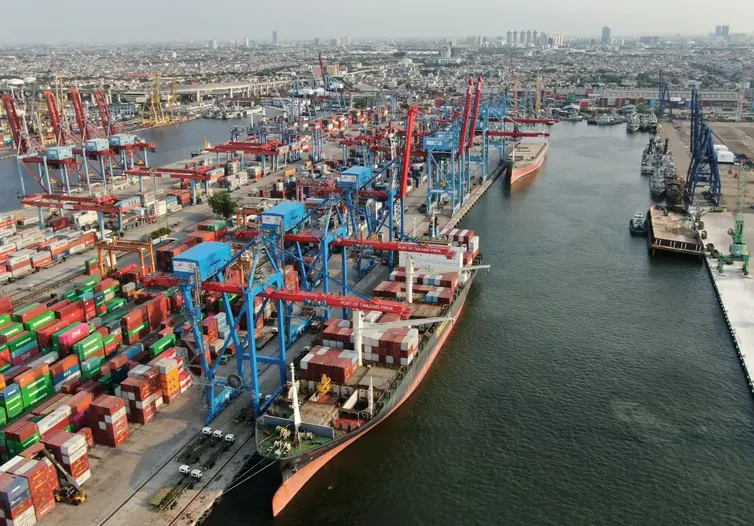
Johannesburg is South Africa's main commercial center. The Johannesburg Stock Exchange sits in Sandton, many listed groups and mining companies are headquartered in the northern business districts, and banks, insurers, law firms and audit practices cluster around them. To the east, Ekurhuleni holds manufacturing plants, warehouses and the main international airport, while the West Rand and the southern industrial areas add more factories and distribution sites. City Deep, an inland container terminal, links the region to the coastal ports by rail and road.
For ERP purposes this mix produces three common profiles. The first is the group head office that needs one view across several companies. The second is the wholesaler or distributor with a central warehouse, branches and trucks covering Gauteng and beyond. The third is the service company that supports mines and industrial sites with equipment, people and maintenance, managed from the city.
Each profile calls for different requirements and often a different platform. Tax, B-BBEE and power resilience points that apply nationally sit on my South Africa ERP consultant page. Everything below is about the city itself.
A typical Gauteng group has grown by buying businesses, starting new ones and occasionally closing some down. Each company arrived with its own accounting package, its own chart of accounts and its own way of recording sales. Head office then assembles the monthly group pack by exporting trial balances, mapping them in a workbook and chasing subsidiaries for explanations.
An ERP project for such a group starts with structure, not screens. I document every legal entity, how they trade with each other, which ones share staff or premises, and which reports the board, lenders and auditors expect. From that I propose a common chart of accounts with room for local detail, rules for intercompany charges and loans, and a consolidation approach, whether inside the ERP or in a reporting layer above it. The multi-company ERP page explains the options in more depth.
Rollout order matters as much as design. Moving every subsidiary at once can overload a small finance team, while moving them one at a time stretches the period of mixed systems. I help you choose a sequence that suits your calendar and the capacity of the people doing the work.
Gauteng is the country's largest consumer market, and many wholesalers run a central warehouse with trade counters or branches spread across the province. Some also send trucks to customers in neighboring countries. Their daily questions are practical: what is in stock at each branch, which customers are over their limit, which deliveries went out today and which came back with problems.
I map the full trading cycle: buying from local manufacturers and importers, receiving goods at the central warehouse, transferring stock to branches, selling over the counter and on account, delivering on the company's own vehicles or through carriers, and collecting payment. For cross-border customers I add the export documents, the currency of the invoice and the proof of delivery that finance needs before treating a sale as complete. Customs rules themselves should be confirmed with your clearing agent.
The design is written up using my wholesale ERP and distribution ERP frameworks, then tested with your own product codes, price lists and customer terms during vendor demonstrations. Generic demo data hides the gaps that matter most in this kind of business.
Many Johannesburg companies answer to boards, private equity owners, lenders or listed parents, and their auditors expect controls that can be shown rather than described. Yet approvals often run on email and signatures on printed purchase orders, which leaves no reliable trail when someone asks who agreed to a payment.
I turn your delegation of authority into workflow rules: who can raise a purchase requisition, who approves it at each value band, who can create a new supplier or change bank details, and which payments need two people. Segregation of duties is checked against the roles each platform supports, because some systems make it easier than others to stop one user from both creating and paying a supplier. The approval workflow page covers the typical patterns.
Reporting follows the same logic. I agree which management and board reports must come straight from the system, which can be built in a reporting tool on top of it, and who owns each one. That way the finance team stops rebuilding the same reports every month, and auditors can trace figures back to the transactions behind them.
Gauteng's clock is a few hours behind India's. In practice your team starts its morning while I am already well into my day, which leaves the rest of your morning for live sessions and my evening for turning what we discussed into documents. Each department gets its own short video workshop, and the outputs, from process maps to requirement lists, live in a shared folder that subsidiaries can open whenever it suits them.
Group projects bring many stakeholders: the financial director, subsidiary managing directors, the IT lead and often a parent company or investor. A single decision register, visible to all of them, stops one subsidiary from quietly agreeing something that contradicts another.
For warehouse or depot reviews, a staff member carries a phone through the building while I ask questions. Should a kickoff or steering meeting in Johannesburg prove genuinely useful, we can plan it ahead, though nothing in the project hinges on it. Western Cape operations are covered on my Cape Town ERP consultant page, the South Africa hub gives the national overview, and you can start a conversation through the contact page.

Tell me about your business and current systems. I’ll suggest the most sensible first step.
Book a Consultation
Not sure which ERP you need?
Share your business requirements with me and I will help you understand the right process, architecture and platform before implementation.
FAQ
Not as a rule. Engagements are run from India over video calls, shared folders and recorded walk-throughs, and Gauteng business hours fall inside my working day. When a face-to-face kickoff or steering session would clearly help, we can schedule one well in advance, yet the plan is written so the project succeeds without it.
Often yes, but it depends on how different the subsidiaries are, how many currencies and reporting frameworks are involved and how intercompany trade works. Some groups run every entity in one system; others keep certain businesses on separate platforms and consolidate in a reporting layer. I set out both options against your structure before you decide.
Yes. I design how cross-border orders, export documents, invoice currency and proof of delivery are captured so finance and logistics see the same picture. Your clearing agent and tax advisor decide the customs and tax treatment of each shipment, and the configuration then reflects their advice.
Yes. Each proposal is checked against your requirements to show what is included, what is assumed, what is excluded and where effort looks too thin. You receive a written comparison with the questions to put back to each bidder, so the final choice rests on scope rather than presentation.
Every business is different. Share where you are today and what you want to fix, and I’ll tell you honestly whether and how I can help.
Book a Consultation
Insights
 Book a Consultation
Book a consultation to talk through your processes, systems and goals. I’ll reply with practical next steps - no obligation.