Contact Info

 Kuala Lumpur
Why do Kuala Lumpur companies hire an independent ERP consultant?
An ERP consultant helps a Kuala Lumpur business decide how projects, stock, billing and the ledger fit together in a single platform, then chooses and oversees it without vendor bias. In the Klang Valley that often means project costing and purchaser billing for property developers, principal claims for distributors near Port Klang and multi-country posting for shared service centers. I work remotely, with visits only by arrangement.
Last reviewed by Vikas Saroj
I work remotely with businesses in Kuala Lumpur and the wider Klang Valley. Few of them sit in one place: a head office near KLCC or in Bangsar South, a warehouse in Shah Alam or close to Port Klang, a sales team covering the whole peninsula and perhaps a plant in an industrial park further out. Their systems have to follow goods and people across that whole area.
The businesses I have in mind include property developers and contractors, consumer goods distributors, manufacturers in the industrial towns around the city, and the shared service and technology centers in KL and Cyberjaya. Each needs something different from an ERP, so I start by mapping how your own operation runs before any platform is put on the table.

 What I Do
Developers, distributors and service centers each bring their own pressure points. These are the areas that tend to need untangling before a platform is chosen.

For property developers, I design cost tracking by project, phase and block, linking land, consultants, main contracts and variations to budgets so the board sees committed and remaining cost while construction is still running.

I map how billing to unit buyers follows the payment schedule in their sale agreements, how architect certificates trigger each stage and how end-financier payments are matched, with legal points confirmed by your lawyers.

Distributors handling several brands juggle promotions, rebates and claims back to principals. I define how each scheme is recorded, evidenced and reconciled so claims are submitted on time and nothing is left uncollected.

Food and consumer goods companies that hold halal certification may need segregated storage, approved suppliers and batch tracing. I document those controls as requirements, with the certification rules confirmed by your own compliance lead.

For centers in KL or Cyberjaya that process finance for entities in other countries, I design standard workflows, document capture, posting rules and service reporting across several ledgers and currencies.

When head office, warehouses and branches sit in different parts of the valley, I design transfers, in-transit stock, branch replenishment and delivery planning so every site works from the same numbers.
My Consulting Journey
Business first, technology second. You can hire me for one step - a BRD, a gap analysis, a vendor shortlist - or for the whole journey.
How I Work
Follow work across every site
 Interview each site lead
Trace order, project and claim
Gather sheets and local tools
Rank the costly gaps
Interview each site lead
Trace order, project and claim
Gather sheets and local tools
Rank the costly gaps
Requirements, demos and a choice
Write requirements per process
Run demos on your scenarios
Compare total ownership effort
Recommend with written reasons
Stay with you through go-live
Check partner configuration
Lead acceptance testing
Plan site-by-site cutover
Review early month-ends
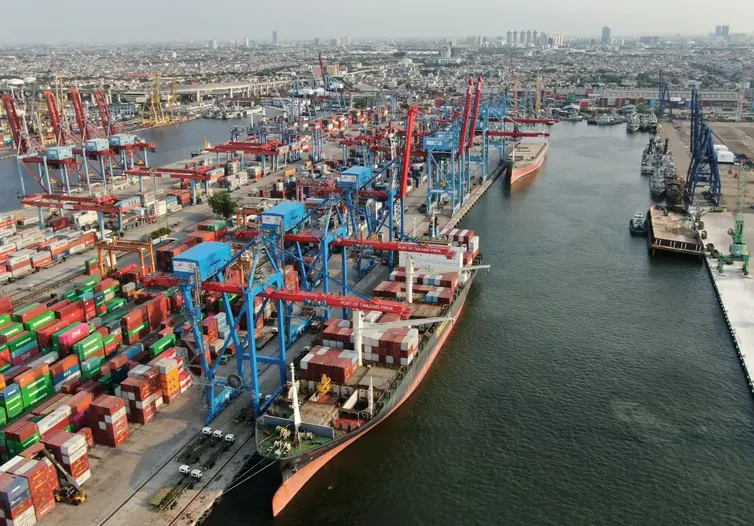
Kuala Lumpur's business life spreads well beyond the city limits. The towers around KLCC, the Tun Razak Exchange and Bangsar South hold head offices, banks, energy companies and professional firms. Petaling Jaya, Subang, Shah Alam and Klang host factories, warehouses and distribution centers. Port Klang, one of the country's main container gateways, sits at the western edge, while the international airport and its cargo facilities lie to the south near Sepang. Cyberjaya and the corridor toward Putrajaya add technology parks, data centers and government-linked activity.
For an ERP, that geography matters. A typical mid-sized Klang Valley company has goods moving by truck between port, warehouse and customers every day, staff working from several locations and managers who expect live figures on a phone. Stock in transit, branch transfers, delivery scheduling and approval on the move become real requirements rather than nice extras.
Points that apply to every Malaysian company, such as SST, the MyInvois rollout and language needs, are covered on my Malaysia ERP consultant page. This page looks instead at what the city's mix of developers, distributors, manufacturers and service centers asks of a system, and how I work with teams spread across the valley.
Property development is a visible part of the Kuala Lumpur economy, and developers carry some of the most demanding ERP requirements in the city. A single project may run for years, split into phases and blocks, with land costs, consultants, main and nominated subcontractors, variations and authority charges all feeding the budget. Directors want to know committed cost, cost to complete and expected margin for each phase, not just what has been paid.
On the revenue side, billing to purchasers generally follows a stage-based schedule set out in the sale agreement, with each stage supported by certification from the project architect. End-financier payments, purchaser loans, late payment interest and handover all need tracking. Some developments include units with discounts or allocation rules set by the authorities. I document these flows carefully and leave the legal reading of agreements and regulations to your lawyers and advisors.
Contractors working on these projects face the mirror image: progress claims, retention, back-charges and subcontractor certification. I design both sides using my real estate ERP and construction ERP frameworks, and I test shortlisted platforms with a real project budget and a real payment schedule instead of generic demo data, because that is where differences between systems show quickly.
Many consumer goods, food and industrial products reach Malaysian shops and factories through distributors based between Shah Alam and Port Klang. These companies often represent several principals at once, each with its own price lists, trade promotions, rebate schemes and claim procedures. Margin depends as much on recovering those claims on time as on selling well.
I map the full trading cycle: purchase from principals or import through the port, landed cost, storage, van sales or scheduled deliveries to retailers, credit control, and the claims that go back to principals for promotions, damaged goods and expiries. Each scheme needs a clear record, evidence and a reconciliation that does not depend on one person's spreadsheet.
Food and personal care distributors add batch and expiry control, and some must keep halal-certified goods segregated and traceable. I treat those as design requirements for warehouse locations, supplier approval and batch records, while the certification rules themselves stay with your compliance team. My distribution ERP and food and beverage ERP pages hold the baseline requirement lists I adapt.
Sales teams on the road also need customer balances, stock availability and order entry on mobile devices, and the system has to cope when a connection drops between calls.
Kuala Lumpur and Cyberjaya host shared service and global business services centers that process finance, procurement or HR work for group companies across Asia and beyond. Their ERP needs are unusual. The center itself may be a modest entity, but its staff post into many ledgers, often on more than one platform, and they are measured on accuracy and turnaround.
For these centers I design the work rather than just the software: standard procedures for invoice capture, approvals and payment runs, posting rules that respect each entity's local requirements, segregation of duties, and service reporting the group can trust. Where the parent wants to consolidate platforms, I help assess whether a single system can serve all the entities the center supports, and in what order to move them.
Technology and digital companies in the city face a different challenge. Project-based firms need time, budgets and milestone billing, while software companies need subscriptions, renewals and revenue that is recognized according to the rules their accountants set. I scope these requirements with the same discipline and link them to the CRM, so sales data and finance data agree. The ERP solution design service covers how I turn this into a blueprint an implementer can build.
I work remotely with businesses in Kuala Lumpur, and remote delivery suits a region where crossing the valley for a meeting can take longer than the meeting itself. Malaysian business hours start a little before mine and then run alongside them for the rest of the day and live sessions can be set at hours that suit your managers. Between sessions I prepare process maps, requirement drafts and demo scripts in a shared workspace, so each call starts from written progress.
Warehouse, site office and factory walk-throughs happen by video, guided by a member of your team. For developers and contractors I also review sample budgets, payment schedules and claim files so the design reflects the documents you already use. If an implementation partner is configuring the system, I stay on your side, checking their work against the agreed requirements and preparing acceptance tests.
A visit to Kuala Lumpur can be considered by arrangement for a kickoff or go-live, but no part of the method depends on it. If your group also has a base across the causeway, my Singapore city ERP consultant page covers that side. You can also read the Malaysia hub or get in touch with a short outline of your sites and systems.

Tell me about your business and current systems. I’ll suggest the most sensible first step.
Book a Consultation
Not sure which ERP you need?
Share your business requirements with me and I will help you understand the right process, architecture and platform before implementation.
FAQ
Yes, several platforms can, though some need configuration or an add-on to do it well. I map your payment schedule, certification steps, financier payments and late interest rules, then test shortlisted systems against a real project. The legal interpretation of sale agreements and housing rules stays with your lawyers; I make sure the system reflects what they confirm.
It can, provided each scheme is defined clearly: who funds it, what evidence is needed, when it is claimed and how it is reconciled. I document every active scheme with your trade and finance teams, then check how each candidate platform records promotions, rebates and claims so recoveries stop depending on spreadsheets.
It should treat each site as a location with its own stock, transfers and in-transit quantities, and give head office live visibility without daily phone calls. I design delivery scheduling, branch replenishment and approval rules around how goods actually move between your sites, then plan cutover so neither location stops working.
With the current process. I document how invoices, approvals, payments and journals are handled for each entity the center serves, then define a standard process with clear controls and design service reporting. Where the group is considering one platform for all entities, I assess the fit and propose a sensible migration order.
Everything is planned for remote delivery through video workshops, shared documents and guided walk-throughs. A visit for a kickoff or go-live can be discussed by arrangement, but the work does not rely on it. Most teams find that short, regular online sessions keep momentum better than occasional long meetings.
Every business is different. Share where you are today and what you want to fix, and I’ll tell you honestly whether and how I can help.
Book a Consultation
Insights
 Book a Consultation
Book a consultation to talk through your processes, systems and goals. I’ll reply with practical next steps - no obligation.