
Contact Info
 ERPNext in Italy
Is ERPNext a good choice for an Italian company?
ERPNext can suit Italian firms that want open-source ERP and have technical capacity, but sending invoices through the Sistema di Interscambio usually depends on a separate app, an intermediary or an Italian accounting package beside it. As an independent ERPNext consultant I test that route first, choose between Frappe Cloud and self-hosting with you, and work remotely in English while Italian material stays with your team.
Last reviewed by Vikas Saroj
Italian companies that consider ERPNext tend to share a profile: an owner or IT lead who likes open source, a dislike of per-user license growth, and a business with stock, purchasing and some production that has outgrown spreadsheets.
ERPNext covers that core well. What it does not settle on its own is the Italian electronic invoice flow and the local reporting your commercialista relies on. I make those gaps explicit at the start and test the options to close them before you commit.
 What I Do
With ERPNext in Italy, the main risk is not the core system but the local pieces around it, so that is where I focus.

I compare a community Italian app, an external intermediary fed from ERPNext and a hybrid with Italian accounting software, testing each against your sample invoices and supplier files.

For any Italian localization app proposed, I check who maintains it, how it tracks ERPNext upgrades, what it covers today and what happens if its maintainer steps away.

I lay out Frappe Cloud against self-hosting on a European cloud region: backups, upgrades, access control, data location and who answers the phone when something fails.

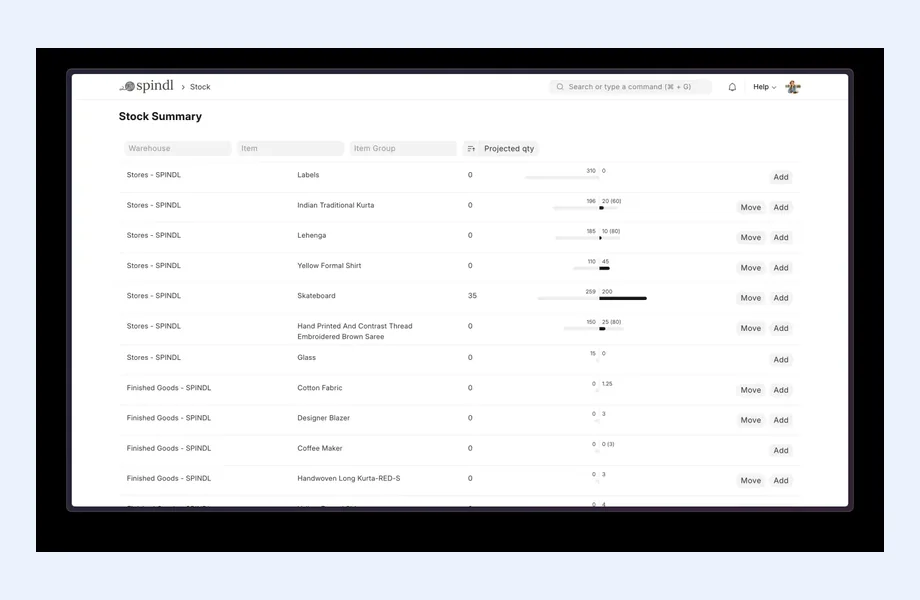
Warehouses, batches, serial numbers, bills of materials and work orders designed around how your plant and store actually move goods, then tested with real item codes.

Where custom work is needed, I write a precise brief for your developer or Frappe specialist, with acceptance criteria, so customizations stay upgrade-safe and documented.

I sequence the move from your current accounting and stock tools, decide what history to carry, and reconcile opening balances with your commercialista before cutover.
How I Work
Find the Italian gaps early
 Requirements and fit-gap matrix
E-invoice route shortlist
Hosting and support model
Internal skills inventory
Requirements and fit-gap matrix
E-invoice route shortlist
Hosting and support model
Internal skills inventory
Run critical flows on test data
Invoice files through chosen route
Incoming supplier file handling
Stock and production trial
Backup and restore drill
Go live with clear ownership
Upgrade policy agreed
App maintainer contact named
Users trained in Italian internally
Periodic health review
Every Italian business invoice has to travel as a structured file through the Sistema di Interscambio, and supplier invoices arrive the same way. Core ERPNext is built for a global audience and does not, on its own, give you a dependable Italian transmission route. Over time, Italy-specific features have been offered in different forms, and today the realistic options usually look like this:
I do not assume any of these works. I check the current state of each candidate, then run a test cycle with your documents: standard invoices, credit notes, a rejected file, an incoming bill and the archive of receipts. Deciding which obligations apply is for your commercialista, who also signs off the selected route; I do not offer tax advice. If no route passes those tests, ERPNext should not issue your Italian invoices.
An Italian company can run ERPNext on the hosted Frappe Cloud service, operated by the makers of the framework, or on infrastructure under its own control. Both are workable in Italy, but they shift responsibility in different ways.
| Question | Frappe Cloud | Self-hosted |
|---|---|---|
| Who patches and upgrades? | Largely handled by the service, within its plans | Your IT team or a contractor |
| Where does data sit? | Ask which regions are offered and pick one deliberately | Wherever you choose, such as a European cloud region |
| Custom apps | Supported within platform rules | Full freedom, full responsibility |
| Backups and recovery | Check what is included and test a restore | You design, run and test them |
Under GDPR you should be able to say where personal data is stored, who processes it and on what terms. I raise those questions with your data protection lead and record the answers in the requirements. Whichever option you choose, I recommend a documented restore test before go-live; it is the cheapest insurance in an open-source project. The ERPNext platform page covers the wider product.
Once the invoice route is solved, ERPNext offers a lot to a mid-sized Italian business. Its stock module handles multiple warehouses, batches with expiry and serial numbers, which suits food producers, spare parts distributors and equipment dealers. Its manufacturing features cover multi-level product structures, work orders and shop-floor job tracking, enough for many workshops and light assembly plants. Projects and timesheets help engineering and installation firms track cost against each job.
The fit is best when your processes are reasonably standard and you are willing to adapt some habits to the system. Owner-led firms sometimes want every exception kept; in ERPNext that leads straight to custom code. I use a fit-gap matrix to separate needs from habits, then score what standard ERPNext covers, what an app adds and what would need development.
For production detail see ERPNext Manufacturing, and for finance ERPNext Accounting. I keep those pages general; here the point is that Italian projects should weigh operational fit only after the compliance route is proven. My gap analysis service explains how the matrix is built and reviewed.
Open source moves cost from licenses to people. Before an Italian company commits to ERPNext, I want to know who will fix a broken report, apply an upgrade or adjust the Italian app when technical rules change. That may be an internal developer, a Frappe specialist firm, or a freelance developer you trust. I help you write that support model down with response expectations, because it matters more than any feature.
My own role is consulting, not coding. I write requirements, design the configuration, brief developers, review their work against acceptance criteria and run user acceptance testing. When something is custom, I insist it lives in a separate app rather than edits to the core, so upgrades remain possible.
I deliver remotely and in English. Live sessions take place during the Italian morning, my afternoon in India, with written decisions sent afterward. Italian print formats and user training are handled by your bilingual staff or a local provider. My Italy ERP consultant page and the Italy hub describe how I work with Italian firms more broadly.
I recommend against ERPNext in Italy more often than in some other markets, mainly because of the local invoicing layer. The clearest no-fit cases are:
In those cases Odoo for Italian companies or a partner-supported Business Central may be the safer route, and I say so plainly. The comparison ERPNext vs Dynamics 365 sets out the general trade-offs; the Italian specifics come from testing with your documents.

Tell me about your business and current systems. I’ll suggest the most sensible first step.
Book a Consultation
Not sure which ERP you need?
Share your business requirements with me and I will help you understand the right process, architecture and platform before implementation.
FAQ
Not reliably from the core product alone. Italian transmission usually relies on a localization app, an external e-invoicing service or an Italian accounting package beside ERPNext. I check the current options, test them with your sample documents and ask your commercialista to approve the route before go-live.
Frappe Cloud reduces the work of patching and upgrades; self-hosting gives full control over location and customization but makes you responsible for security and backups. I compare both against your IT capacity, GDPR position and custom app plans, then test a restore either way.
You need access to one. Even a mostly standard setup will need someone to maintain the Italian app, apply upgrades and adjust reports. That person can be internal, a specialist firm or a trusted freelancer, but the arrangement should be agreed before go-live.
I design the configuration, set up and test key flows with your team, and brief developers for anything custom. Larger builds usually involve a developer or specialist firm, while I keep the work aligned with the agreed design and run acceptance tests.
Every business is different. Share where you are today and what you want to fix, and I’ll tell you honestly whether and how I can help.
Book a Consultation
Insights
 Book a Consultation
Book a consultation to talk through your processes, systems and goals. I’ll reply with practical next steps - no obligation.


